
Skunk Train Chief Details Freight Operations, Federal Oversight Amid Eminent Domain Dispute
"Freight is not a big part of our business. But it is part of the business, and people have taken us up on it.”
Editor’s Note: We fixed a typo and also added a sentence clarifying that Mendo Local was able to examine railway records. (December 16, 2025 10:32 p.m. )
The president and CEO of the Mendocino Railway says freight service — though limited — remains a real and documented part of the Skunk Train’s operations, a point at the center of a recently decided eminent domain case involving a Willits property owner.
In an interview last Friday, Robert Pinoli walked through federal railroad regulations, internal records, and specific examples of freight and passenger service that he says establish the railroad’s status as a common carrier under federal law. Pinoli also provided the records to Mendo Local to examine at the railway’s office.
The eminent domain case stemmed from Mendocino Railway’s effort to acquire 20 acres of land in Willits owned by John Meyer, a move initially blocked by a trial court but later revived by a state appellate ruling that held the railroad qualifies as a public utility with eminent domain authority.
Federal rules and railroad operations
Pinoli emphasized that railroad operations are governed first by federal law — specifically Title 49 of the Code of Federal Regulations — and then by the General Code of Operating Rules, a nationally adopted rulebook originally developed by Union Pacific and used by hundreds of railroads across the country.
While federal regulations cannot be altered by individual railroads, Pinoli said operating rules may be modified through a railroad’s timetable, special instructions, or temporary “general orders” used to address conditions such as construction or speed restrictions.
“These are the documents that govern how trains actually run,” Pinoli said.
FRA inspection found no violations
Pinoli said the Federal Railroad Administration conducted a records inspection in 2025 covering the period from January 2020 through April 2025. The inspection focused on required monthly reports tracking train miles, employee hours of service, and injuries or illnesses.
According to Pinoli, the FRA identified a clerical reporting error involving how freight and work-train miles were categorized on Form 55 but recommended no violations.
“They ordered us to correct how the miles were allocated going forward,” Pinoli said. “There were no violations, and we’ve never had a records’ violation.”
Pinoli said the FRA’s request for correction occurred because the railway did haul freight during the period in question but did not account for the miles correctly.
The railroad was also asked to provide its internal control plan under 49 CFR Part 225, which Pinoli said existed at the time of the inspection but was not immediately available to inspectors.
Freight service examples
Although freight is not a major revenue source, Pinoli said it has been — and remains — part of the railroad’s operations and that it is reflected in the company’s documentation.
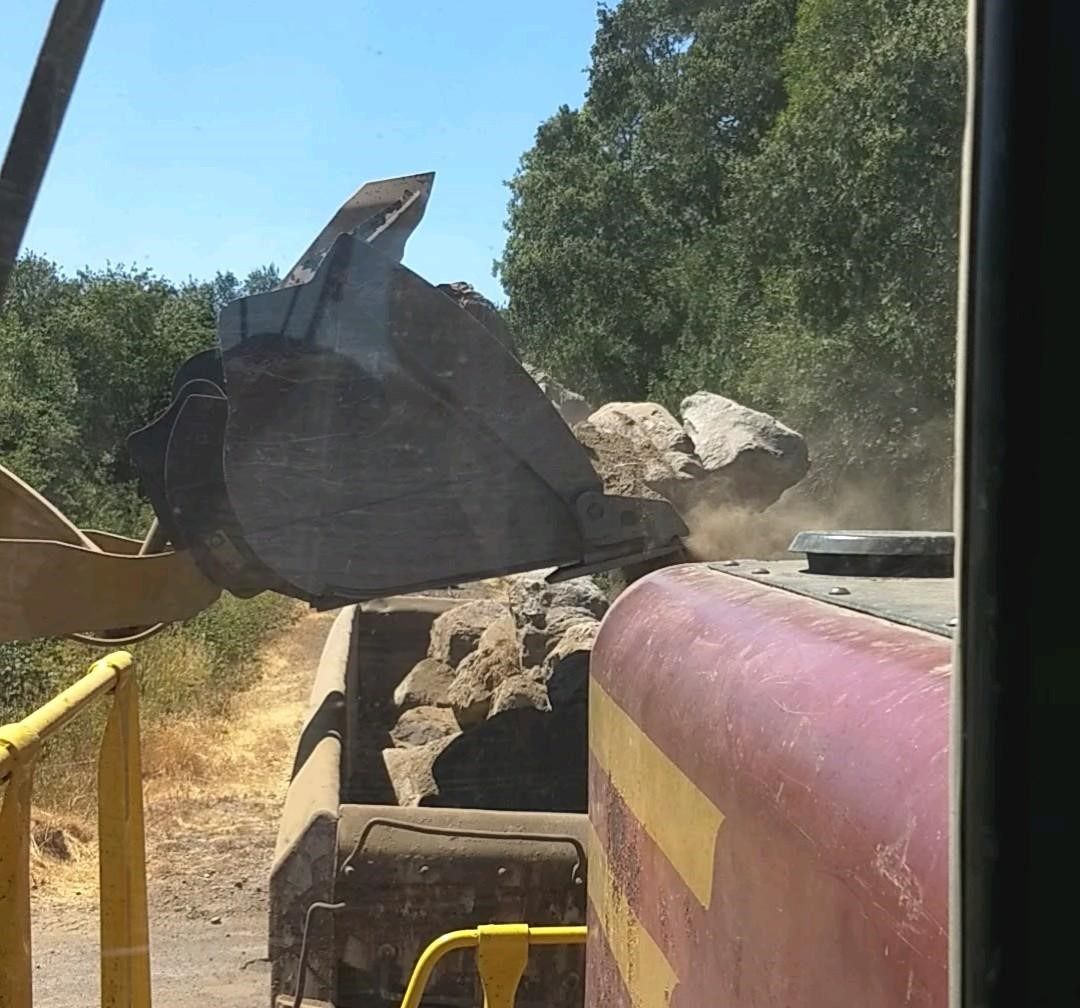
In 2022, he said, the railroad carried approximately 150 to 160 carloads of aggregate for a neighboring property owner near Willits. It has also transported steel bridge components manufactured in Texas and transloaded onto railcars in Willits for delivery to a site near milepost 26, as well as concrete footings for construction projects at Camp Noyo and Camp Mendocino.
“At present, freight is not a big part of our business,” Pinoli said. “But it is part of the business, and people have taken us up on it.”
Pinoli said freight operations have at times required the railroad to cancel passenger excursion runs to meet construction deadlines, citing internal emails directing staff to prioritize rock hauling over tourist service.
Passenger service as transportation
Pinoli also provided an example of point-to-point passenger service — Camp Noyo, a privately owned retreat facility located about 16 rail miles east of Fort Bragg.
While the camp has road access, Pinoli said winter conditions often make the road impassable, leaving rail as the only reliable transportation option.
“In the wintertime, if they’re hosting a retreat, they absolutely depend on the train to get in and out,” he said.
Acknowledging public reaction
Pinoli acknowledged that eminent domain cases often provoke strong reactions and said he understands why the dispute has drawn public scrutiny.
“There are few things in this country that make people angrier than eminent domain,” he said. “It’s not something I take lightly.”
Read Mendo Local News’ coverage of Mendocino Railway and the battle over its status:
California Appeals Court Says Public Utilities Need Not Serve Active Customers
Should the Skunk Train be Part of the Regional Transporation Plan?
California AG Bonta Challenges Mendocino Railway’s Federal Carrier Status
Mendocino Railway Rejects Fort Bragg’s Bid for Yearlong Pause in Litigation
Fort Bragg Plans Public Study Session, Website to Boost Transparency on Mill Site Development
Skunk Train, Fort Bragg Jointly Agree to Set Aside Default in Mill Site Suit
U.S. Supreme Court denies Skunk Train appeal
Federal Railway Agency Affirms Mendocino Railway’s Carrier Status
Default Notice Issued as Stormwater Contamination Battle with Fort Bragg Escalates