
Tribal Members Oppose Endorsement of Bourassa As Court Records Detail 2024 Fight for Control of Tribal Building, Bank Accounts
"She has left us broken, divided and in poor financial shape by her leadership. That condition continues to this day."
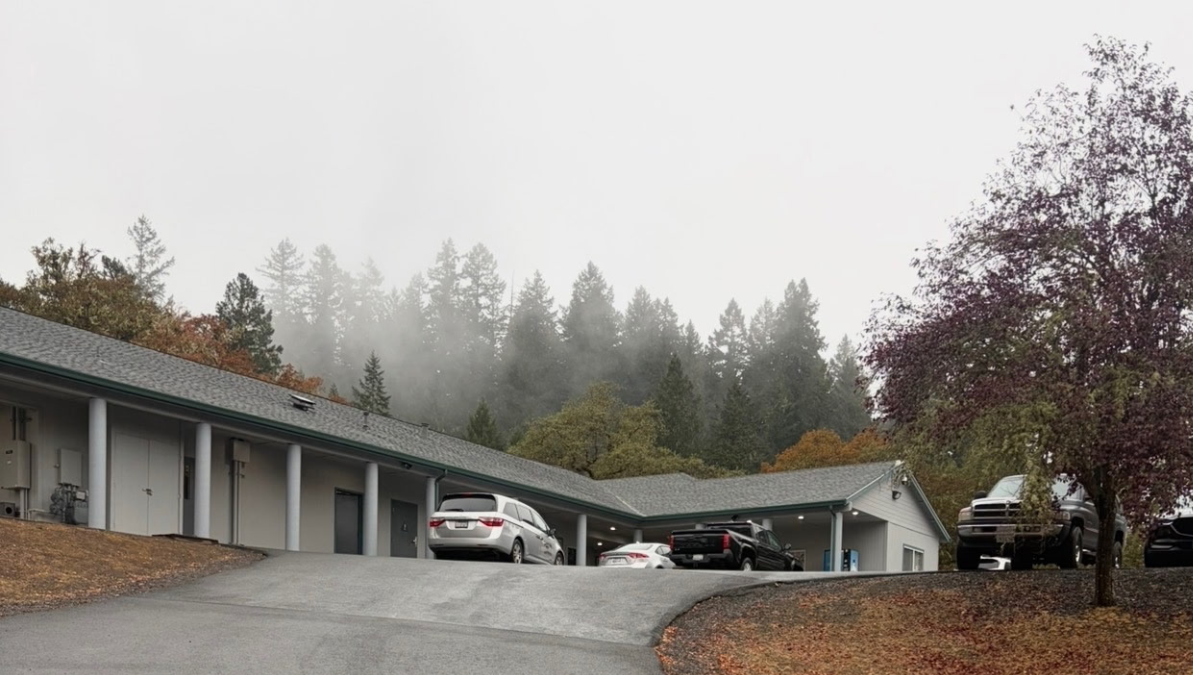
WILLITS, Calif. — As a candidate for 3rd District supervisor, Buffey Wright Bourassa has cited her experience in tribal government as a qualification for the job. But 11 members of the tribe who spoke with MendoLocal.News expressed strong reservations about her leadership, citing a bitter dispute over a contested 2024 tribal council election that divided the membership and disrupted the tribe's finances and operations.
In a letter sent to media outlets last week, eight tribal members, many of them elders, said they opposed an endorsement of Bourassa from their own tribal government. On Sept. 2, 2026, Sherwood Valley Band of Pomo Indians Chairman Jose Carlos Rivera Jr. signed a letter that "is provided to support and endorse Buffey Bourassa for Mendocino County Supervisor District 3 on behalf of the Sherwood Valley Band of Pomo Indians." Bourassa posted the letter on her campaign's Facebook page Sept. 13.
Rivera did not respond to questions about whether the endorsement for Bourassa was voted on by the tribal council or the full membership.
"We hope our neighbors in the Third District of Mendocino County do not elect Buffey Wright Bourassa into a leadership role for the County based upon her leadership with our Tribe," the tribal members wrote. "She has left us broken, divided and in poor financial shape by her leadership. That condition continues to this day." The letter is signed by Sterling C. Wright, Georgina Mitchell, Tasha Robinson, Tonia Rockey, Elaine Rockey, Russell Phillips, Guy Phillips, and Sherry Malicay. (A ninth member signed the letter after it was sent.)
In response to questions from MendoLocal.News, Bourassa noted that the tribe has more than 450 members and said the signers of the letter opposing the endorsement "should not be presented as speaking for the Tribe as a whole." She referred other questions to Rivera, who said via email that he supported Bourassa. He did not respond to specific questions raised by the court record of the tribal dispute.
The March 9 Election for Tribal Council
The problem with the election began when Buffie Campbell-Schmidt, an Indigenous leader and Mendocino County educator, withdrew her candidacy for the council after the ballots had been printed. Campbell-Schmidt ended up receiving a sufficient number of votes to change the outcome of the election, according to court documents. And that wasn't the only irregularity. Ballots also failed to include a candidate who had been timely nominated. Electioneering took place at the polling place, court records stated, and the election ordinance was not available on the website or to voters. The election committee was not aware of it until weeks after the election.
On April 3, all five members of the election committee decided not to certify the results and advised tribal membership that it was necessary "to repeat the entire process."
Council members Bourassa and Karen Shepherd, who did not run in the election, and Melanie Rafanan and Tina Sutherland, who ran and were elected, disagreed. They voted to certify the March 9 election in a tribal council meeting on April 9.
Then, on April 14, a special meeting of the general council, representing all the members, voted to redo the election. On May 4, a quorum of 87 members met, held a new election, and approved a motion to hire a new attorney — Gregory Narvaez of Peebles Kidder (now Peebles Bergin).
The Building Takeover
There were now two councils: one led by Hazel Ramirez, elected in 2023, and one led by Melanie Rafanan, who was elected in the contested March 9 election. (Ramirez ostensibly led both councils, but the four key members of the Rafanan council voted to suspend Ramirez on May 2, 2024, and elevate the newly elected Rafanan to fulfill chairman duties.)
Each council was recognized as legitimate by part of the tribe's membership. But only the Ramirez council had control of the Tribal Administration Building and tribal bank accounts.
On May 6, the rival faction attempted a takeover of the Tribal Administration Building. In videos of the confrontation reviewed by MendoLocal.News, Hazel Ramirez was temporarily barred from the building as a deputy sheriff looked on.
Employees were also locked in the building and prevented from leaving, according to one of the tribal members who was present that day.
In an interview with MendoLocal.News, Sheriff Matt Kendall would later say that he supported Bourassa in her candidacy for 3rd District supervisor in part because of how she handled the tribal dispute. Bourassa works for Kendall as a restorative justice program manager. Bourassa was not present at the takeover, and she said in an email to MendoLocal.News that she was at work.
A locksmith eventually restored Ramirez's access to her office in the Tribal Administration Building.
On May 19, a quorum of 88 members affirmed the May 4 election and voted to suspend Bourassa and Shepherd. The suspensions were to continue "until they meet with the General Membership to explain their actions within 30 days."
The Bank Account Takeover
Since October 2010, the Sherwood Valley Band of Pomo Indians had kept tribal funds — which by October 2024 exceeded $5 million — at Westamerica Bank, headquartered in San Rafael.
Control over the accounts passed from one council to the next, leaving Ramirez and other officers of the tribal council as signatories on the account at the beginning of October 2024.
But Bourassa, Rafanan, Shepherd, and Sutherland didn't recognize Ramirez's council as legitimate. They contended that the council containing the individuals elected on March 9 should have control of the bank account. And they had a letter from the Bureau of Indian Affairs that they said supported their position.
On Oct. 7, Westamerica Bank approved changes to the signers on the tribe's account, replacing the Ramirez council with the Rafanan council.
Joseph San Diego, the tribal administrator, learned of the changeover from an email Rafanan sent at 10:56 p.m. and forwarded to him the next morning. In it, Rafanan named what she called the official tribal council – herself as vice chairman, Bourassa as tribal secretary, Shepherd as treasurer and Sutherland as a council member – and attached a resolution suspending Ramirez, whom the same email still listed as chairman.
"As of October 2024, check signers on all accounts are Melanie Rafanan, Buffey Bourassa, Karen Shepherd, and Tina Sutherland," she wrote. "Any disbursements over $3,000 must be approved by Buffey and/or Karen."
Rafanan also directed staff to deactivate the email accounts of three members aligned with Ramirez – Guy Phillips, Danny Rockey and Yvonne Quintero – and to reactivate accounts for Bourassa, Shepherd, Sutherland, Kyle Martinez and herself, and to forward Ramirez's email to her account. Questions about tribal business, she wrote, should be "directed to myself or the Council as a whole."
The BIA Letter
In sworn declarations submitted to the Mendocino County Superior Court, both Rafanan and Bourassa cite a letter, sent by Amy Dutschke, Pacific regional director of the BIA, on Sept. 24, 2024, to Ramirez, as giving them authority.
The purpose of the letter, Dutschke states, "is to inform you of my decision to approve the Attorney Contract between the Sherwood Valley Rancheria" or "Tribe" and Christina Kazhe, Attorney at Law, Kazhe Law Group.
Dutschke goes on to write that "the tribal election dispute is to be resolved by tribal procedures and not the Federal Government." But she adds that "there are instances where the BIA may be required to recognize some tribal entity," and said that because the agency was being asked to approve an attorney contract for the tribe, it had the authority to determine whether the request came from "valid representatives of the Tribe."
Dutschke then concludes that the results of the March 9, 2024, tribal election were valid because no appeals had been filed with the tribe's General Council within the 30-day deadline. Ramirez subsequently appealed Dutschke's decision. As of publication, MendoLocal.News had been unable to confirm the outcome of that appeal or find a record of the decision filed with the court.
In her declaration, filed Oct. 31, 2024, Bourassa presented Dutschke's letter as supporting the legitimacy of the Rafanan council. "The BIA confirmed that the Rafanan Faction was the duly elected Tribal Council and was, therefore, the valid leadership team for the Tribe," she wrote.
In a written response to MendoLocal.News, Bourassa described the BIA decision more narrowly, saying the BIA accepted "for that particular decision" the authority of the Rafanan council.
In her declaration, Bourassa described herself "as neutral and focused on the best interests of the Tribe," adding that she was "very conscious of making every effort to follow Tribal law." She alleged that on Sept. 25, 2024, the day after the BIA decision, the Ramirez council transferred $100,000 to the law firm representing it.
The Fallout
The tribe, represented by attorneys for the Ramirez council, sued Westamerica Bank on Oct. 15, 2024, for changing the signers on the accounts and asked for a temporary restraining order. The order was issued Oct. 16. In it, Judge Ann Moorman found "a likelihood that Plaintiffs will prevail on the merits" and that the plaintiffs would suffer "significant and irreparable harm absent an injunction."
Pending a hearing on a preliminary injunction, Westamerica was barred from giving signing authority to "the Rafanan Council, which consists of Melanie Rafanan, Buffey Wright Bourassa, Karen Shepherd and Tina Sutherland."
But the injunction didn't automatically return control of the accounts to the tribe. That's because the same day that the judge issued the restraining order, Westamerica sent the tribe letters closing its accounts. This put more than $5.5 million in 21 accounts temporarily out of reach.
On Oct. 22, the bank filed a cross-complaint over the money, asking the court to order the two groups claiming to represent the tribe to litigate their rights to the accounts, to discharge Westamerica from any and all liability, and to award the bank its costs and reasonable attorney's fees.
"With the Bank deciding to remove the Tribal Council as signers on the Tribe's accounts, and replacing them with Melanie Rafanan and her group, the Tribal Council now lacks access to all of the Tribe's funds and accounts," San Diego wrote in a declaration signed October 11. "As a result, the Tribe has been forced to cease all distributions, programs and activities, all of which are funded from those accounts. Accordingly, currently the Tribe's vendors and utilities are not being paid, employee salaries are not expected to be paid, and elders and others who received meals and social services through the Tribe are cut off."
San Diego, who is not a tribal member, said he was "extremely concerned about the impacts the situation is having on the Tribe's elders, children and others who depend on the programs and resources of the Tribe for their wellbeing."
According to minutes from the annual general membership meeting held on Jan. 11, 2025, the tribe lost access to its accounts for a little over a month. All employees were unpaid during that time, and the tribe struggled to maintain a food program serving 500 families across five counties.
In October 2025, the parties reported a settlement in principle and said they intended to ask the court to dismiss the case with prejudice. Moorman has said she will not dismiss the case without a hearing or a formal motion. The next hearing is a status hearing set for Dec. 4, 2026.
Inside the tribe, the break has hardened. At a special general membership meeting chaired by Ramirez on Nov. 16, 2024, members voted to bar Rafanan, Bourassa, Shepherd, Sutherland, and Martinez from running for tribal council and from "participating in any tribal gatherings indefinitely," according to meeting minutes filed in the bank case.
"Many of us are afraid to go to meetings," the eight tribal members wrote in the letter to media outlets. "There is violence and a restraining order had to be issued against members of that team. Melanie, Buffey, Tina and Karen have been permanently banned from Sherwood Band of Pomo Indians’ Council Meetings, Big Times and tribal functions through a majority vote of members of their Tribe."
Bourassa disputes the ban. A resolution, meeting record or ban "issued during a governance dispute does not, by its existence alone, establish an authorized Tribal action," she wrote to MendoLocal.News. Court records confirm a restraining order was issued protecting Jodi Marie Sjolund from Melanie Rafanan concerning an altercation at a membership meeting.
Responding to a request for comment about the letter, Rafanan, Bourassa, Shepherd, and Sutherland wrote that the letter written by tribal members "contains several inaccurate and misleading claims that do not fully reflect the documented facts and circumstances."
They did not specify any particular claims. Instead, they pointed to "relevant court records, legal correspondence, and Bureau of Indian Affairs findings," and to the tribal government, "which has formally endorsed Mrs. Bourassa's candidacy." Allegations about a person's character, they wrote, "warrant careful review and verification before publication."
Bourassa declined to answer specific questions about Rafanan's Oct. 7 email and the other matters described in court documents. "I remain concerned about your apparent lack of understanding of Tribal sovereignty and the distinction between public court filings and the internal governmental records of a sovereign Tribal Nation," she wrote.
She said she does not have the authority to release internal tribal government records or speak for the tribe without its written consent, and she directed questions to the tribal government. Her decision not to answer, she wrote, "should not be characterized as an admission of wrongdoing or as confirmation of the allegations."