
Tribal Co-Management of California's Demonstration Forests Now Rests With Newsom
Assembly Bill 2494 would empower the Natural Resources Agency to enter into co-management agreements with California Native American tribes and "to make good faith efforts to collaboratively develop" them.
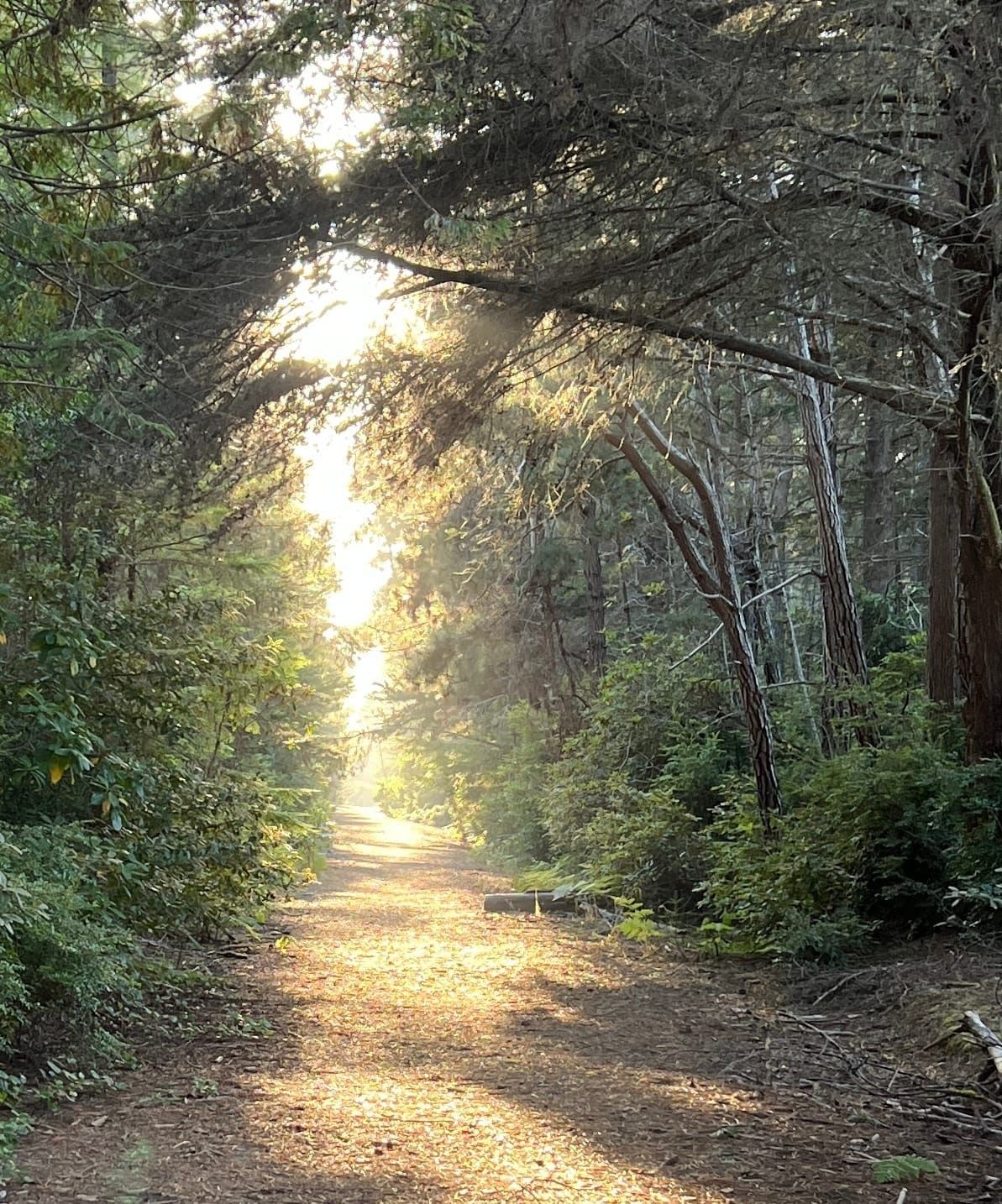
A bill awaiting Gov. Gavin Newsom's signature would, for the first time, write into state law a requirement that California pursue co-management agreements with Native American tribes over its demonstration state forests — formalizing, and expanding, a process CAL FIRE has already begun at Mendocino County's Jackson Demonstration State Forest.
Assembly Bill 2494, by Assemblymember Chris Rogers, D-Santa Rosa, would empower the secretary of the Natural Resources Agency to enter into co-management agreements with California Native American tribes and would require the secretary "to make good faith efforts to collaboratively develop" them. The agreements would incorporate "local traditional ecological knowledge and local indigenous knowledge into the management direction of a forest in the demonstration state forest system," according to the bill.
The amended bill goes further than the version Rogers introduced in February, which committed the state only to "seek opportunities for comanagement." As it now stands, the bill authorizes the secretary to enter the agreements and obligates the state to try, in good faith, to build them with the tribes.
Co-management of Jackson is not a new idea for the state. CAL FIRE and the Natural Resources Agency, under Secretary Wade Crowfoot, have been in government-to-government co-management consultation with the Coyote Valley Band of Pomo Indians since late 2021 and early 2022. In September 2022, CAL FIRE floated a co-management offer for a 75-acre parcel it had pulled from the Caspar 500 timber harvest plan — an offer tribal advocates rejected as falling short of "true equal co-management." AB 2494 would move that engagement from a discretionary, contested process to a statutory obligation across all 14 demonstration forests.
Jackson, the largest of the state's 14 demonstration forests, stretches between Fort Bragg and Willits and has been the site of years of conflict over logging, with Coyote Valley and other Pomo tribal members pressing the state to change how the forest is run, along with environmentalists.
The same tribes are already partners in a separate land return a few miles west, on the Mendocino coast. In June, the California Transportation Commission approved transferring roughly 136 acres of Blues Beach — surplus Caltrans right-of-way the state acquired in the 1960s for planned Highway 1 scenic overlooks — to Kai Poma, a nonprofit formed by the Coyote Valley Band of Pomo Indians, the Round Valley Indian Tribes and the Sherwood Valley Band of Pomo Indians.
State officials described it as the first time California has returned land managed by Caltrans directly to a Native-led organization; the transfer bars commercial development and requires public access to be maintained.
The Newsom administration has pointed to a 2020 policy directing state agencies to "seek opportunities to support California tribes' co-management of and access to" their ancestral lands as the foundation for both the coastal return and the push for forest co-management. AB 2494 as introduced used nearly identical language, committing the state to "seek opportunities for comanagement" before later amendments strengthened it into the good-faith mandate now on Newsom's desk.
Buffie Campbell, executive director of the InterTribal Sinkyone Wilderness Council and a citizen of the Sherwood Valley Band of Pomo Indians who testified for the bill in the Legislature, called AB 2494 "a huge step forward and long overdue." She said it strengthens and updates the state's intent on tribal co-management, and that it looks "very promising" Newsom will sign it.
Campbell tied the measure to the formal apology California issued to Native people in 2019 and the ancestral-lands policy that followed. "That was just monumental," she said of the apology. "We have never gotten an apology from any government agency, let alone the government of California." The bill, she said, is a chance to change course: "We can't undo history, but we can start a new history for the generations who are coming, who we may never know."
She framed forest protection as urgent and generational. "Everything we have today is borrowed from the future, and I think Governor Newsom realizes that," she said.
Campbell said tribes are ready to take on a larger role. "We've always been at the forefront of stewardship of our lands," she said. "It is not going to be something we have to start from scratch." Tribes without federal recognition should also have a voice in how the forests are managed, she said, and the goal is cooperation: "We want to build bridges, we don't want to destroy relationships."
"The Pomo and Yuki occupied and stewarded what is now known as the Jackson State Demonstration Forest in Mendocino County since time immemorial," Nikcole Whipple of the Round Valley Indian Tribes said in a statement released by EPIC, the bill's sponsor. "The land yearns for the guidance learned over millennia that we call 'traditional ecological knowledge' from the Yuki and Northern Pomo." Whipple said her hope is that Newsom "chooses a path forward for Demonstration Forest systems inclusive of Tribal co-management and surveys, meaningful consultation and conservation plans."
Jaime Boggs, a tribal citizen of the Robinson Rancheria of Pomo Indians who represents his tribe on the InterTribal Sinkyone Wilderness Council, said the bill's core is putting tribes back in the room. "It's about tribes managing that land," he said. He faulted the state's approach directly: "The state of California has failed with the management style of the agencies," he said. "When there is no input from the tribal nations regarding the stewardship of any forestry land then we have natural disasters."
Boggs described what tribal management would restore — chiefly the cultural burning that Pomo people used to keep the landscape productive. Tribes would "burn below the oak trees and redwoods," he said, "to ensure wild potatoes and wild herbs and medicines were grown." Looking at the demonstration forest, he said, "it is sad to see the cutting of trees and the stacking of the old growth." His prescription: "Give it to the tribes and let them manage it the way they see fit and we will regrow the trees and keep the atmosphere clean."
The need for the change is urgent, he said. "Now is the opportune time with all the wildfires that are happening, climate change, lack of water, and lack of food" — and said the state and federal governments "can do better as long as they work with tribal authorities."
Buffey Wright Bourassa, a District 3 supervisor candidate and a member of the Sherwood Valley Band of Pomo Indians, welcomed the expanded tribal role. "I appreciate that the final version of AB 2494 strengthens the opportunity for meaningful Tribal co-management of California's demonstration state forests," she said. "Including local Tribal knowledge and experience in decisions about these lands is important."
However, Bourassa said funding is also concern. "Changing how Jackson is managed also raises the practical question of how the forest and the broader demonstration forest system will be sustainably funded over the long term," she said. She called for "a clear funding strategy that supports Tribal co-management, research, restoration, recreation, road maintenance and responsible forest management without creating unintended consequences for the forest or our local communities."
CAL FIRE, which manages Jackson and would carry out any co-management agreements, declined to comment, saying it does not comment on pending legislation.