
Supervisors Move to Update Mendocino's Historic Structures Inventory, A Half-Century After Volunteers Began It

The Mendocino County Board of Supervisors voted 5-0 on Sept. 15 to begin updating the inventory of historic structures in the Mendocino Town Plan, a decades-old document that officials and property owners say is incomplete.
Supervisors Move to Update Mendocino's Historic Structures Inventory, A Half-Century After Volunteers Began It
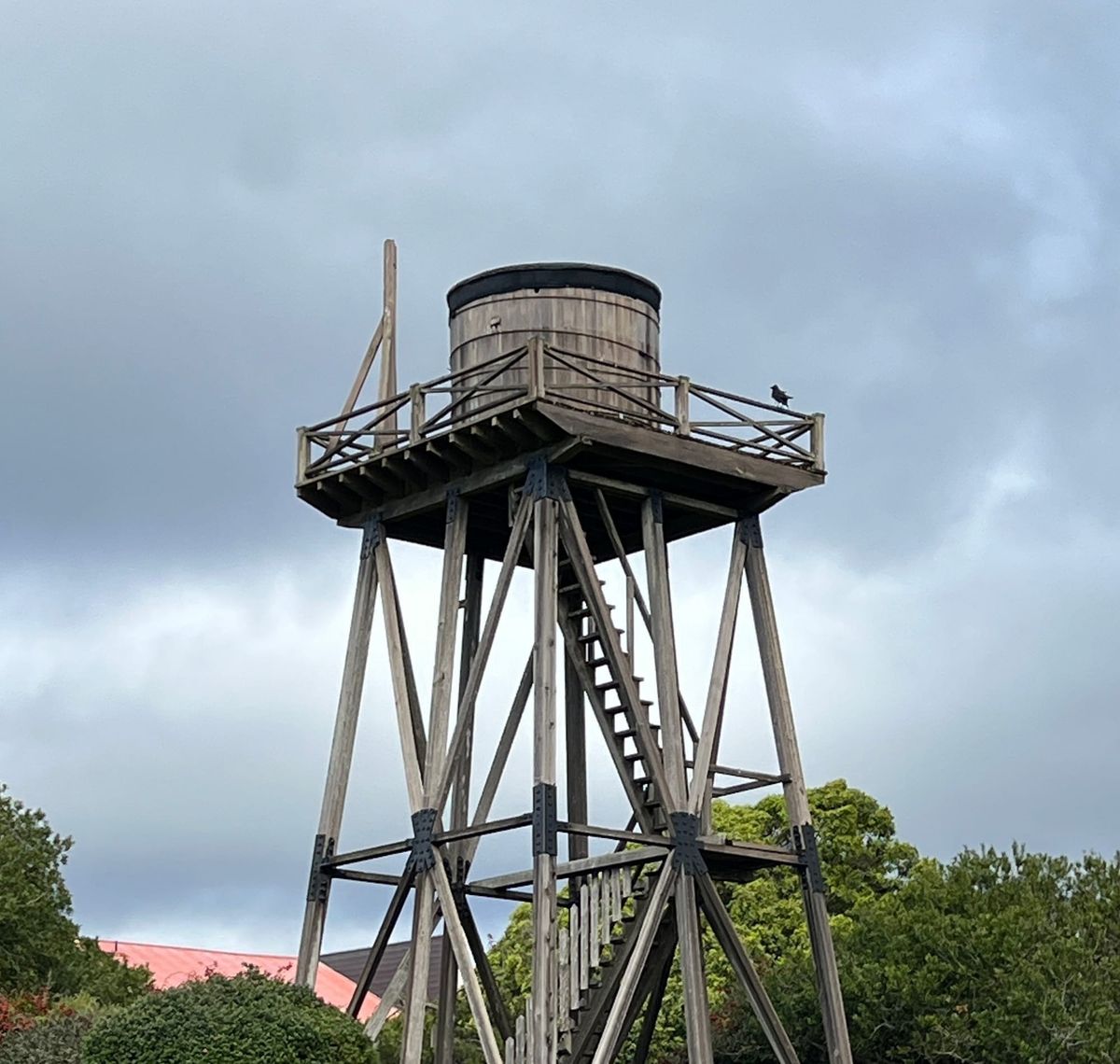
The Town of Mendocino is famous for its historic water towers, some of which were listed in an inventory of the Mendocino Historic Preservation District. The board of supervisors has directed staff to update that inventory. (MendoLocal.News CC BY 4.0)

MENDOCINO, Calif. — The Mendocino County Board of Supervisors voted 5-0 on Sept. 15 to begin updating the inventory of historic structures in the Mendocino Town Plan, a decades-old document that officials and property owners say is incomplete and, in places, inaccurate — and whose gaps have surfaced in the legal fight over the town's Main Street water tower.

The inventory, which lives in Appendix 1, Chapter 4.13 of the town plan, was acknowledged to be only 70% complete when the county first accepted it, Supervisor Ted Williams (D5) told the board, which met at the Fort Bragg Veterans Memorial Building. Williams called it "a cleanup item," noting the county has since received an updated appendix with construction dates and citations for the village's buildings. "This is a good idea because it will reduce contention. It may reduce future lawsuits," he said. "So there's a little bit of cost involved, but there's a lot more to gain in the long term by working with accurate information."

The original inventory was compiled by volunteers in the 1970s and '80s until, as Deirdre Lamb, a member of the Mendocino Historical Review Board, put it, one of them "just kind of gave up." The current update grew from the work of two more volunteers — Karen McGrath, a curator at the Kelley House Museum, and Carol Dominy, a Kelley House vice president and Apple retiree — who built an interactive online map documenting the construction date of every house, shed and water tower in the village, cross-checked against Mendocino Beacon archives.

The board directed planning and building staff to solicit proposals for a qualified architectural historian's services and, at Williams' addition, to begin using the updated inventory — the community-revised list dated April 7, 2026 — immediately, rather than keep relying on the outdated records. Documenting construction dates is distinct from assessing a building's historic integrity or changing its categorization, speaker Dan Potash noted; the latter requires the professional the county would hire. Planning and building staff told the board that without an outside architectural historian, county employees would themselves need training "to understand what qualifies as structure and what does not qualify as structure."

The only real hesitation centered on cost. Supervisor John Haschak (D3) asked how much the work would run and where the money would come from; interim Chief Executive Officer Sara Pierce said no estimate exists until that solicitation is complete and the county can see what the work would cost, with funding to come from the general plan designated reserve — which she believes "may cover it" but could not guarantee. Holly Madrigal, who chairs the review board, urged the supervisors to fast-track the volunteers' database and consider hiring someone to check their work: "I don't think you need to be a historical architect to say a shed exists."

For property owners, the stakes are practical. John Cavanaugh, who lives in the village, said his home's classification in the appendix is now "wrong and out of date" after permitted work, and that such errors "could result in having to fend off or even comply to unnecessary code enforcements" — or hinder access to federal preservation grants and tax incentives. "Maintaining the inventory isn't only about historical preservation," he said. "It's also about protecting private property rights."

Potash and Cavanaugh both sit on the board of the Mendocino Preservation Fund — the nonprofit that petitioned to stop demolition of the Main Street water tower. That case turns partly on this same inventory: the circa-1904 tower, which houses the staircase at Flow Restaurant, is not listed among the town's historic structures, and the Preservation Fund argues the inventory's acknowledged incompleteness means its omission shouldn't count against the tower. The supervisors overrode three denials by the review board to approve the work in May 2025; the Preservation Fund's challenge is now before a state appeals court.