
Fort Bragg Police Told Joey Lara, “You’re Going to Jail,” Despite Breath Tests Below the Legal Limit
The City of Fort Bragg is withholding records documenting Lara's arrest, including his own public records requests for his own arrest records
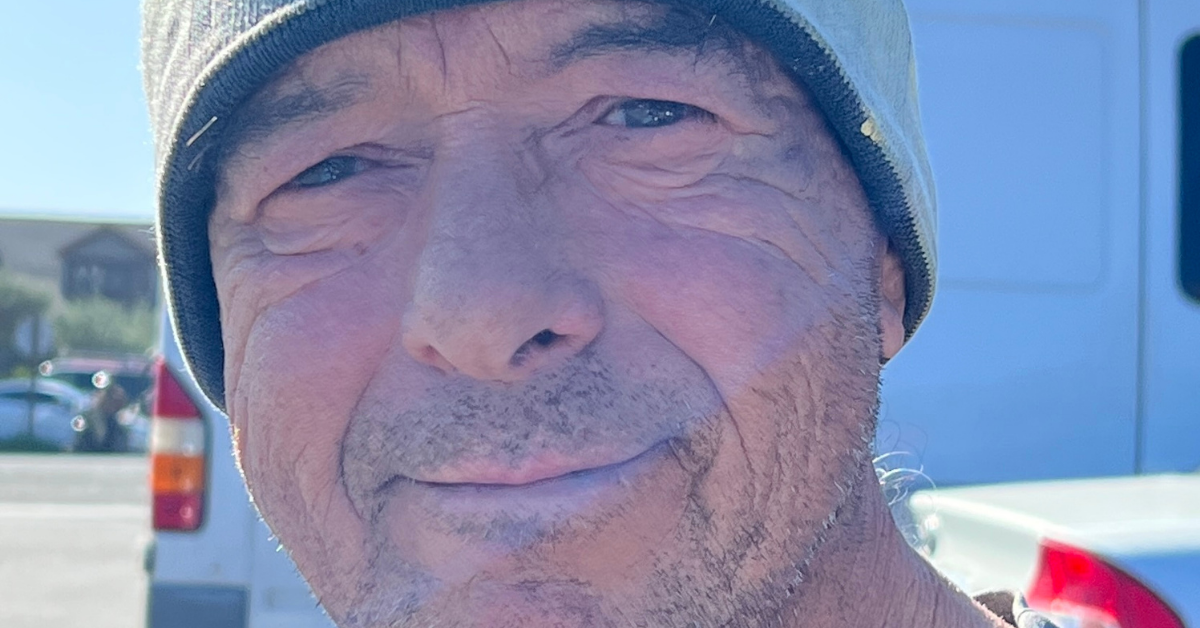
Joey Lara had spent most of the day at a friend’s house — watching movies, doing laundry, eating pizza. He was almost home when a Fort Bragg police officer pulled him over for a flickering rear license-plate light on his truck and asked how much he’d had to drink.
One beer, he told her. Eight hours earlier.
What followed were roadside sobriety tests that he believes he passed and an order to get out of the truck, followed by several hours in the booking room at the Fort Bragg Police Department. At the station, the breathalyzer put his blood-alcohol level at .04, then .03 — under the legal limit — across six attempts the officer blamed on malfunctioning equipment.
If the breathalyzer was working, Lara was below the legal limit. If it wasn't, the legality of his arrest depended on whether the officer had probable cause to believe he was impaired.
The district attorney declined to file charges, and someone wrote the reason on Lara’s release paperwork by hand: “lacks jury appeal.”
Nearly a year later, the City of Fort Bragg has settled the false-arrest claim Lara brought against it, paying him $2,950. But Lara — 67, a Mendocino Coast urchin-diving legend who had only just gotten back on his feet — still hasn’t fully bounced back.
The Fort Bragg Police Department did not respond to a request for comment about Lara’s arrest. It declined to release any records related to the case in response to multiple California Public Records Act requests. The department also did not respond to questions about whether patrol vehicles typically carry breathalyzers or how often they are calibrated.
Title 17 of the California Code of Regulations requires that instruments for testing breath alcohol “shall be checked for accuracy with reference samples” and that “records shall be kept for each instrument to show the frequency of determination of accuracy and the identity of any person performing a manual determination of accuracy.” MendoLocal.News has requested these records from the Fort Bragg Police Department under the California Public Records Act.
Picking up the pieces
Back in the nineties, when Lara owned a thriving urchin-diving business, Lara estimates he pulled more than three million dollars’ worth of the spiny invertebrates off the ocean floor. He had a family, a boat, a house.
But even before the catastrophic decline of the red sea urchins that were his bread and butter, he saw the writing on the wall. “I told my wife, the future is not looking good in terms of urchin diving,” he recalled in an interview with MendoLocal.News.
Lara started working to develop other forms of livelihood — logging, dredging, organic gardening, sport-fishing excursions. Nothing he tried was as lucrative as urchin diving. His income suffered, and along with it his marriage. He lost his house and fell behind on child support.
In 2019 he found himself homeless — though for Lara, and for many other Mendocino locals, this doesn’t mean sleeping in the streets. It means couch surfing, living on a boat, camping out in a leaky RV.
Five years passed. The death of Lara’s wife finally released him from the legal claims she had made against him.
In October 2024, he rented a small studio apartment. “I felt like a real guy again,” he said. “It was getting old, being a couch surfer.” In May 2025, he got a new truck.
On Saturday, July 26, 2025, he was driving it home after an afternoon and evening hanging out with a friend. Around 10:30 p.m., he headed back to his apartment off Airport Road, driving north on Franklin Street, then a left at Manzanita Road and a right onto Highway 1.
That’s when he saw the Fort Bragg police car, parked and facing east. As Lara passed by, the car, driven by Officer Antoinette Moore, pulled in behind him.
“As I turned on Airport Road, she turned her emergency lights on, and I pulled over on Burrows Ranch Road and Airport Road,” Lara wrote in the claim he submitted to the City of Fort Bragg.
Moore approached Lara’s truck and told him she was stopping him for an intermittent rear license-plate light. This didn’t sound right to Lara. He had just replaced the bulbs a week before, and he told the officer that.
“She immediately and persistently questioned if I was intoxicated, had I been drinking, how many drinks did I have,” Lara wrote. He told her the truth: he’d had one beer, at least eight hours earlier. “Officer Moore kept insisting that I was intoxicated, and she was going to do a visual Standard Field Sobriety Test,” he wrote.
Moore did the test. Lara passed. Moore again said he was intoxicated. She administered a second test, which consisted of her moving her finger around erratically while asking Lara to follow it with his eyes. Afterward, Moore complained that she couldn’t see his eyes and asked him to step out of the vehicle.
Lara let Moore know that he was partially disabled and had an uneven walking gait.
“At that point in the investigation Officer Moore advised that if I didn’t get out of my vehicle I would be arrested for obstruction of justice.” A second officer arrived. They again told him to get out of the truck or be arrested. “I asked them to wait as I was in the process of calling my friend to come and pick up my dog as it was obvious where this was headed,” Lara recalled.
Lara said the officers opened the truck door and dragged him out. He was handcuffed and placed in the back of Officer Moore’s police car.
After arriving at the Fort Bragg Police Department, Officer Amanda Pacheco administered what Lara counted to be a minimum of six breathalyzer tests.
The first test failed. The second test failed. Officer Pacheco asked Lara to blow into the device for a longer period of time. This time, the device registered .04%. The fourth test failed. The fifth test registered .03%, and the sixth test failed, according to Lara’s claim for damages.
The problem was the equipment, Officer Pacheco told Lara. “It was malfunctioning.”
The officers told Lara he was going to jail in Ukiah unless he could find someone to come and take responsibility for him. His friend, Sam Presswood, picked him up in the morning hours of July 27.
How an arrest becomes a detention
For weeks, Lara was under the impression he had been arrested. He hired an attorney to make sure he didn’t lose his license and to assist with a false-arrest claim. He doesn’t remember when he received a sheet of paper that converted what had appeared to be an arrest into a detention. He believes he learned he had been detained after he filed his claim in early September.
So was Lara released free and clear? His release paperwork, reviewed by MendoLocal.News, states that he was “detained” — not arrested — and released on “written instructions from the District Attorney’s office.” The reason the DA gave for declining the case, written by hand by an unknown person is: “lacks jury appeal.” The paperwork itself carries no date.
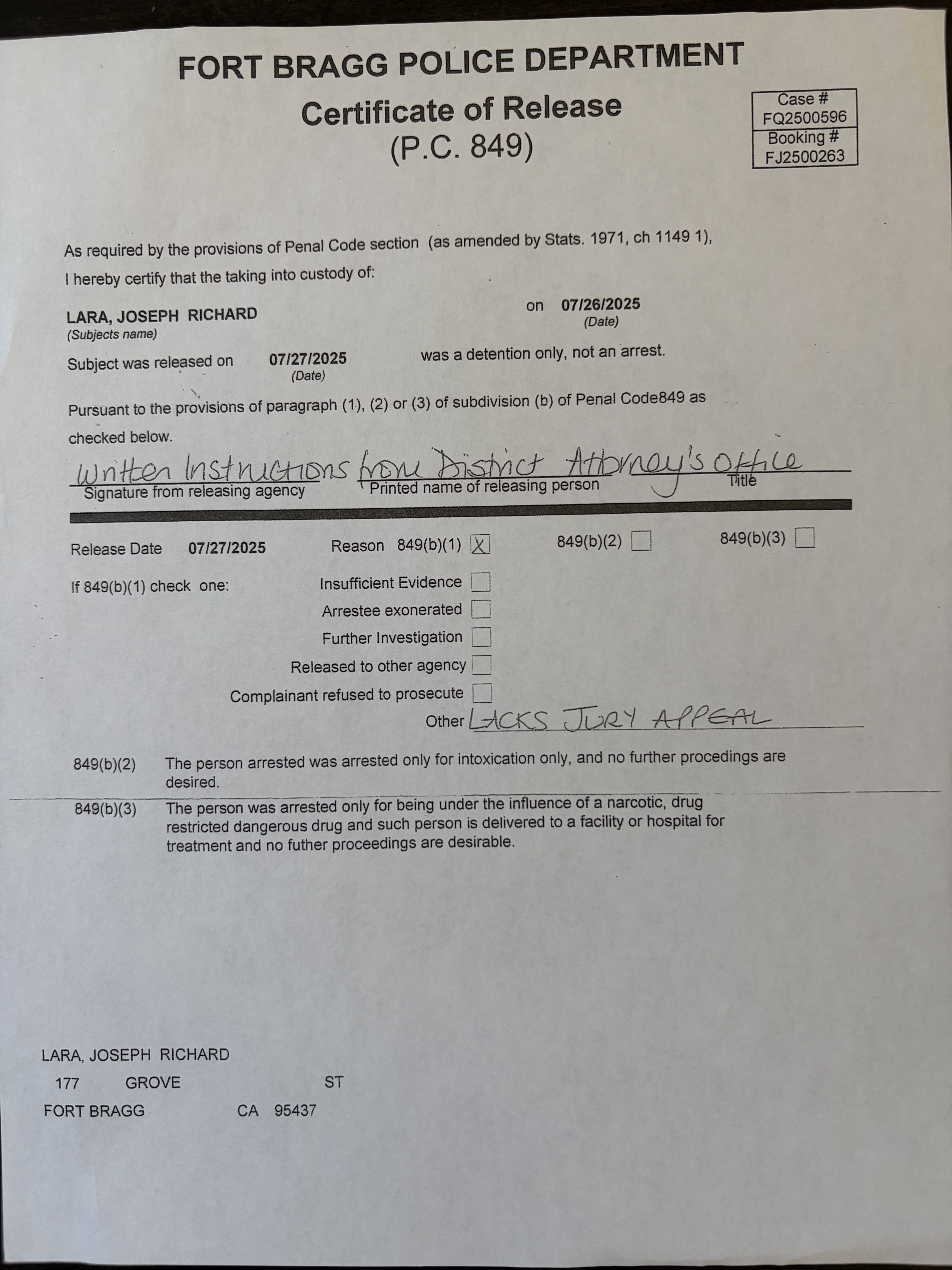
Under California law, when a person is booked and then released without charges, the arrest is reclassified on paper as a detention. But Lara had been handcuffed, hauled to the station, held for hours, and told he was being sent over the hill to the jail in Ukiah. The district attorney also had options. The release form has boxes for “insufficient evidence” and “arrestee exonerated.” Neither was checked.
And there are questions about the form itself. It is not signed by anyone from the releasing agency, and there is no printed name of the releasing person.
According to California Penal Code 851.6, a person who is arrested and released “shall be issued a certificate, signed by the releasing officer or his superior officer, describing the action as a detention.”
The impound paperwork also suggests that the “detention” label was applied after the fact. The paperwork lists California Vehicle Code 22651(h)(1) as the authority for towing Lara’s truck — a section that applies only when a driver has been arrested and taken into custody.
The Fourth Amendment of the U.S. Constitution protects against unreasonable searches and seizures. But the U.S. Supreme Court has held that a pretextual traffic stop — say, for a missing license-plate light — is lawful as long as police have probable cause that a violation occurred. So whether the stop was legal may come down to a single question: was the light actually on or off?
The arrest is a separate matter. A lawful stop doesn’t authorize an arrest; that requires probable cause to believe a crime — here, driving under the influence — has been committed. Lara says he passed his field sobriety tests and blew under the legal limit six times. Federal appeals courts have held that signs a person has been drinking are not, by themselves, probable cause that the person is impaired. In a 2005 case, United States v. Brown, the Fourth Circuit found that probable cause for public intoxication could not be based solely on glassy, bloodshot eyes and the strong smell of alcohol.
To Lara, the experience validated his feelings about the dishonesty and corruption of the system. In his view, all he had done was drive home from a friend’s house.
The turnaround that had been so long in coming reversed. In addition to towing, impound, and attorney fees, a family member needed financial help. Lara let go of his apartment. He moved into a dilapidated trailer.
It took him a while to stop being angry, he said. He talked to Council Member Marcia Rafanan, who promised she would look into the issue. He filed a claim against the city for false arrest, which the city paid to settle without admitting wrongdoing. He also filed an internal affairs complaint.
Then he worked on letting go. But his bad luck stuck around.
In October, Lara learned his identity had been stolen: someone had used his name and Social Security number to report $60,000 in income. He found out when the Social Security Administration began docking his monthly check for the back taxes. To make it stop, he needed to file a police report — but he was reluctant to ask the Fort Bragg Police Department for help.
On April 6, 2026 Lara got a letter from Chief Eric Swift about his internal affairs complaint. It said his complaint against Officer Moore was “not sustained” — which is not the same as exonerating her; it means there wasn’t enough evidence to prove or disprove the complaint. His complaint against Officer Pacheco, who administered the breathalyzer tests, was “exonerated” — a finding that the conduct occurred but was deemed lawful.
“He is standing by his officers rather than supporting the people,” Lara said. “I’m one of the most honest, hard-working guys in town. I didn’t deserve to be treated like that.”
To settle the matter, MendoLocal.News asked Lara to request a copy of his police report and the body-camera footage under the California Public Records Act. It turned out he had already done so, and the police had denied the request stating “all investigative materials are exempt from disclosure.” At the behest of MendoLocal.News, Lara submitted a second request to review “all police documents” associated with his arrest/detention. This time, the police responded that they had no disclosable records — including, apparently, the release document that had already been provided to Lara, which MendoLocal.News reviewed.
When MendoLocal.News filed a request to review Lara’s public records requests — which are themselves typically public, as the name implies — the department denied that, too.
Lara says he’s doing better. He’s working a lot, and spending downtime in his organic garden. It’s looking to be a bountiful year. “I’ve got all kinds of herbs,” he said. “We are getting ready to harvest zucchini, tomatoes, turnips, Swiss chard, bunches of beans, broccoli, cauliflower, and Brussels sprouts. It’s looking good.”
MendoLocal.News’ previous coverage of allegations of constitutional rights violations:
Mendocino County Butcher Says Fort Bragg Police Retaliated Against Him for Refusing to Share Phone Video, August 28, 2025