
They Survived Shark Attacks on the Northern California Coast — Here’s How
"This shark, it knew we weren't seals."
Correction: James Eastman, is a teacher at Mendocino High School, not Fort Bragg High School as originally reported. Eastman also does not live in Fort Bragg, as implied by the sentence structure. (April 5, 2026, 7:13 a.m.)
Shark attacks on humans along the Northern California coast are rare — especially compared with the number of people in boats, kayaks, paddleboards, surfboards, and other craft who intentionally enter their habitat. But as today’s surfers, or the urchin divers of yore, will tell you, attacks are not unexpected. So if someone yells “shark,” get out of the water.
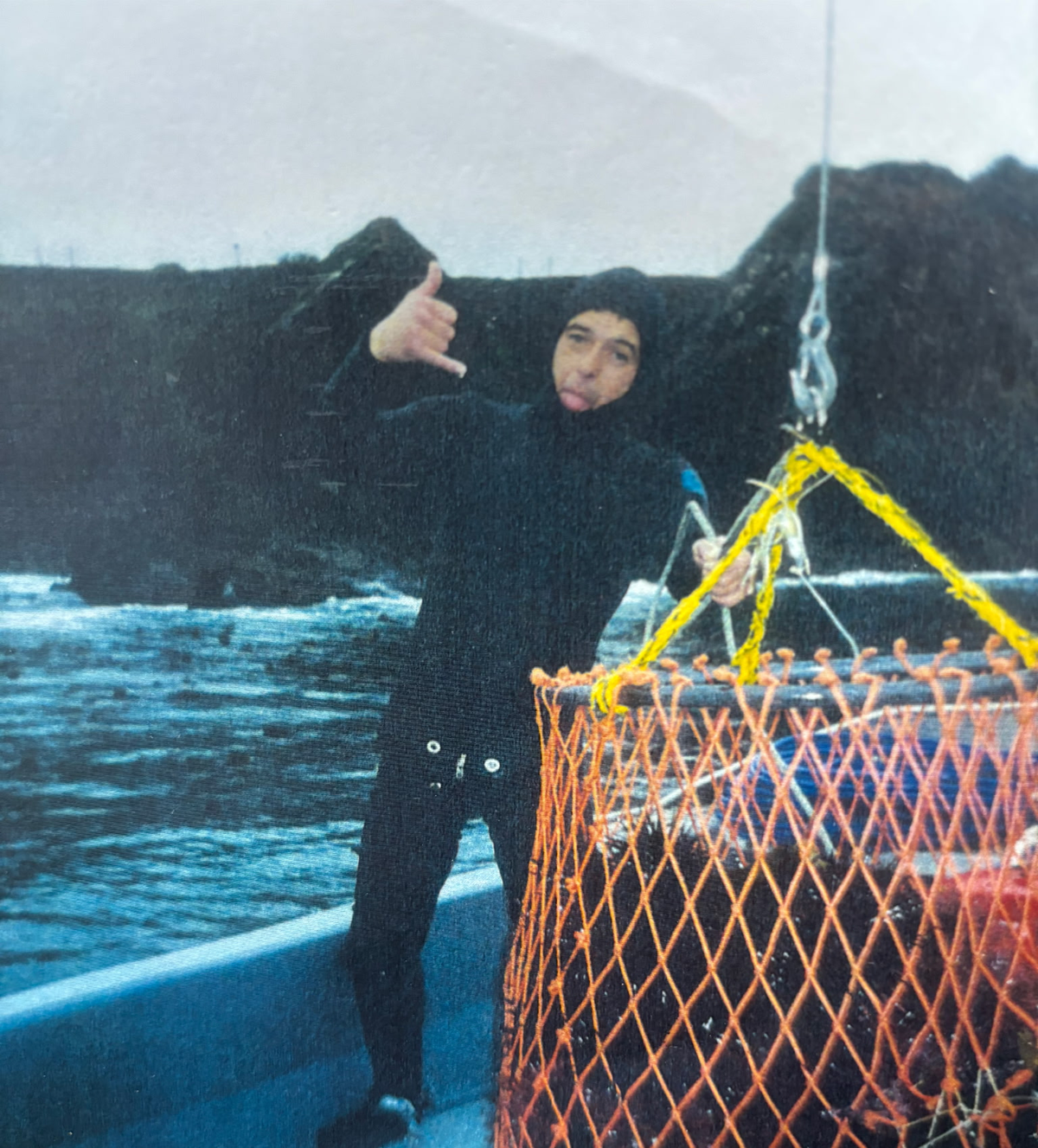
That’s the advice of Joey Lara, a famed urchin diver and surfer from Fort Bragg, who made his living underwater on the Northern California coast for close to 25 years. Lara said surfers need to be aware of their surroundings and listen to their intuition.
At the end of the day, he says “you can’t really protect yourself,” but, as his story and the stories from other shark encounters show, there are steps you can take to increase your chances of survival.
MendoLocal.News tracked down Lara after James Eastman, 39, a Fort Bragg high school teacher at Mendocino High School, sustained injuries from a bite to his legs while surfing in Big River in early March. Eastman told ABC News he fought back by hitting the shark on the nose.
Other survivors, like Tommy Civik, 26, who was attacked while surfing at the mouth of the Gualala River in early January, escaped by swimming for shore as fast as he could. “I didn’t know where the shark was, so I just focused on getting away. After a minute I realized that if the shark [had] wanted to bite me again, it would’ve,” Civik told the Los Angeles Times.
In contrast, David Alexander, superintendent at Bellevue Union School District in southern Santa Rosa, survived by doing nothing. Alexander was returning from a day of fishing in Shelter Cove six years ago when a white shark bit down on the front of his kayak, throwing him into the water.
“I was probably about 4 feet from the shark,” he told the Redheaded Blackbelt. “I could see both eyes — one side more than the other … I could see his teeth and his gums. You see those rows of teeth … that’s something else.” Alexander tried to mentally prepare himself to be torn apart, but the shark let go of the kayak and swam away.
For Lara, who lives in Fort Bragg and knows many of the surfers here, Eastman’s attack evoked concern — and also brought up an old memory.
It was 1991. Lara had a flourishing urchin-harvesting business based in Fort Bragg. The desirable red urchins carpeted the seafloor from San Diego to Crescent City. It was spring. Lara was diving in the thick kelp of Shelter Cove. He remembers that the water was very murky, which was typical for that spot.
“That place has never got any visibility,” Lara said. “If you get 10 feet of visibility in Shelter Cove, you’re pretty lucky.”
But Lara had figured out how to work in those conditions. He had filled up his urchin bag when he saw something out of the corner of his eye.
“It was really super slow, barely moving, and I look over at it. God dang, it’s a tail. Yeah, about 7 feet from tip to tip.”
The tail belonged to a shark that Lara estimated was about 10 feet long.
“I backed myself up against the reef, got my bag in front of me. I didn’t know what the hell I was going to do. So I started pulling all the urchins out of the bag. I got inside it, cut a whole bunch of kelp, wrapped it around me, and went to the surface and got on the boat.”
Lara said his boat tender never saw the shark, and he didn’t think much about it until he returned to the spot six months later with his friend Dave Abernathy.
They dove for hours in calm water that sparkled with sunlight.
“We’re getting ready to load up our last couple bags and go home,” Lara recalled.
He watched Abernathy moving between two reefs. Then he surfaced and raised his arm — as if to say, “I’m done.”
“A 16-footer came up right behind him and grabbed his dive hose right off the bat.”
Lara watched as the shark spun Abernathy around — but the hose was too short.
“It’s trying to flip around to get him.” But Abernathy was flipping with the shark.
Lara had turned the boat around and cut the engine. He froze as man and shark flip-flopped on the surface of the water.
“He’s so close that he’s bouncing up the shark’s belly.”
“Don’t just stand there, do something!” Dave yelled.
Lara got the engine started and was able to position the boat between man and shark just as the dive hose broke. They were able to yank Abernathy on board, but in doing so, the dive hose got wrapped around the propeller.
The boat was dead in the water, and the shark was circling.
Lara knew he had to clear the propeller, so with his buddies keeping an eye on the shark, he jumped back in and quickly cut the hose when the shark appeared to be furthest from the boat. He jumped in and quicklynclimbed out three times before the propeller was clear.
“I mean, this is when my whole philosophy about the white shark changed. I had swum around thousands of sharks. I had punched a couple of sharks in their faces,” he recalled. But he never felt like he was being intentionally hunted. Now he did.
“This shark, it knew that we weren’t seals,” Lara said.
His conclusion: some sharks may have figured out that humans are food too.
“Humans have entered the food chain for predators, and there’s no distinction,” Lara said. “I’ve got a feeling that that’s happening.”
John Ugoretz, a program manager at the California Department of Fish and Wildlife, puts the danger more mildly.
“I like to tell people the ocean is a wilderness, just like any other, and just as you might encounter a bear if you go into the forest or a mountain lion if you go walking in the hills, you might encounter a shark if you go into the ocean.”
Ugoretz said the data does not indicate sharks are intentionally hunting people.
“We’ve only seen 234 shark incidents in California since 1950,” he said. “And the number of people going into the ocean continues to increase, and you don’t see an associated increase in bites that would show that more people equals more bites or more sharks equals more bites.”
For scientists, the cluster of three shark attacks documented on the California coast this year does not raise alarm. Events can cluster together randomly and still reflect an overall random pattern.
For Lara, who continues to surf into his sixth decade, enjoying the sport he loves is a calculated risk.
“You’re diving into their ocean,” he says.
Respecting the wildlife that lives there, he adds, is the best way to stay alive.