
Mendocino Coast Clinics Buys the Mendocino Coast Pharmacy for Undisclosed Amount
MCC is expanding into a new business while reporting a significant deficit. Profitability has declined steadily from 2020, when the clinic reported a surplus of $1.1 million. Last year, the clinic reported a loss of $1.3 million.
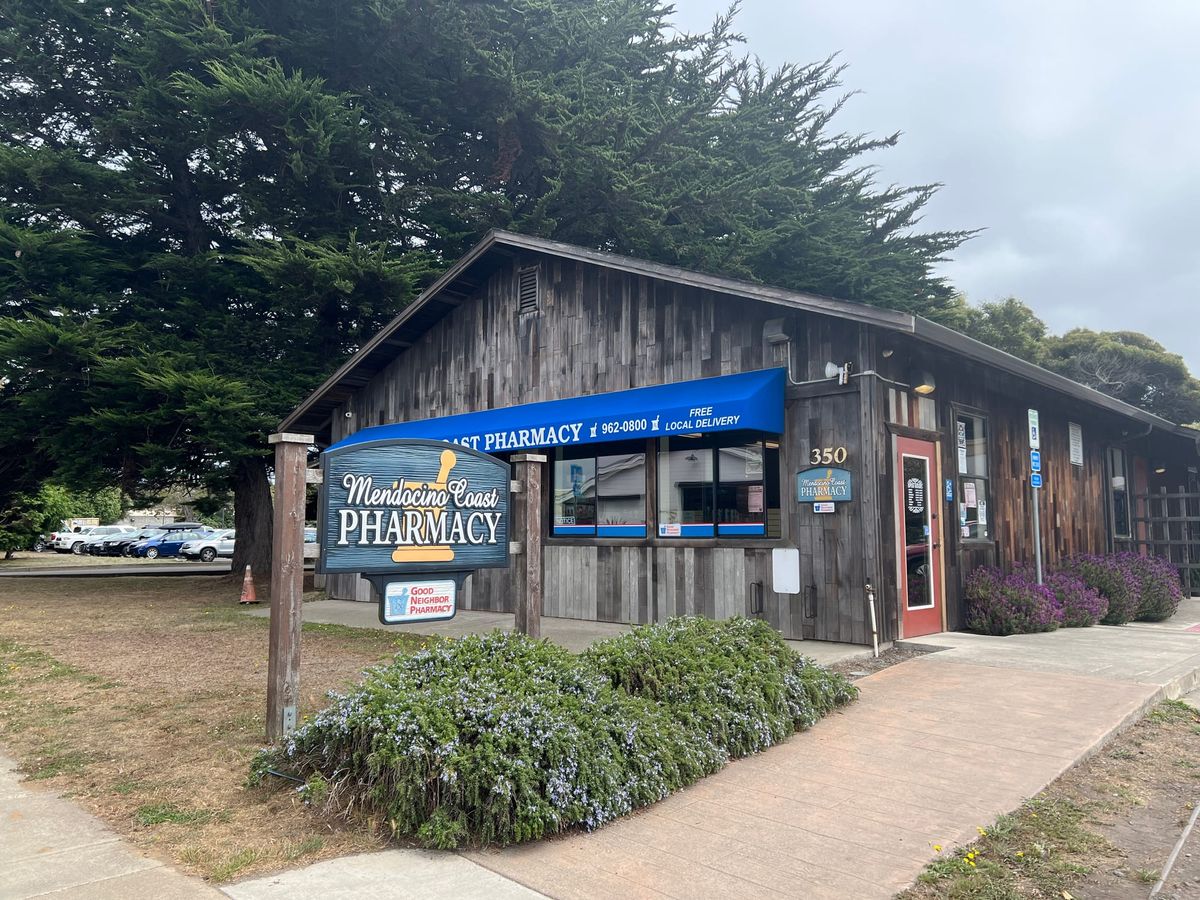
Mendocino Coast Clinics (MCC) has bought the Mendocino Coast Pharmacy, adding a retail drugstore to the health center's operations for the first time. Executive Director Lucresha Renteria declined to disclose the purchase price.
The purchase closed in early August, capping a process Renteria said began about three years ago. In an Aug. 10 interview, Renteria said the pharmacy's longtime owners Gary and Kelly Brodetsky approached the clinic as they looked toward retirement. Mendocino Coast Clinics, a federally qualified health center, has absorbed retiring providers' practices before, Renteria said, but this is the first time it has expanded outside direct medical, dental, and behavioral health care.
The Brodetskys could not be reached for comment. MendoLocal.News sought them through the pharmacy and asked Renteria to provide contact information; she said she would but had not done so as of publication.
Renteria said the clinic is financing the purchase over five years. Under the arrangement, she said, 90% of what she described as the pharmacy's monthly profit will go to the sellers until the purchase is paid off, with the remaining 10% going to the clinic. She said the deal does not draw on or put at risk the federal grant funding that supports the rest of MCC, and that no jobs would be cut.
The clinic employed about 125 people before the purchase and picked up roughly a dozen more with the pharmacy. Its two pharmacists, technicians, and clerical staff are staying on, Renteria said, and hours will not change to start, though she said she has heard requests for evening and Saturday service.
Asked what the clinic paid, Renteria said she preferred not to give a figure, and as a private 501(c)(3) nonprofit, Mendocino Coast Clinics is not legally required to disclose the purchase price. Renteria did say the price was based on a valuation by an independent certified public accountant who reviewed three years of the pharmacy's financial statements and audits, but she did not identify the accountant.
The pharmacy operates at 350 Cypress St., a building the Mendocino County assessor's roll lists as owned by Parents and Friends, Inc., a Fort Bragg nonprofit. MendoLocal.News asked MCC whether the acquisition included the building or only the pharmacy business, and, if MCC is leasing the property, what it will pay in rent. MCC had not responded to those questions as of publication.
“We see this as a huge opportunity for MCC and the community,” said Jesse Martin, CEO of Parents and Friends. “Our understanding is that the acquisition will help MCC become more financially stable while also allowing it to provide more comprehensive services to our community.”
Renteria framed the purchase as a way to protect drug access on a coast that lost a pharmacy when Rite Aid closed, dropping Fort Bragg from four pharmacies to three and pushing many customers onto Safeway. She said owning a pharmacy also lets the clinic expand a discount-drug program it already ran through the Mendocino Coast Pharmacy under the federal 340B program, which allows qualifying health centers to buy medications at reduced cost. Renteria said that program helps uninsured patients — a group she expects to grow as changes to Medi-Cal and Affordable Care Act subsidies take effect — fill prescriptions for a fraction of the retail price.
The clinic's own finances form part of the backdrop of the deal. MCC is expanding into a new business while reporting a significant deficit. Based on revenue and expenses included in Mendocino Coast Clinics' Form 990s for fiscal years 2021 through 2024, obtained through ProPublica, the clinic reported a surplus of about $842,000 in fiscal year 2022, roughly broke even in 2023, and then reported deficits of about $12,000 in 2024 and about $1.31 million in 2025.
Renteria said the purchase does not use or risk the clinic’s other funding and that the pharmacy's revenue would be tracked separately. She did not respond to questions about the Form 990s, which MendoLocal.News originally had difficulty locating. In the Aug. 10 interview, Renteria characterized the pharmacy acquisition as a way to diversify MCC’s revenue over the long term.
The acquisition comes as voters are being asked to consider a statewide proposition that directly addresses how community health centers spend their money. Proposition 44, on the November ballot, would require private nonprofit safety-net clinics to spend at least 90% of their total revenue on health care services, capping other spending — the measure's official title calls it "program services" — at 10%.
According to the Legislative Analyst's Office, the state attorney general would define which costs count as health care, and clinics that fall short would pay a penalty equal to the shortfall, with five years to come into compliance and recover those payments before the state keeps the money. The measure applies to roughly 2,000 nonprofit clinics statewide, which the analyst's office says currently report spending about 80% of revenue on care on average. County-run clinics are exempt.
Renteria opposes the measure. She said its 90% definition would exclude costs such as executive compensation — including her own $295,000 salary — as well as mortgage and lease payments and referral coordinators, though the measure leaves those definitions to the attorney general. She said Mendocino Coast Clinics spent about 73% of revenue on qualifying care in 2023, roughly $3 million short of the threshold on a budget of about $15 million to $16 million, and that falling short would have meant a penalty of about $2.8 million — a hit she said the clinic could not absorb for more than a year. Renteria said she believes the measure would push 91% of California's health centers into deficit spending, and that the California Democratic Party, the California Primary Care Association, and the California Hospital Association oppose it.
Disclosure: Elise Cox, editor of MendoLocal.News, is a patient at Mendocino Coast Clinics.