
Jackson State Forest: We’re Looking at the Wrong Economy
For generations, Mendocino County looked at a redwood forest and saw an economy. We should still see one. But in 2026, we ought to be asking whether the greatest economic value comes from removing trees or leaving them.
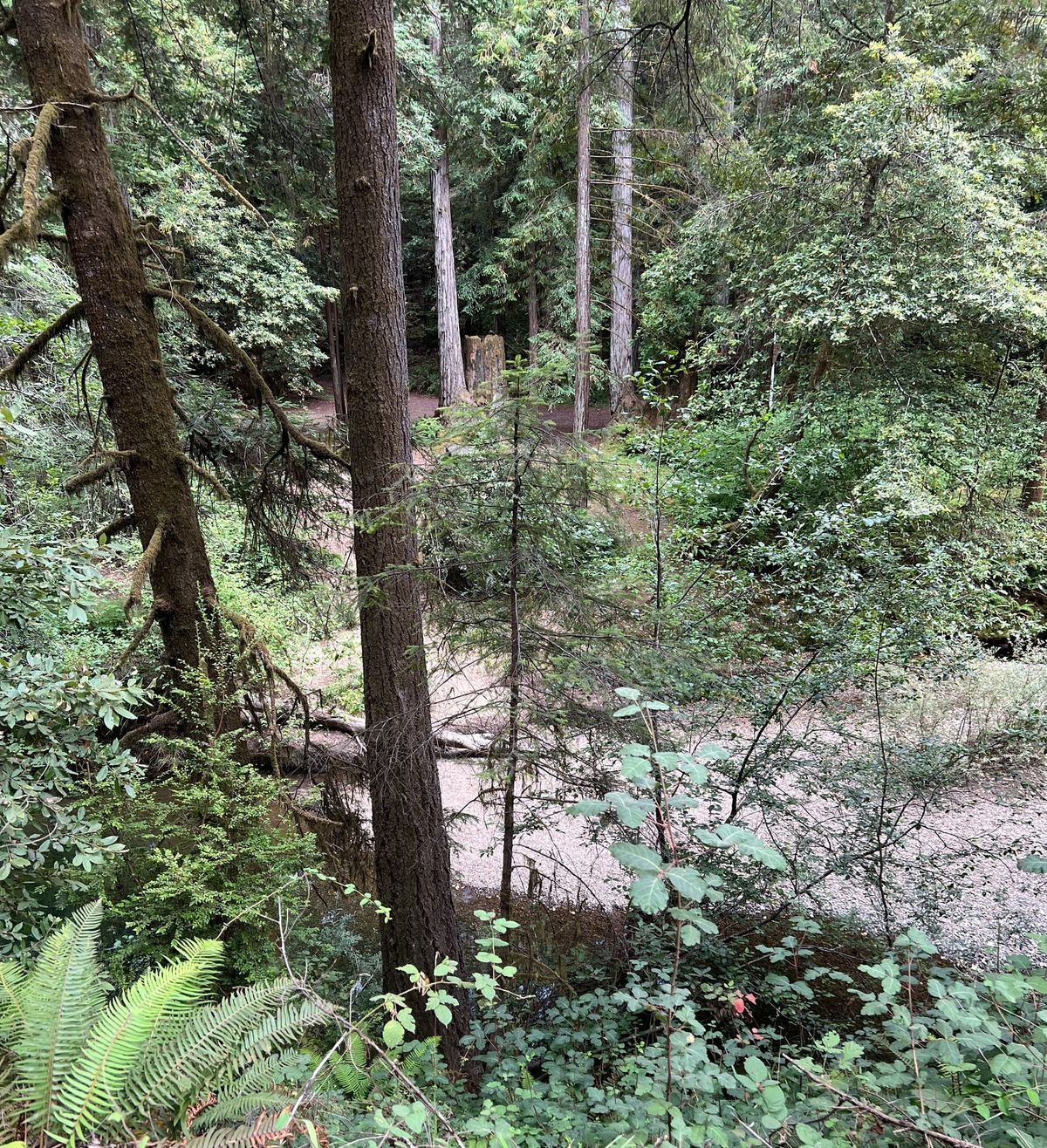
By Scott Roat
For generations, Mendocino County looked at a redwood forest and understandably saw an economy. We should still see one. But in 2026, we ought to be asking whether the greatest economic value of nearly 50,000 acres of publicly owned redwood forest still comes mainly from the trees we remove from it.
I don’t think it does.
I’ve lived on the Mendocino Coast for more than two decades, worked here as a real estate broker for about the same period, and spent 12 years as a volunteer firefighter.
I’m not anti-logging. Timber built much of this county, still provides good jobs, and active forest management will remain important.
But Jackson Demonstration State Forest is a much bigger opportunity than we’ve allowed ourselves to imagine.
On Friday, Gov. Gavin Newsom vetoed Assemblymember Chris Rogers’ AB 2494, which would have broadened the mission of California’s demonstration forests beyond the existing emphasis on sustained timber production. The bill would have put greater emphasis on forest health, wildfire resilience, watersheds, biodiversity, carbon storage, recreation, research and tribal stewardship, while still allowing timber harvesting for specified purposes.
In his veto message, Newsom argues that demonstration forests need flexibility to remain “living laboratories” where California can develop and test science-based forest management practices as the climate changes.
That is a reasonable concern. But it leaves unanswered the larger question raised by AB 2494.
What do we want this extraordinary public property to demonstrate?
Jackson is the largest of California’s demonstration state forests, nearly 49,000 acres stretching between Willits and Fort Bragg. It sits next to one of the best-known visitor areas on the North Coast. Yet as a recreational and economic asset, we have barely begun to imagine what it could become.
Imagine a truly first-rate trail and access system. Hiking, mountain biking, horseback riding, birding, mushroom foraging, forest education, research, tribal stewardship, and simply giving people a reason to spend a few days in a redwood forest that belongs to all of us.
Those visitors need a place to stay. They eat in local restaurants. They shop. They buy gas. They hire guides. They return.
That is an economy too.
And unlike a timber harvest, which produces much of its economic value when the trees are cut, recreation can produce economic activity year after year while the forest itself continues to mature.
This is also not some new idea dreamed up in Sacramento.
In 2021, the Mendocino County Board of Supervisors unanimously called on the state to reconsider Jackson’s management in light of climate science. More importantly, it specifically asked that the forest be managed in a way that enhanced its “scientific, recreational and economic opportunities.”
The resolution passed 5-0.
Five years later, the current Board again unanimously supported a broader vision for Jackson by backing AB 2494. The Legislature passed the bill by substantial margins in both houses before Newsom vetoed it.
That tells me the conversation isn’t over.
Opponents have raised fair questions. How will roads and forest management be funded if timber revenue declines? How will research continue? Can we manage aggressively enough for fire resilience without creating more delay and litigation?Those are real questions.
But they should be part of deciding how to make a broader vision for Jackson work, rather than reasons not to have one.
Mendocino County can support a timber industry and still ask whether one extraordinary, publicly owned redwood forest should do more than maximize timber production.
In fact, that is what a demonstration forest ought to demonstrate.
California talks constantly about rural economic development, wildfire resilience, carbon storage, outdoor access and adapting to a changing climate. Jackson is a place where all of those goals can meet.The governor’s veto settles the fate of AB 2494.
It does not settle the future of Jackson.
The forest has already given Mendocino County generations of timber. The next step is not to stop using Jackson.It is to recognize how many more ways we can use it, and how much more valuable it may become if we do.
Scott Roat is a Mendocino resident, real estate broker and former volunteer firefighter.