
Fort Bragg Approves Emergency Repair of Water Line Broken at the Noyo River Crossing

The council greenlights horizontal drilling under the Noyo River and agrees to continue discussion of new rules for the coastal trail.
Fort Bragg Approves Emergency Repair of Water Line Broken at the Noyo River Crossing
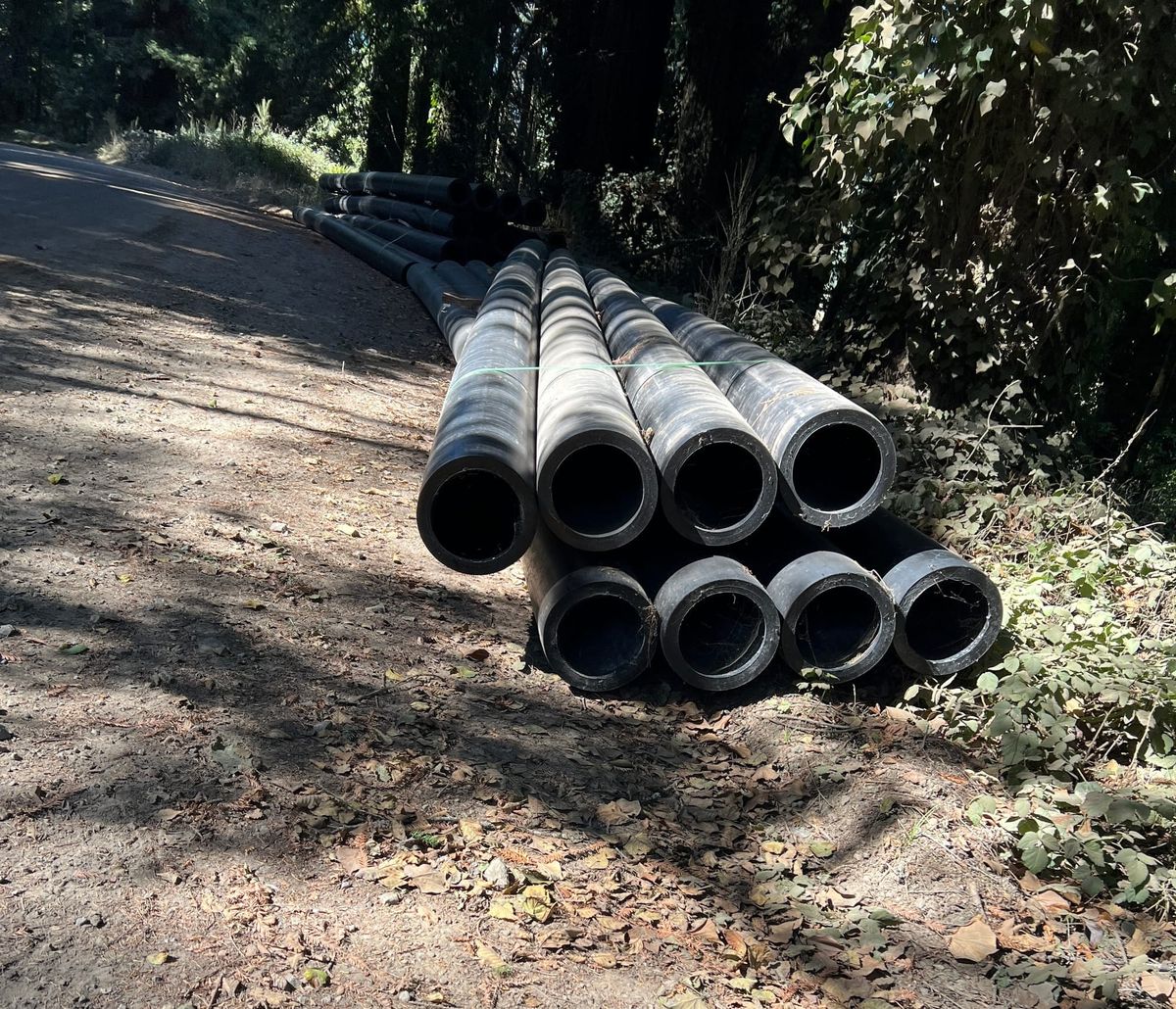
Following the "catastrophic" rupture of one of Fort Bragg's main water lines, the city council has approved a conceptual repair that would install a new line under the Noyo River. (MendoLocal CC BY 4.0)

FORT BRAGG, Calif. — Fort Bragg moved Tuesday to keep water flowing to its treatment plant through the winter, with the City Council approving an emergency plan to replace a raw water line that ruptured at the Noyo River crossing, triggering a call for voluntary conservation.

The council voted 5-0 to adopt a conceptual design for the repair, authorize emergency contracting, and find the project exempt from the California Environmental Quality Act under CEQA Guidelines Section 15269(b), which exempts emergency repairs to essential public-service facilities from environmental review. Council Member Lindy Peters moved the resolution and Mayor Jason Godeke seconded it.

The break hit the city's raw water transmission line — the pipe that carries untreated water to the treatment plant — as it crosses the Noyo River. Engineering technician Kevin McDannold told the council the failed pipe was ductile iron installed in 1987, and that roughly 40 years of brackish water and corrosion had worn it through. He described the break as a "catastrophic failure."

Water is flowing again thanks to a temporary line, but "it is a very temporary bypass and we still need to put in a permanent repair," McDannold said. Staff recommended directional drilling to install a new 10-inch high-density polyethylene pipe under the riverbed, on roughly the same alignment as the failed line — an approach that avoids diverting water from the river. Slip-lining the old pipe was ruled out because crews would have to work through pipe elbows outside the break.

McDannold urged the council not to wait, saying the city is at the edge of the permitting window for in-river work and that missing it would likely push the project into the next work season, putting the water supply at risk over the winter.

No one spoke during public comment, and council questions were largely technical. A council member asked whether the work would disrupt the working harbor; McDannold, who presented, said no — the project is upriver, and directional drilling avoids any temporary dam or water diversion.

In other business, the council took up — but did not decide — new rules for the coastal trail, continuing the public hearing 5-0 to its Oct. 26 meeting. A revised parks ordinance presented by planning consultant Marie Jones, drawn from a Sept. 11 Community Development Committee meeting, would set a 15 mph trail speed limit for all users, allow Class 1 and Class 2 e-bikes while prohibiting faster Class 3 models, add signage, and bar drones and gliders from all city parks. Nine speakers addressed the item, most of them opposed to banning any class of bike; several argued the trail should stay open to all users, and one said the staff report conflates legal Class 3 e-bikes with faster, unregulated "e-motos" that are illegal in California.

The council leaned toward a speed limit and signage over a class ban. Peters questioned whether the original Coastal Conservancy easement already restricted motorized use and noted the city's authority ends at the trestle, where State Parks takes over; Council Member Tess Albin-Smith said naming specific e-bike classes would quickly date the law; and Council Member Scott Hockett called banning Class 3 bikes "an enforcement nightmare," favoring a posted limit instead. Police Chief Eric Swift said the department gets few complaints about e-bikes or scooters. Jones said she would redraft the ordinance — dropping the Class 3 ban and allowing drones by permit — for the council's next meeting.

The council adjourned at 7:29 p.m.