
Code enforcement down to two working field investigators, division tells supervisors
County code enforcement said 2 out of every 5 reports of code violations are not getting addressed due to staffing, and reports of seniors getting forced from their homes due to code violations proved unfounded.
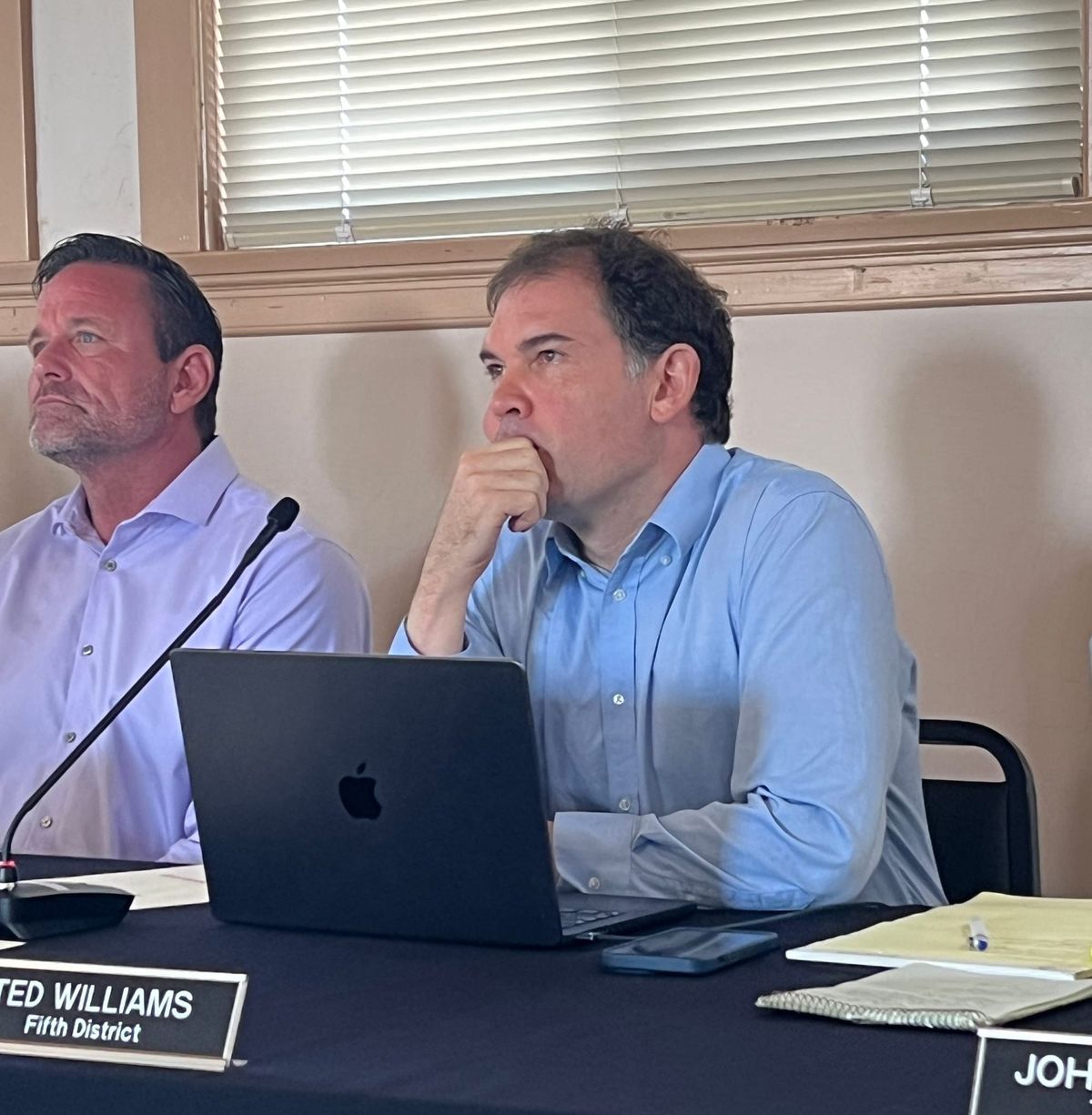
Mendocino County's code enforcement division told the Board of Supervisors on Tuesday that it has two field investigators available to answer complaints across the entire county, down from eight in 2021.
Each investigator now carries about 94 cases, roughly double the 45 the division considers workable, Gretchen McLaughlin, the county's code enforcement manager, told the board. Staffing reductions have "materially affected the division's capacity to process and resolve individual cases," she said.
The division did not ask the board for more staff. Instead, it asked supervisors to keep its enforcement priorities largely as they are and to let it keep triaging complaints it cannot reach.
The board agreed on a 4-1 vote, with Supervisor John Haschak making the motion and Maureen Mulheren dissenting.

The staffing picture
The division had 12 employees in 2021, including eight field investigators who issued their own enforcement notices. It dropped to 11.5 in 2022, 8.5 in 2023 and seven today, according to the report.
On paper, three of those seven are field investigators. One cannot currently do field inspections, and one of the division's two supervisors is unavailable to perform duties, the report said. Because of limited staffing, the supervisors also issue enforcement notices themselves.
McLaughlin is also stretched. She is serving as both code enforcement manager and acting assistant director of Planning and Building Services, which is between permanent directors.
One new code enforcement officer is on the way, funded by a Proposition 64 grant to the Sheriff's Office that the board accepted on Sept. 1. But that position is dedicated to code enforcement work for the Sheriff's Office under the grant and "will not be eligible to provide support" to the division's existing caseload, the report said.
A slide in the presentation said an ideal staff would be about 10 positions, with six or seven officers or investigators. Getting there would cost the general fund roughly $250,000. That figure was not part of the division's formal recommendations, and the board took no action on it.
A decrease in complaints and a rise in enforcement
The report compared the division's workload in the 12 months ending September 2026 with figures it gave the board in December 2023.
- Complaints received fell about 10%, from 698 to 629, after excluding a 2023 enforcement sweep for illegal cannabis in Redwood Valley. McLaughlin said the drop may be tied to the board's 2025 rule requiring complainants to give their names.
- Enforcement cases, opened when property owners fail to comply voluntarily, rose about 53%, from 49 to 75.
- Closures fell about 26%, from 830 to 612, after excluding 220 anonymous complaints closed without investigation.
- Active inventory, including recorded liens, fell about 28%, from 896 to 646. McLaughlin said most of that progress came in 2024 and 2025 and has since slowed with staffing.
McLaughlin described the shift as a move to a lower-volume but more enforcement-intensive workload, occurring alongside a substantial reduction in staff.
The complaints most likely to go unanswered fall outside the top five priorities, McLaughlin said. Those include signs, lighting, use-permit violations, older unpermitted structures, and violations requiring a coastal development permit and make up about 41.5% of the workload. "Those are the ones that we are not getting to more times than not," she said.
When Williams asked to see examples of complaints the division could not address, staff said the issue is capacity, not refusals: the division had eight field investigators in 2021 and now has two working in the field.
What the division asked for
The division made three requests, all of which the board approved.
- Keep the priority list, with one addition. Complaints are answered in this order: life and safety, environmental degradation, active unpermitted construction, nuisances, and illegal cannabis cultivation. The division asked to add Sheriff's Office referrals of illegal cannabis sites that threaten public health or cause egregious environmental harm to the top tier, to match the Prop 64 grant. McLaughlin called it "really a formality."
- Keep discretion over anonymous complaints. In September 2025, after a wave of more than 250 anonymous complaints believed to come from one source, the board required complainants to identify themselves, with confidentiality protected where the law allows. The division asked to keep deciding whether and how to pursue anonymous complaints.
- Keep discretion over non-priority complaints. The division asked to keep using cost-effective tools, such as courtesy letters that explain the violation and how to fix it, instead of site inspections.
Taken together, the requests ask the board to formally accept that the division will triage rather than answer every complaint.
The board's discussion
Mulheren voted no because she wanted neighborhood nuisances, such as accumulated trash at homes affected by drug use, moved into the top tier with life safety. "If we're going to include illegal cannabis in priority one, also include nuisances," she said.
Supervisor Madeline Cline said the issue Mulheren raised was one of process and staffing, not ranking. Life-safety complaints make up only about 5.5% of the workload, she noted. "If there's a legitimate complaint, regardless of 1 2 3 5 whatever, it still needs to be taken care of," she said.
Supervisors Ted Williams and John Haschak also pushed back on claims, aired at a recent Fort Bragg meeting, that code enforcement is forcing seniors from their homes. McLaughlin said the division has posted a structure as substandard about five times in eight years. "We don't have the authority to evict people from their homes," she said.
She said many owners cannot afford repairs, so the division often records liens rather than issuing fines when there is no immediate safety threat. About 343 cases have received liens.
Interim CEO Sara Pierce said a broader discussion of how complaints are handled, and what resources departments need, will return in December or January with Environmental Health, County Counsel, Planning and Building and the executive office. She said she wants leadership changes in those offices, including the hiring of a Planning and Building director, to settle first.