
Coast Hospital District Moves to Approve $21 Million in Debt Financing — Without a Public Vote
The Mendocino Coast Health Care District board votes Thursday to borrow up to $21 million for a state-mandated seismic retrofit, through a mechanism that requires no public vote. One director calls the process rushed.
FORT BRAGG, Calif. — The first item of business when the Mendocino Coast Health Care District board meets Thursday evening is to adopt the policy that governs how the district borrows money. Minutes later, it plans to borrow up to $21 million under it.
The borrowing would pay for the state-mandated seismic retrofit of Mendocino Coast District Hospital, which the district owns and leases to Adventist Health Mendocino Coast. It would come through a certificate of participation — a lease-based financing that, unlike the general obligation bonds and parcel tax that district voters have approved before, requires no public vote.
A 2017 state law requires local agencies to adopt a debt-management policy before issuing debt; the board will adopt its policy as part of approving the new indebtedness and putting the borrowing on a fast track. Thursday's vote comes just six weeks after the district declared its intent to borrow on Oct. 8; the district expects to close the deal by Dec. 10.
The certificate would be issued by the CSDA Finance Corporation and purchased by Tri Counties Bank in a private placement, with a par amount of $19 million at a fixed interest rate of 4.85%. The resolution before the board authorizes up to $21 million and a rate as high as 6%.
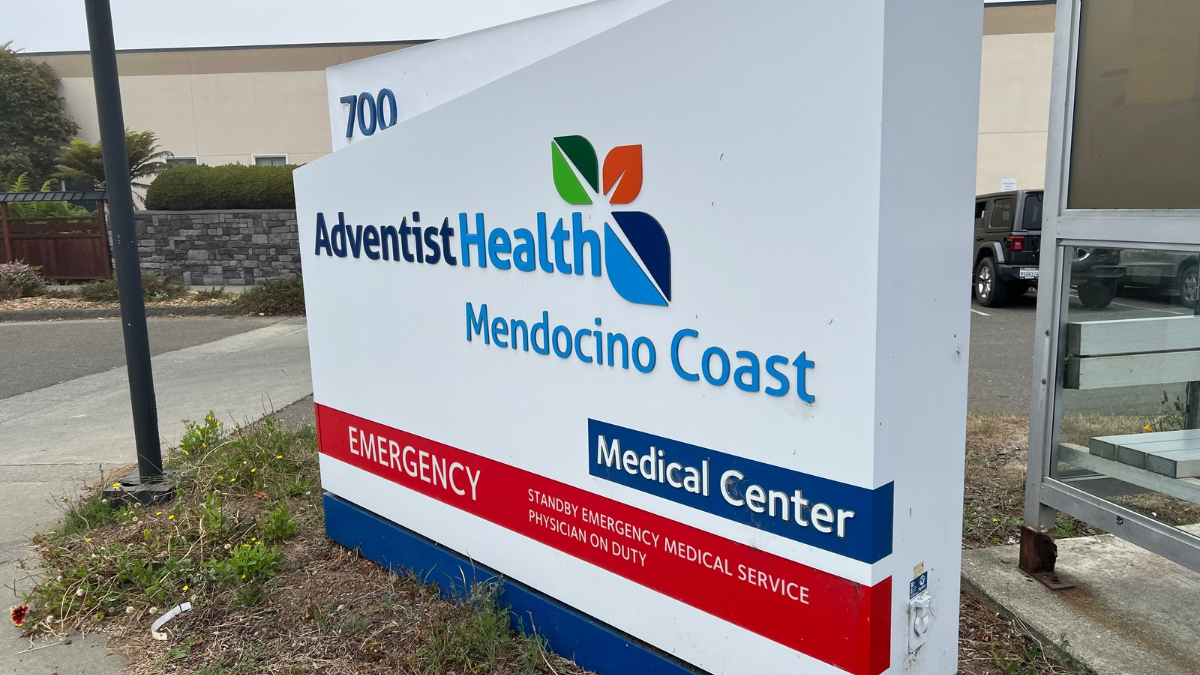
The board meets at 5 p.m. Thursday at the Adventist Health Mendocino Coast hospital, 700 River Drive in Fort Bragg. The Redwoods Room is the conference room off the main entrance, not the emergency entrance. A public hearing on the financing, required under federal tax law, is set for 5:05 p.m. The meeting can also be joined by Zoom through the link in the agenda, and the district takes public comment by email at info@mendocinochcd.gov or by phone at 707-962-3175.
Not everyone on the board is happy with how the financing proposal has been handled. Member-at-Large Jan McGourty says the board is being handed a done deal without any meaningful opportunity for public input.
"We aren't being given choices," McGourty said. "We are being presented with this and it's being rushed through without public understanding. The way it's written, it isn't comprehensible. The dates are already on the paper. It's just waiting for signatures."
The record shows the debt-management policy up for adoption Thursday already carries "November 19, 2026" as its printed adoption date, above blank signature lines for the chair and secretary. The public-hearing notice was signed and dated by Board Chair Paul Garza Jr. on Nov. 6. And on Nov. 10 — nine days before the vote — the district signed the lender's term sheet; the 4.85% rate is locked through Dec. 11.
You Read Our Stories. Please Help Fund Our Newsroom.
MendoLocal.News was created by locals for locals. We pay attention and dig deeper and we distribute for free. With your support, we can keep going.
In an Oct. 10 press release, the district said it would "review lender proposals and a financing recommendation before deciding whether to proceed" at Thursday's meeting.
A report produced by Kathy Wylie, the district's contract administrator, and Wayne Allen, the contract CFO, frames the financing as nothing new, saying it "is not a new or different approach" but carries out a two-phase plan of finance the report says the board previously approved, dated Dec. 11, 2025. The board did not meet that December, however: McGourty said it held no meeting in December 2025, and the district's posted records show its last 2025 meeting was Nov. 13.
McGourty says her objection isn't to borrowing itself. Financing part of the retrofit would make sense, she says, and she wants the board to weigh that option. "That wasn't presented to us," she said. Wylie and Allen's report on the financing notes the district "has the discretion to contribute more cash," which "would further reduce the Certificate par amount and lower annual debt service" — but says "doing so is not the current intention of the [contract] CFO and the financing team."
The district already holds roughly $18 million in reserves — close to the project's full cost. However, Wylie, Allen, and the district's bond advisor favor keeping the large majority of the money invested, to preserve liquidity for the borrowing still ahead — the long-term loan that will refinance this one and a second phase of hospital capital improvements the district hopes to pursue.
The debt policy up for adoption would also concentrate control of the district's bond-disclosure apparatus under Wylie, who would appoint the disclosure working group, select the disclosure coordinator — a role she may fill herself — and hire the disclosure consultant. That machinery doesn’t apply to this certificate — a private placement with no offering document — but to the district’s other public bonds and any future public borrowing.
Board Vice Chair Mikael Blaisdell, responding to written questions, said the 5-member board had weighed its options and determined this to be the desired course. "The board was fully aware of all options, and the recorded minutes of previous meetings document this fact," he said. McGourty, he noted, could have raised the option of borrowing less herself and did not — "entirely in her purview."
It was unclear from Blaisdell's email when McGourty would have had an opportunity to raise additional options, given that the board only agreed to explore potential financing options at its last meeting, in October, and has not met since. The board has met only seven times in the last year — an infrequency McGourty finds troubling.
Blaisdell, who was appointed to his seat in an uncontested election, called the borrowing prudent and necessary. The district is preserving its cash reserves "in case of future emergencies," he said. He noted the retrofit is a state mandate — miss the 2030 deadline, he said, and the hospital would have to close. The district has, in fact, applied to push that deadline to as late as 2033, under a 2024 law for district and rural hospitals. A decision on their application has not been posted.
Repayment would come from Adventist Health's lease payments, Blaisdell said, and "the public will not be burdened with any new taxes."
It's true no new tax will be levied immediately. But the district is redirecting taxes it already collects to pay for new debt. The county would pay the lender out of the district's property-tax money first, before releasing any to the district.
The district has also claimed a low net cost. In the Oct. 10 press release, it said that if its retained cash earns about 4% while the borrowing costs about 5%, "the net carry cost to the taxpayers for the retrofit improvement is roughly 1%."
The district's financial records show a wider gap. The certificate carries an all-in interest cost of 5.136%, while the district's reserves earned about 3% to 4% over recent months — putting the real spread closer to 1.1% to 2.1%. The 1% estimate also leaves out the $300,000 cost of issuing the debt. The two figures are not fixed in the same way, either: the 4.85% borrowing rate is locked for the life of the bridge, while the return the district earns on its reserves varies with the market and could fall, making the decision to borrow even more costly.
One thing the roughly 200-page packet does not contain is a numeric affordability cap — a limit on how much debt the district can take on, tied to its revenues or to the value of property within its boundaries. The debt management policy, known as Policy 22, says only that "debt capacity and affordability" should be "adequately considered." State law does not require a numeric cap, and other local agencies' debt policies can be similarly qualitative. But without one, the size of any single borrowing is left to the board's judgment.
Asked about the absence of a cap, Garza, the board chairman, said it was there, but could not point to one. After conferring with Wylie, he said it was in the "staff report". The report, by Wylie and Allen, did contain a ceiling — the $21 million maximum and 6% maximum interest rate the resolution authorizes for this deal — but it did not contain an affordability cap.
Garza declined to provide the report to a MendoLocal.News reporter. "I'm not going to send it to you," he said. "I have a meeting at the high school I'm going to in 35 minutes." He offered to discuss the financing in detail on the day of the meeting. The reports are posted on the district's website as part of the meeting packet.
The $19 million certificate is only the first of two planned borrowings. Wylie and Allen's report describes the certificate as a short-term "bridge" — interest-only until 2032, followed by a balloon payment of about $18.4 million when the loan matures in August 2033.
The district intends to retire that balloon by refinancing it through a second, long-term loan, most likely one subsidized or insured through the state's Cal-Mortgage program, after the seismic work is complete. The $6.09 million in interest on the current financing covers only the bridge; the second loan will carry its own interest and issuance costs, which have not been disclosed.
Over the bridge’s life, total debt service comes to $25.1 million — about a quarter more than the estimated cost of the seismic repair, and roughly a third more than the district is borrowing.
By choosing a private placement over a bond, the board avoided involving taxpayers in the decision — but it didn't avoid additional costs. Asked how a private placement differs from a bond in his mind, Blaisdell said the board believes voters are “currently unlikely to support a bond that would be paid for from increased property taxes.” “We are not asking for that,” he said. However, making the balloon payment could require approval of additional taxes.
The district’s dedicated health-care tax is set to run out before the loan comes due. Measure C, a voter-approved $144-per-parcel tax that raises about $1.5 million a year for local health care, expires in 2030 — three years before the roughly $18.4 million balloon payment falls due in 2033.
Today, three revenue streams cover the district’s costs: the Measure C parcel tax, its ad valorem property tax, and the Adventist rent. By the time the balloon comes due, two of the three would be gone or spoken for — the parcel tax expired in 2030, the ad valorem tax flowing first to the lender — leaving the district leaning mainly on the $1.75 million a year in rent.
You Read Our Stories. Please Help Fund Our Newsroom.
MendoLocal.News was created by locals for locals. We pay attention and dig deeper and we distribute for free. With your support, we can keep going.