
Willits Unified Absorbs Credit Downgrade as Reserves Fall Below Mandated Level
Trustees approves $5 million bond sale while looking to cut $600,000.
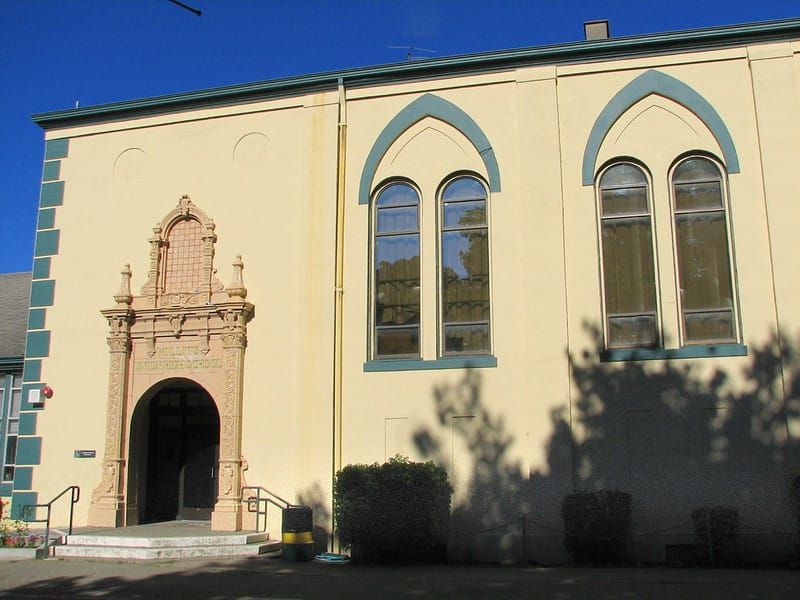
WILLITS, Calif. — Willits Unified School District's governing board learned Wednesday night that the district's finances are now formally out of compliance with the state's minimum reserve requirement. The news was followed by a unanimous vote to sell up to $5 million in general obligation bonds despite a fresh downgrade to the district's credit rating.
The board met at 4 p.m. with five trustees present: President Jeanne King, David Lilker, Paula Nunez, April Lamprich, and Jennifer Sookne, who arrived a few minutes late. "This is just really difficult," Trustee Paula Nunez said, after listening to the district's adviser describe the assumptions behind the bond offering. "It's difficult to trust that things will go the way that they go."
The district's reserve for economic uncertainties came in at 2.38% of its budget, below the 3% floor the state sets for a district Willits' size.
Amanda Laskovics, president of the Willits Teachers Association (WTA), told the board she read the "ugly" 109-page unaudited actuals report twice over the weekend. "We've crossed an official line and we have to deal with that in a very serious way," she said, noting the adopted budget contemplates $600,000 in cuts.
Laskovics said the WTA is interested in participating in the budget advisory committee and that some potential areas to cut included matching grants, outside consultants, and professional development. She noted that the committee is set to meet in September, October, and November to prepare a plan due in December.
One area that came under special scrutiny was the district's solar panels. Trustee Lamprich pointed to the district's high PG&E bills. "Did you know that the district paid out $135,380.84 to PG&E last month?" she said. "That's $135,380.84. That's a lot of money."
Laskovics asked for information about the health of the panels. "We have solar panels at every site," she said. "But my question is also, do they work? Are they turned on?"
Superintendent John Baker, who says he has an engineering background, said he would look into it. "That's a lot of money for PG&E. And it's not sustainable to us," he said. "When you start to add the water bill and I start to add the garbage bill, that's a lot in a single month that we have to pay out. So there's something there to fix."
The bond vote came at the end of the meeting. Adam S. Bauer, president and CEO of Fieldman, Rolapp & Associates, the district's advisor on the bonds, explained the financing carried a tax target of about $40 per $100,000 of assessed value, with pricing set for Sept. 22. Bauer delivered what he called "some disappointing news. The credit ratings were downgraded by one notch."
He said the district remains investment grade and that an upgrade by 2028 is possible, but he cautioned that the market was turbulent. "Like today was one of the worst days I've seen, and we would have wanted to pull your deal if you were pricing today," he said.
Bauer explained that a good-faith estimate of an interest rate of about 5% was only an estimate and had already changed since the document was created.
Declining financial health was just one issue facing the board. Trustee Nunez pointed to staff turnover, which she said had risen to about 30%. "This is larger than it's been in like eight years," she said. "I'm wondering if this is a trend."
Baker acknowledged the district has been doing a lot of hiring. "The goal is retaining them," he said. "Hopefully they won't be leaving next year," and he also noted that the district will be welcoming the largest class of ninth graders — 169 students — in recent memory.
"We had to add another math teacher," he said. "Because otherwise the numbers, I mean, we'll be off the roof, and we'll be, it'll be like 40 kids in a classroom."
Site reports from principals revealed ambitious efforts to address issues the principals described as unacceptable. Willits High School principal Kenneth Mansfield opened with two figures: 11% of students said they want to come to school every day, and 52% said they have an adult on campus they trust. "That means the other 48% do not have a single adult on campus that they feel like they'd come to and say anything to about their lives," he said. "That's a problem."
Baechtel Grove Middle School principal Shane Topolinski described rebuilding systems that "just kind of fell by the wayside," emphasizing written processes so programs survive staff turnover. Blosser Lane Elementary School principal Margaret Duran set a goal of 80% of students publishing a writing piece each trimester. Brookside Elementary School principal Diane Johnson reported that only about half her students said children treat one another kindly.
The board also looked ahead to the November ballot. Laskovics said Proposition 3, which she described as making permanent a tax on earners above $740,000, currently supplies about 15% of the district's budget and is set to sunset in 2030. "If Prop 3 does not pass, every school district in the state stands to lose significant amounts of money," Laskovics said. "For our school district, we stand to lose more than $3.6 million every year, which is something we cannot afford." She asked the board to place a resolution in support of the proposition on the next agenda, adding that she had already emailed draft language.