
Two Mendocino Soccer Coaches Faced ICE Detention. Then Their Cases Diverged.
Two volunteer soccer coaches from Mendocino County, detained by federal immigration authorities months apart, went before the same federal appeals court in July — but for very different reasons, and to very different ends.
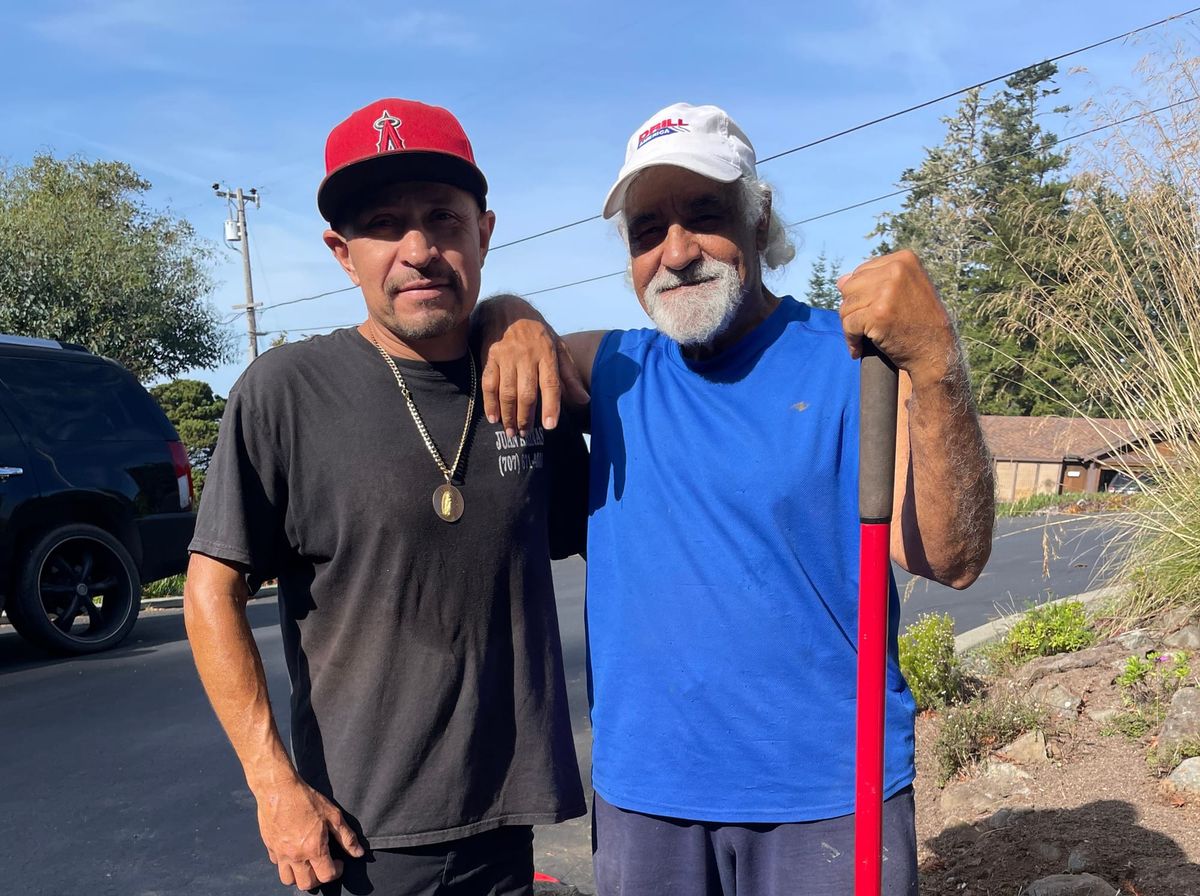
Two volunteer soccer coaches from Mendocino County, detained by federal immigration authorities months apart, went before the same federal appeals court in July — but for very different reasons, and to very different ends.
Juan Jose Cienega-Arenas, 46, of Fort Bragg, entered the United States from Mexico without legal status nearly three decades ago. After being detained in mid-July, he asked the U.S. Court of Appeals for the Ninth Circuit to overturn his deportation order. Before the court could consider his request, Cienega-Arenas was removed to Mexico. His attorney, Kevin Crabtree of San Francisco, declined to comment through the office receptionist.
Otis Ffriend, 39, of Willits, also entered the country without legal status, applied for asylum, and was granted protection from deportation to Jamaica. The federal government is now asking the Ninth Circuit to overturn a ruling that has so far prevented officials from deporting him to a third country, after immigration authorities detained him in May.
The cases shine a light on the legal machinery that determines how people who enter the United States without legal status — and then remain, sometimes for decades, building lives, starting businesses, and raising families — are treated.
Who will bring in the firewood?
Cienega-Arenas came to the United States from Mexico when he was 19, around 1999. He raised three children in Fort Bragg and has made a living doing everything from gardening and groundskeeping to cooking for private parties and community events.
People who started out as his clients now describe themselves as friends. They are willing to go out on a limb to sing his praises.
Norma Rannie, a 103-year-old woman who lives independently in the house she designed herself south of Fort Bragg, says Cienega-Arenas has been an integral part of her support system.
"What am I going to do without him?" she asked in a heartfelt letter to ICE dated July 20, 2026. "Who will bring my firewood and cut my kindling? Who will cut the grass in the meadow and trim the trees? Who will mend the broken fence and fix the porch rail? Who will check on me and stay to visit and cheer me up?"
Tracey Coddington, who employed Cienega-Arenas as a gardener, said working beside him "made my heart sing" and described his gentle, considerate temperament.
Milton and Christine Mendes said he was an exceptionally hard worker and an equally valued friend who went above and beyond to take care of other people — whether they wanted to create a water feature in a garden or live independently in old age.
An early morning arrest
Cienega-Arenas was arrested on July 15 in the Cleone trailer park where he lives with his family. A family member who spoke with MendoLocal.News said federal agents arrived early in the morning and parked behind his truck, blocking him in.
The family member, who asked not to be identified because of concerns about being targeted, said the agents mentioned a DUI when they arrested him.
ICE later said Cienega-Arenas has multiple DUI convictions as well as domestic violence convictions. The agency posted the same information on X through its @EROSanFrancisco account.
Court records reviewed by MendoLocal.News, however, show one DUI conviction, from 2023. Cienega-Arenas admitted having a blood-alcohol concentration of 0.15 or higher. He was sentenced to a nine-month first-offender DUI program and four days in jail, and completed 88 hours of community service at the Mendocino Coast Botanical Gardens.
The family member said this was Cienega-Arenas' only DUI conviction. The court record supports that account; the 2023 conviction qualified him for a first-offender program. The family member and Cienega-Arenas' clients and friends said he has remained sober since the DUI, and that he was open about his conviction and his desire not to drink again.
The family member also confirmed that Cienega-Arenas had a domestic violence case more than 20 years ago. The family member said the incident was related to drinking, that it did not happen again, and that Cienega-Arenas and his wife later reconciled. The family member's account, however, does not explain why Cienega-Arenas was subject to removal. A single DUI conviction does not appear to account for the removal order.
His immigration history may have been more significant.
The family member said Cienega-Arenas left the country about 11 years ago to be with his dying grandfather in Mexico. When he tried to return, he was stopped at the border and sent back. It is not clear from the public record whether that encounter resulted in a formal removal order.
A detainee with protected status
Ffriend arrived in the United States by a very different route, one his family has documented in detail.
A former professional soccer player in Jamaica, Ffriend earned a B-1 visitor visa that allowed him to visit the United States for specific periods of time. Around 2018, he used it to visit his father, who is a U.S. citizen, and later his cousin, Willits attorney Colby Friend. Although the two men are related, they spell their names differently.
Ffriend played well enough locally that a Mendocino College coach recruited him, and a top amateur club offered him a spot, Colby Friend said in an interview with the Redheaded Blackbelt.
As Ffriend's visa neared its expiration, he returned to Jamaica to apply for longer-term status through legal channels. But the application was denied.
Facing what his family described as personal danger in Jamaica, Ffriend crossed the southern border in 2022 and requested asylum. In 2024, a judge granted him withholding of removal under the Convention Against Torture, a protection barring his deportation to Jamaica.
Ffriend settled in Willits, where he lives with a wife who is a U.S. citizen and stepchildren, and where he coaches and referees youth soccer.
His cousin said Ffriend has no criminal record: "not here, not in Jamaica."
The legal machinery
The last step in the deportation process is a petition for review. It usually comes after a case is decided by an immigration court, which is run by the U.S. Department of Justice rather than the independent federal judiciary. After an immigration judge — or the Board of Immigration Appeals — issues a final order of removal, a person can ask a federal appeals court to review that decision.
But Cienega-Arenas' case did not come from an immigration court. His petition for review, docketed July 23, along with a motion to stay his removal, challenges a Department of Homeland Security removal order dated July 13. Immigration officers can issue these orders directly, without a hearing before an immigration judge.
That made the Ninth Circuit Court of Appeals the first court to review Cienega-Arenas' case independently. Under the court’s General Order 6.4, a temporary stay of removal took effect "until further order of the court." No such order followed.
On July 30, government lawyers filed papers opposing his motion to stay. That same day — with the temporary stay still in effect and the motion unresolved — Cienega-Arenas was deported to Mexico. Crabtree's office declined to comment.
A judge demands due process
Ffriend reached the Ninth Circuit on a different path.
In May, U.S. District Judge William Orrick granted him a preliminary injunction blocking the government from deporting him to a third country, St. Kitts. Orrick found that the proposed removal was counter to Ninth Circuit law.
The ruling turned on a distinction between the government's authority to deport Ffriend and the procedures it must follow in doing so. Ffriend was not challenging the underlying order that allowed him to be removed from the United States. Instead, he challenged how the government was attempting to carry out that removal.
His 2024 immigration case had named Jamaica as the country to which he could be sent. The judge in that case had blocked his removal to Jamaica after finding that he was likely to face persecution there.
St. Kitts was not part of the case. Ffriend first learned the government intended to send him there on May 1, after he was taken into custody.
Orrick found the Constitution requires the government to provide a person with notice and an opportunity to argue that he would face danger in a new country before deporting him there. Ffriend had not been given that opportunity regarding St. Kitts.
Orrick wrote that Ffriend "made a strong showing that he is likely to succeed on the merits [of his case], that he faces irreparable harm in the absence of injunctive relief, and that both the balance of equities and the public interest weigh in his favor."
The government argued it had followed its own procedures. A March 2025 Department of Homeland Security memo says that once a third country promises not to persecute or torture a deportee, and the State Department finds the promise credible, the person can be removed with no further proceedings. St. Kitts had signed such an agreement. Orrick rejected the argument, finding that the memo conflicts with binding Ninth Circuit precedent requiring due process before a person can be removed to a third country.
Overlapping timelines
On July 14, federal officials appealed Orrick's ruling to the Ninth Circuit. The court opened the case, No. 26-4459, and set an expedited schedule. The government's opening brief was due Aug. 11. The government did not meet the deadline and filed a motion to extend the time. Orrick's injunction remains in effect unless a court pauses it while the appeal proceeds.
Among the questions ahead: whether Cienega-Arenas' petition survives his removal and whether government will succeed in overturning Orrick's injunction — and if not, whether Ffriend will continue to be allowed to stay in the United States.
Together, the two cases trace the limits of due process in the absence of immigration reform. Due process governs how people are removed; it doesn't determine who gets to stay, or why.