
The Mendocino County District Attorney Will Not File Criminal Charges in the Death of Nicholas Bakewell
The civil case brought by Bakewell's family against the county, the City of Willits, and individual officers is proceeding
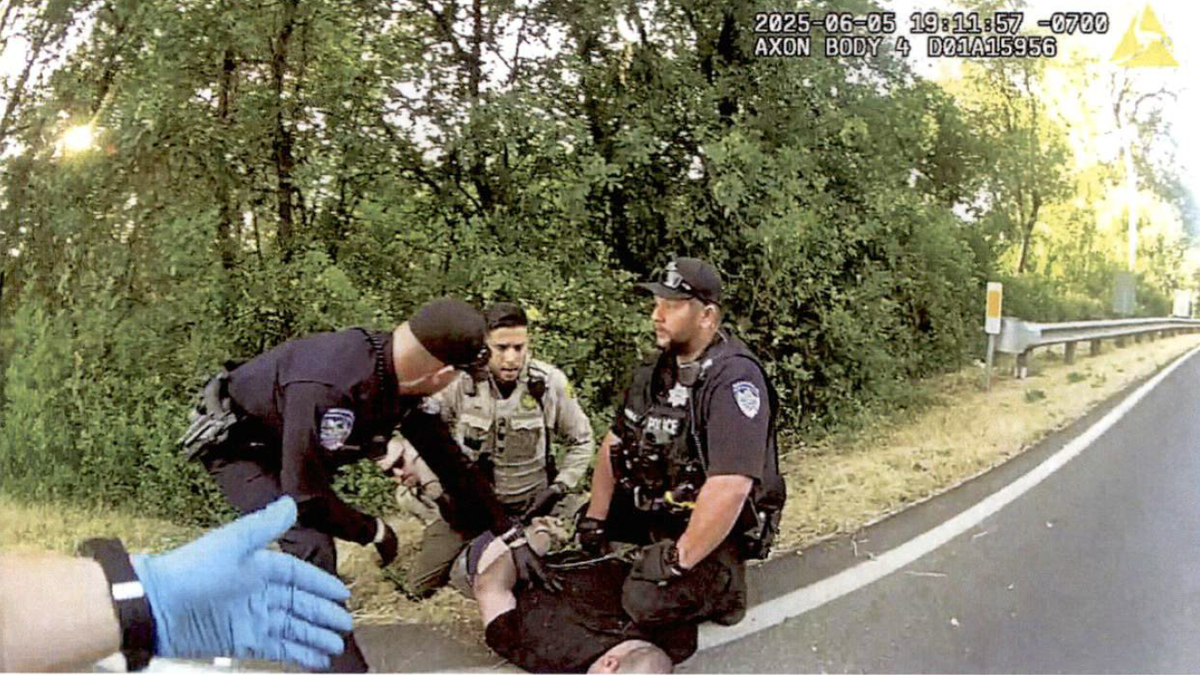
No criminal charges will be filed against the Mendocino County sheriff’s deputies and Willits police officers who restrained a 36-year-old man before he died in their custody last summer, the District Attorney’s Office concluded in a report released Monday, July 13, in response to a public records request submitted by MendoLocal.News.
Nicholas Bakewell died the evening of June 5, 2025, about half an hour after Mendocino County Sheriff’s Office deputies and Willits Police Department officers pinned him to the ground and handcuffed him at the end of a violent episode reported by a string of 911 callers. He was pronounced dead at 7:42 p.m.
The autopsy report, authored by forensic pathologist, Dr. Bennet Omalu, classified the manner of death a homicide, listing the cause as restraint-associated asphyxiation and a heart-muscle injury, with contributing acute drug toxicity, an enlarged heart and severe obesity.
The 34-page Officer-Involved Fatal Incident Report, dated June 25 and prepared by Senior Deputy District Attorney Eloise Kelsey, was co-signed by District Attorney C. David Eyster. It found the officers’ use of force “objectively reasonable” and closed the criminal review.
Three days earlier, Bakewell’s three young children and his mother had amended a federal lawsuit accusing the same officers of killing him through excessive force. The two documents describe much of the same body-camera footage and reach opposite conclusions.
Between about 7 and 7:11 p.m. on June 5, callers reported a man running in and out of Hearst-Willits Road — jumping from a moving vehicle, choking a man off an ATV and punching the driver of an SUV. A sheriff’s deputy reached Bakewell at about 7:07 p.m. According to the report’s account of the body-camera video, Bakewell took a fighting stance, fled into brush and ignored commands. Officers used pepper spray and deployed a Taser twice before five officers — sheriff’s deputies and Willits police — brought him to the ground face-down and handcuffed him at about 7:11 p.m.
Within moments of being cuffed, the report says, Bakewell went unresponsive. Officers removed the handcuffs, repositioned him and began chest compressions and administered Narcan. First responders arrived at 7:19 p.m. He was pronounced dead at 7:42 p.m.
Asked about how the office reached its conclusion, Kelsey responded in writing on July 14, describing the review in detail.
The report took time because it had to be thorough, she said. “The public nature of the report requires our office to make a careful and comprehensive review and determination and only then draft the report.” Investigators from the district attorney’s own bureau “conducted independent witness interviews,” she wrote, and the office completed “a full forensic and physical evidence review” and reviewed each agency’s policies and officer training, along with the relevant law.
Kelsey drew a line around what her office decides. “Every law enforcement agency has an internal Use of Force policy and reviews each case for training purposes and policy compliance,” she wrote. “Our office is focused on criminal culpability, not policy or discipline. Those questions belong to each agency’s own internal process.”
The involved officers were themselves interviewed as witnesses, she said, and their “specific actions and internal considerations are evidence and were evaluated.” The review raised no flags for either department: “No referrals or concerns were raised with either agency,” she said.
The pathologist’s classification of the death as a homicide carries less weight than the word suggests. In death certification, “homicide” means death at the hands of another person, as distinct from natural, accidental, suicide or undetermined causes. It is not a finding of murder and not a legal determination of criminal wrongdoing.
The report devotes several pages to that distinction, citing national medical examiners’ guidance and California case law to argue that Omalu’s classification describes how Bakewell died, not who is at fault.
The federal suit brought by Bakewell’s mother and three minor children puts the blame on law enforcement. It alleges excessive force and positional asphyxia.
The report and the lawsuit describe the same body-camera video and disagree most sharply over one officer. The report says Willits Officer Damian Angell “did not apply his full body weight and avoided Bakewell’s neck area,” concentrating the pressure on the shoulder blade. The complaint alleges Angell “placed a knee and significant body weight on the back of and neck of” Bakewell while he was handcuffed and face-down.
They divide on the threat, too. Where the district attorney points to the reported assaults and Bakewell’s resistance before he was subdued, the family says he was unarmed, posed no danger, and that no crime was in progress.
On June 1, U.S. District Judge William H. Orrick dismissed additional claims brought by the family against the city of Willits and two police chiefs, current Police Chief Brian Fay and former interim Police Chief Michael Parish as too thin. The family filed an amended complaint on June 22. The core claims — against the individual officers, the city, and the county — remain.
Asked about the litigation, Kelsey said the office is aware of it and pointed to the difference in roles. “Our report and the complaint describe many of the same underlying events,” she wrote. “They differ in characterization and in specifics. Our office has had the benefit of reviewing all the evidence. The civil case has only begun its discovery process.” Beyond that, she said, she would not comment on a pending civil case: “Our office serves a different role. We follow the evidence developed in our own investigation and apply it against the legal standards required to bring criminal charges.”
The two proceedings answer different questions. A criminal charge requires proof beyond a reasonable doubt that an officer committed a crime; a civil jury weighs whether the force was unreasonable under a lower standard. The two can reach different results on the same facts.
Houman Sayaghi, an attorney with West Coast Trial Lawyers who is representing Bakewell’s three young children and his mother, did not respond to a request for comment by the time of publication.