

Supervisors Reject Permanent Road Sales Tax in Split Vote
"The longer we wait [to pass a tax], the bigger the hole we are digging for ourselves." Supervisor John Haschak.

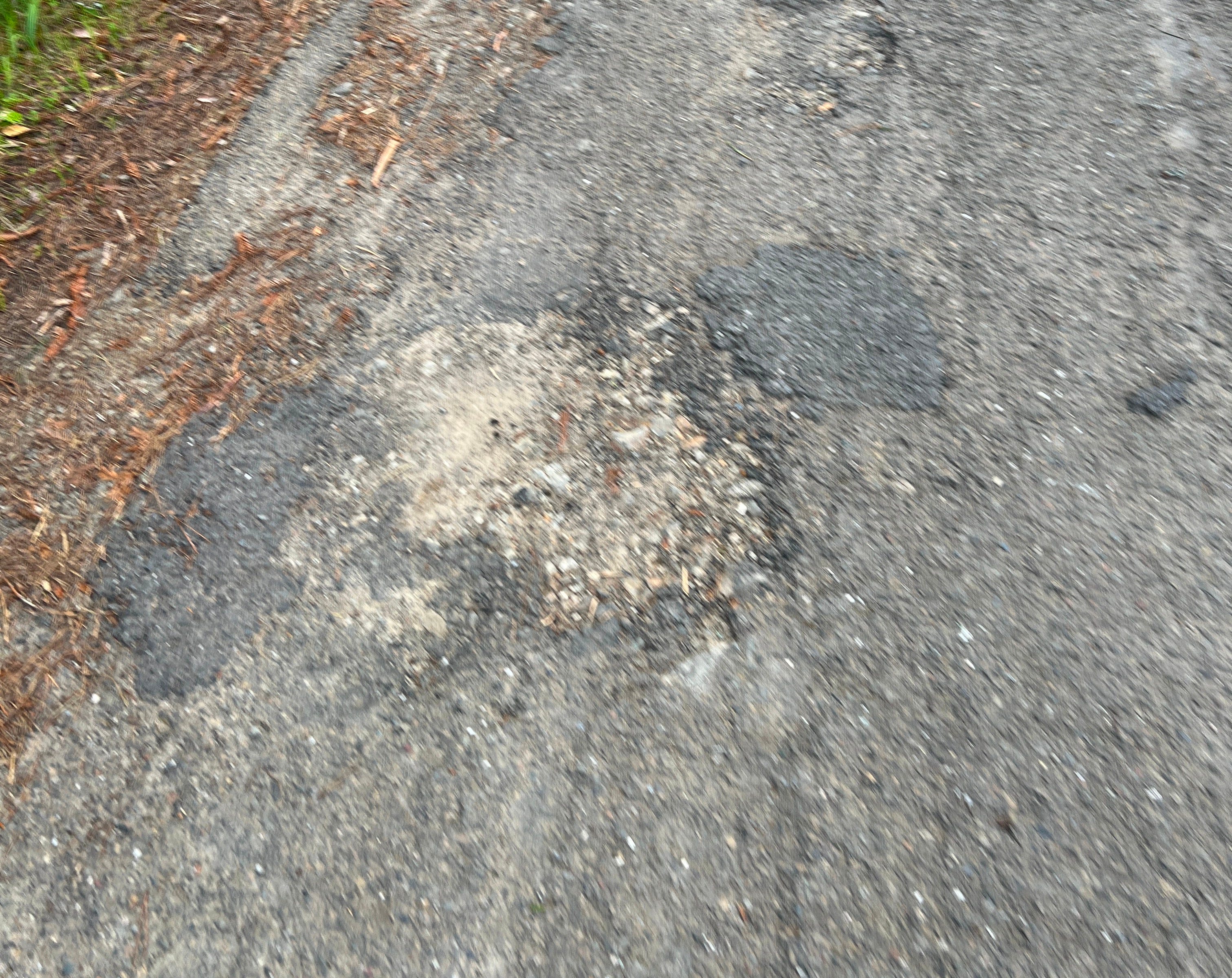
A proposed 1% sales tax to fund county road repairs will not reach the November ballot after the Mendocino County Board of Supervisors deadlocked 3-2 on July 21, with Supervisors Madeline Cline and Mo Mulheren dissenting. The measure drew majority support but fell short of the four votes necessary to place a tax before voters.
The tax would have applied to purchases in the unincorporated county and raised an estimated $5.5 million a year for pavement work and crew positions. But even if the supervisors had decided to place the tax on the ballot, it would have fallen short of what was needed.
Transportation Director Howard Dashiell told the board it would take roughly $220 million over 10 years to restore the county’s roads to “good” condition. He said that the tax would lift the average countywide pavement condition score from a projected 50 to about 64. The measure carried no expiration date: had two-thirds of unincorporated-area voters approved it, the 1% tax would have taken effect in 2027 and stayed in force until voters chose to repeal it.
Road Maintenance Costs More for Rural Counties
Nephele Barrett, executive director of the Mendocino Council of Governments, told the board rural counties shoulder a heavier road burden per resident than urban ones: they have fewer people and fewer retail outlets to raise tax revenue, and “rural counties often lose some of their … sales tax to surrounding urban areas.” With less money to go around, Barrett said, “each person essentially has a higher responsibility in terms of costs of road maintenance.”
An independent audit the department received just before the meeting largely validated how the county spends its road money. The review by Nichols Consulting Engineers, commissioned by the Mendocino Council of Governments, examined 144 road sections treated between 2019 and 2025 and found the county’s treatment choices performed well about 93 percent of the time, with only nine sections rated poor. It credited the county’s heavy reliance on in-place pavement recycling and chip seals as an efficient way to stretch limited dollars across a large rural road network.
The “No” Votes
Cline, who represents the First District, said her mind was made up long before the presentation. “My position hasn’t really changed on this since our discussion in March, where I did not support moving forward with it,” she said. “My constituents, frankly, are not interested in supporting it.” She said she understood the measure’s merits and thought it worth putting on the ballot, but could not back it “due to the conversations I’ve had with constituents, a lot of constituents,” even when she explained its benefits.
Mulheren, whose Second District includes the city of Ukiah, credited county staff but said her reservations went beyond roads. “I think staff did a really good job at trying to answer some of the questions that I had,” she said, but “I still have concerns about the county’s overall fiscal transparency and taking a sales tax to the voters.” She noted that the department’s approach was “essentially … to bring more information back each year.”
The Only Realistic Path
Supervisor Ted Williams, who backed the tax, framed it as the county’s only realistic path. He said the state pegs the county’s road need at about $60 million a year, “putting inflation aside,” against current spending of about $16 million. “If we want better roads, we have to self-fund,” he said, adding that the state’s system for allocating road money “doesn’t seem quite fair” and that he was “not holding my breath for legislators in LA and San Francisco metros to decide to give Mendocino more.”
Supervisor John Haschak, who also supported the measure, said the board constantly hears complaints about road conditions — “they’re coming to the board meetings from far away to complain about the roads,” he said. He acknowledged “the easy thing to do would be to just say, no, we’re going to lose,” but argued the county should let voters decide: “the longer we wait, the bigger the hole we’re digging for ourselves.”
During public comment, Kevin Evans of Gualala, who chairs the community’s Municipal Advisory Council and lost to Williams in June’s race for the District 5 supervisor seat, offered qualified support, arguing the measure could win voters over only if paired with strong accountability. “A modest sales tax may be a reasonable investment,” he said, noting the cost of vehicle repairs from poor roads and that the tax would be “shared by visitors to the county,” not just residents. But “before voters are asked to pay more, they urgently need binding guarantees that every road repair dollar will be spent as promised.” He called for equitable district-by-district distribution and local input from municipal advisory councils, community services districts and town councils, concluding that “with transparency, fairness, and local control, this measure can earn the public support.”
Ukiah Annexation Less Likely
The vote also dimmed prospects for the proposed Ukiah annexation. Williams told the board he has been a proponent of an annexation “that strengthens the county and the city of Ukiah,” but “every time we chip away at funding, and this would be a big chip, $5.5 million, that possibility becomes more bleak.” In his report later in the meeting, he said that with the roads decision, annexation is “probably not likely to happen.”
In his presentation, Dashiell said the county had been asked to analyze the proposed Ukiah annexation and found that transferring 19.65 miles of road to the city would free an estimated $410,000 to $455,000 a year over the county’s 20-year maintenance plan for use elsewhere.
The board dissolved its roads ad hoc committee the same day.