
Supervisors Advance a Road Sales Tax — After a Standoff Over Where All the Money Goes
Supervisor Williams and Mulheren to form an ad hoc to get more information before the next vote
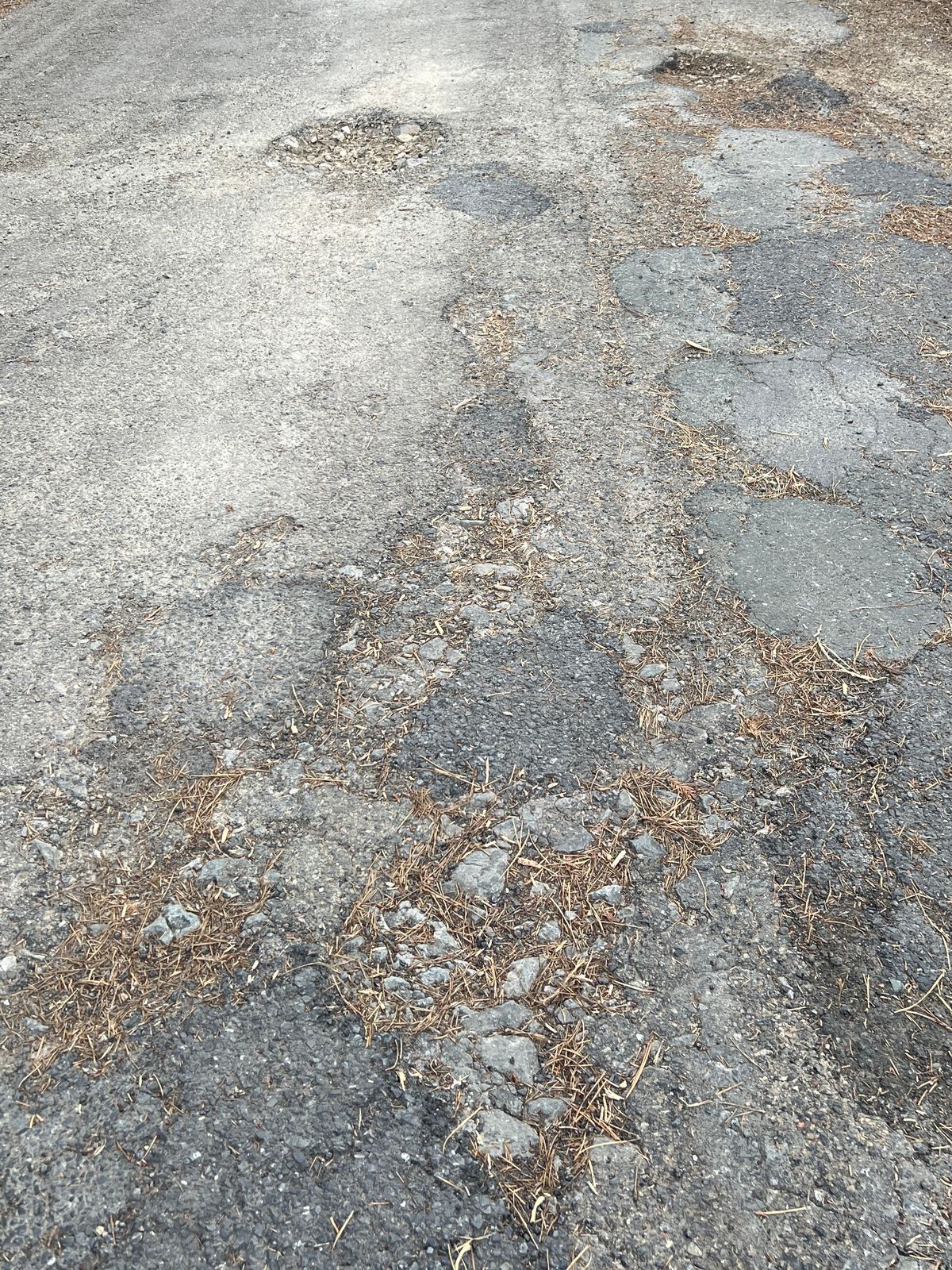
Mendocino County took a first step toward a November ballot measure to fund county road repairs, but only after Supervisor Mo Mulheren withheld her vote until the board promised a better accounting of how the road money is currently being spent — and how the additional money will be allocated.
The Mendocino County Board of Supervisors voted 4-0 on July 7 to introduce an ordinance that would ask voters in the unincorporated county to approve a 1% special sales tax on the Nov. 3 ballot. The draft ordinance says the tax would generate about $5.5 million a year — roughly doubling the county’s current road spending — to fund corrective maintenance, pavement preservation, and additional road-crew positions.
The tax would take effect in 2027 and would not expire. It would remain in place until voters chose to repeal it.
The stakes are high because the county’s roads rank among the worst in the state. Transportation Director Howard Dashiell told the board that Mendocino County’s average pavement condition index is 47 out of 100. Mendocino County has been in the bottom five of California’s 58 counties for 21 straight years. Roughly half of its 690 miles of roads are rated as poor or failed. Fully rebuilding the road network would cost an estimated $575 million.
Dashiell noted that jurisdictions with dedicated road taxes have measurably better roads: Fort Bragg’s pavement index rose from 38 to 66 after voters approved a road tax in 2004, and neighboring Humboldt, Sonoma, and Marin counties all levy their own road tax.
Supervisor Ted Williams pressed Dashiell on a complaint he hears frequently: the county’s pothole repairs don’t hold. Some county fixes, Williams said, resemble “a go-kart off-road derby course,” and he asked whether crews were being given the right tools and techniques.
Dashiell said the issue is workload not skill or equipment. On roads that are in decent shape, crews have the time to complete repairs the right way — even drying out each pothole with a leaf blower first so the patch holds, he said. But on the county’s worst roads, where potholes multiply after big storms and each road worker is covering 25 miles, crew members are working too quickly to do careful repairs.
Dashiell said a modest increase in staffing — one of the stated purposes of the tax — could help.
In response, Williams asked if dedicating just 10% to increased staffing — which is the amount spelled out in the tax — is sufficient. For voters to pass the tax, they need to know what will be done and where it will be done, he said. People need to see “the quality of repairs increasing, the frequency of the repairs increasing — without that it’s a tough ask.”
Dashiell agreed allocating 10% of the proposed tax to additional staffing was not enough for department staff to regain the level it had in 2019. But he defended the allocation saying that doing otherwise would starve materials and equipment.
The path to the ballot nearly stalled over limited financial transparency. The absence of Supervisor Madeline Cline from the meeting meant that advancing the special-tax motion required four votes. After learning that, Supervisor Mo Mulheren, who represents the City of Ukiah, which maintains its own roads, said she could not vote yes.
“I don’t think we have enough information,” she said. “I have a lot of concerns, just in general, about the public understanding how the county’s budgeting system works.”
Williams echoed Mulheren’s concerns about insufficient financial information reaching the board. “It doesn’t matter what’s in front of us, I can never really get the numbers I need to make a good decision,” he said. “So I’ve become accustomed to making decisions with really faulty information, which is not a good way to operate.”
Supervisor John Haschak referenced Facebook comments along the lines of “why haven’t you used the $30 million you haven’t collected?”
After further discussion, Mulheren agreed to vote for the measure to advance to the next step on the condition that she and Williams work with the Department of Transportation and executive staff to produce detailed fiscal and planning information before the ordinance returns.
The ordinance is set for a second reading July 21.