
Mendocino County Planning Commission Rejects Short-Term Rental Permit Due to Septic, Safety Concerns
Neighbor describes living next door to "a party house"
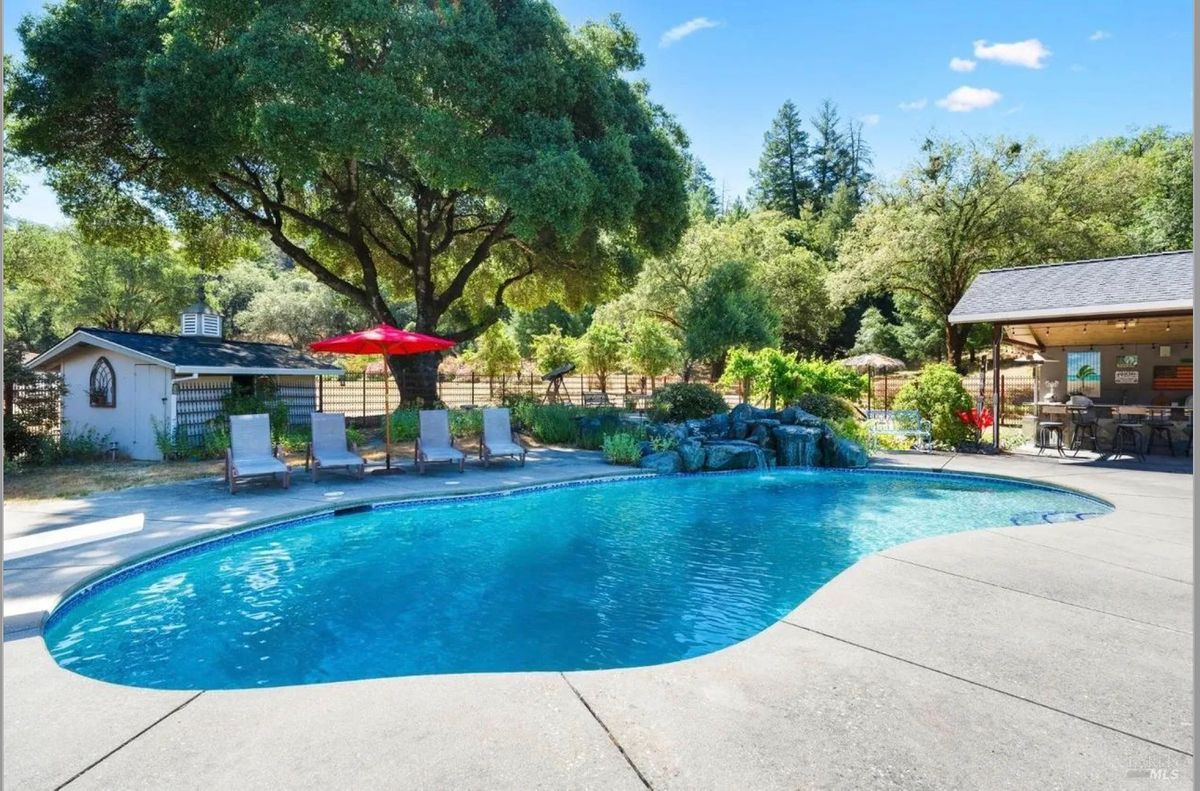
The Mendocino County Planning Commission voted unanimously Thursday to move toward denying a use permit for a short-term rental southwest of Ukiah, overriding a staff recommendation for approval after a neighbor described the property as an unlicensed “party house” operating in a high-fire-danger zone.
The 4-0 vote directed county staff to draft a formal resolution for denial of Use Permit U-2025-0006, which would have allowed property owners Chaitanya Kadiyala and Ravali Devarapalli to operate a short-term rental at 2401 Boonville Road. The commission continued the item to its June 4 meeting, when it is expected to formally adopt the denial.
Senior Planner Russ Ford had recommended approval of the permit with conditions, telling commissioners the project was consistent with rural residential zoning and that outstanding issues, including years of unpermitted construction, could be resolved through conditions of approval.
The commission rejected that reasoning after hearing testimony from Matthew Tollini, a neighbor whose property provides the only easement access to the site.
Neighbor Describes Issues with Noise, Sewage, and Fire
Tollini told commissioners the owners had been advertising and renting the property on Airbnb since December 2024 — the month they purchased it — without ever obtaining a permit.
“We lived there for 14 years,” Tollini said. “It’s been very peaceful in our neighborhood and now they’re bringing a party house right next door.”
Tollini described a series of incidents he said had occurred over the preceding 16 months, including open fire pits burning during dry summer months in what state fire officials have designated a Very High Fire Hazard Area. He said guests had repeatedly trespassed on his property, driven recklessly on the shared private road and generated noise loud enough to wake his family through closed windows and doors in February.
“There’s been probably half a dozen times where they’ve been keeping us up late at night,” Tollini said, adding that he had observed as many as 20 vehicles at the property at one time, suggesting gatherings of 40 to 50 people. The property’s Airbnb listing advertises accommodations for up to 20 guests at a rate of approximately $7,000 per week, he said.
Tollini also raised concerns about the property’s septic system, telling commissioners that a plumbing service had been called to the site on multiple occasions because the system appeared unable to handle the volume of guests. He said the septic overflow was occurring near a creek on or adjacent to the property.
He submitted a printout of the Airbnb listing as evidence.
Staff Had Recommended Approval With Conditions
Ford’s staff report acknowledged two significant complications with the application. First, Mendocino County’s inland zoning code contains no specific use classification for short-term rentals. The county has relied since 2010 on a planning director’s interpretation that classifies short-term rentals as an accessory form of “room and board” use, a regulatory framework Ford described as an imperfect but functional permitting pathway while a formal short-term rental ordinance remains under development.
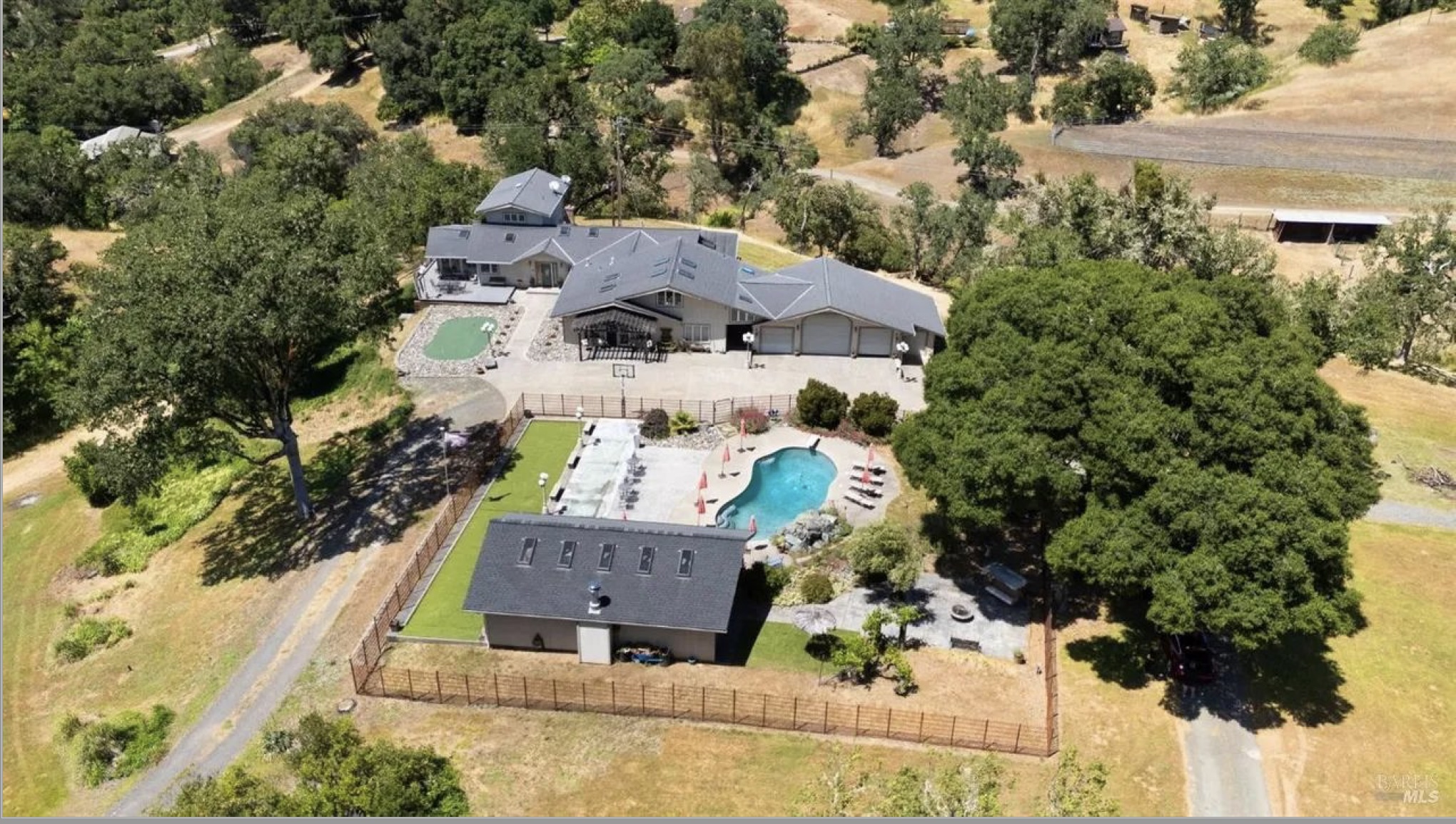
Second, the 15.2-acre property has grown substantially through what Ford described as unpermitted additions and improvements made over the past 15 to 20 years. The main residence has expanded from around 1700 square feet, permitted in the 1970s, to approximately 5,000 square feet. The property now includes an attached garage, enclosed decks, a pool, pool house, outdoor kitchen, putting green, bocce court and detached shop.
Ford said staff had recommended a condition requiring the owners to obtain all necessary after-the-fact building permits before a business license could be issued to operate the rental.
The owners, appearing via Zoom from their San Jose home, told commissioners they had purchased the property in December 2024 and planned to use it as both a personal vacation home and a short-term rental. They said they intended to hire a property manager located within a 10-minute drive of the property and planned to install exterior surveillance cameras to monitor noise and occupancy.
“We’ll make sure that all of the rules that a typical short-term rental will enforce — like no parties, no excess noise — are clearly laid out,” one of the owners said.
Commissioners Cite Bad Faith, Unresolved Concerns
The owners’ assurances did not satisfy the commission.
Commissioner Diane Wiedemann, who represents the district where the property is located, moved immediately after public comment to deny the permit, characterizing the applicants as bad-faith actors for renting their property as an Airbnb before acquiring a permit. Tollini said the owners began renting the property almost immediately after they purchased it.
“I feel like I would be negligent as a planning commissioner to put this back and say maybe we could write better ordinances,” Wiedemann said. “We have too many red flags here.”
Commissioner Michelle Johnson, who seconded the motion, said the required findings for approval could not be made given the record before the commission.
“I don’t believe that the findings can be made,” Johnson said. “Without additional information, I believe that we can’t demonstrate that this won’t constitute a nuisance or be detrimental to the public health, safety, or general welfare.”
Commissioner Richards noted that the owners had been given an opportunity during the hearing to rebut Tollini’s specific allegations and had not done so.
“We had very credible evidence of already existing nuisances,” Richards said. “The owner was given an opportunity to respond and rebut, and there was nothing.”
Deputy County Counsel Matthew Thomas Kiedrowski advised commissioners that drafting a legally defensible denial resolution on the fly carried risks and recommended allowing staff time to prepare a thorough written document. Chair Clifford Paulin agreed, saying a more carefully drafted denial would better withstand a potential appeal to the Board of Supervisors.
The commission ultimately amended the motion to continue the item to June 4 with explicit direction to staff to prepare a resolution for denial, incorporating concerns about septic capacity, fire safety, and the documented nuisance complaints into the findings.
Permitting History Adds Complexity
An additional complication involves the property’s building permit history. Commissioners raised questions about whether some of the structure’s construction was completed under a “Class K” designation, a county permit category intended for owner-built rural dwellings. Under that classification, a property typically cannot be rented for at least one year following the issuance of a certificate of occupancy.
Planning and Building Services Director Julia Krog confirmed that Class K permits carry owner-occupancy restrictions but said the specifics of how those restrictions would apply to the current structure — given the extent of unpermitted additions — would need to be resolved by the building division.
Ford said no currently valid permit covers the structure as it exists today.
Kudrowski noted that even if the commission were to approve the use permit, the owners could face a lengthy and potentially expensive process to bring the structure into full compliance before any business license could be issued.
Caltrans separately flagged that no encroachment permit exists on record for the driveway connection to State Route 253 and requested that the owners obtain an after-the-fact permit.
The June 4 hearing will be held at 9:30 a.m. in the Board of Supervisors Chambers at 501 Low Gap Road in Ukiah. The public may also attend virtually via Zoom.