
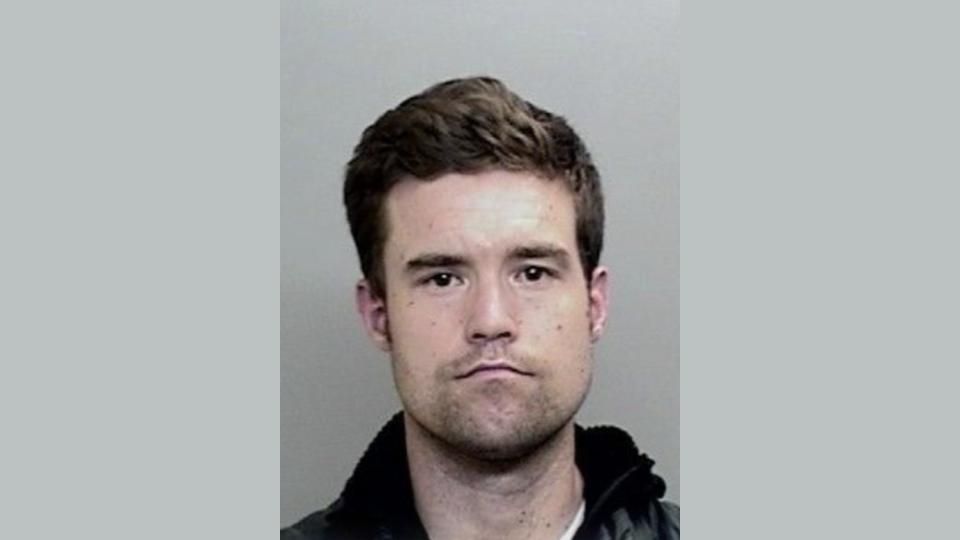
At the time of his arrest, Matthew LaFever was 37 years old and working multiple jobs, including part-time as a journalism teacher at Ukiah High School, freelancing for SFGATE and the Independent Coast Observer, and publishing the local news site MendoFever.com. After learning of the police investigation, the Ukiah Unified School District placed LaFever on paid administrative leave.
In court filings, LaFever’s attorney cited Penal Code Section 1524(g), which prohibits the issuance of search warrants for unpublished journalistic work product and confidential source information protected under Evidence Code Section 1070.
According to his motion requesting the appointment of a special master, LaFever’s electronic devices contained information unrelated to the criminal investigation, including reporting materials and communications with sources. “This is particularly important given California’s interest in protecting a free press,” the motion stated, “especially since MendoFever.com critically reported on local law enforcement and governmental activities.”
Among the stories that LaFever was actively pursuing prior to being served with a search warrant from the Ukiah Police Department was a confidential personnel memorandum authored by former Fort Bragg Police Chief Neil Cervenka. The memorandum, which was obtained by MendoLocal.News, contained sustained findings of sexual misconduct against a Fort Bragg police department law enforcement employee related to alleged off-duty conduct at a party in 2022. LaFever’s correspondence with a source and a colleague regarding that memorandum is among the materials his attorneys argue police had no right to review.
The former employee, who no longer works for the Fort Bragg Police Department, later contacted MendoLocal.News and disputed the chief’s findings. The employee said the allegations had been reported to the Commission on Peace Officer Standards and Training but were not sustained, though he did not provide documentation to MendoLocal.news to support that claim.
In a Nov. 7 video, Trent James, a former deputy for the Mendocino County Sheriff’s Office, displayed an October 2025 letter from a state official that declared that the allegations against the police department employee did not meet the statutory definition of “serious misconduct.” The video names the police department employee with his consent.
The letter came from Robert P. Guyton Jr., a bureau chief at the California Commission on Police Officer Standards and Training (POST).
POST spokesperson Meagan Poulos said in an email that the commission does not authenticate documents in closed cases and does not sustain sexual misconduct allegations arising from off-duty conduct. “An act that would not meet the definition of serious misconduct under Penal Code §13510.8 specifically related to sexual assault,” Poulos wrote, “would be those that occur off duty.”
In LaFever’s motion requesting a special master, LaFever’s attorney has asked the court to ensure “only information relevant to the target of the search warrant and investigation is accessible.”
The motion quotes Penal Code 1524(g): “No warrant shall issue for an item or items described in Section 1070 of the Evidence Code.”
“Therefore,” LaFever’s attorney wrote, “a search warrant should never be issued for the ‘some of any information procured’ by a reporter while newsgathering, or ‘for any unpublished information obtained or prepared in gathering, receiving or processing of information for communication to the public.’”
The motion notes that because of LaFever’s reporting activities, “there is information on the devices that is irrelevant to the target of the investigation, but moreover, is privileged and should be protected from unfettered access by law enforcement,”
The motion acknowledges that the search and seizure by the Ukiah Police Department has already occurred. Despite that, the court can still appoint a special master “to review the contents of the electronic devices to ensure that no privileged and protected materials are accessed by law enforcement.”
The warrant notes that the court has discretion in two areas:
- To appoint a special master who is charged with ensuring that only information necessary to achieve the objective of the warrant is produced or accessed.
- To require that any information obtained through the execution of the warrant or order that is unrelated to the objective of the warrant be destroyed as soon as feasible after the termination of the current investigation and any related court proceedings.
More than six weeks after the prosecution and defense told the court they agreed “in principle” on the appointment of a special master, no order has been filed. The delay leaves open questions not only about what safeguards, if any, are in place to protect confidential reporting materials, but also about how promptly courts will act when the state’s investigative powers intersect with California’s shield law.