
Water Bills Set to Climb 60% Over Five Years for Ukiah Valley Residents
Members of the Ukiah Valley Water Authority will see water rates rise more than 60 percent over the next five years
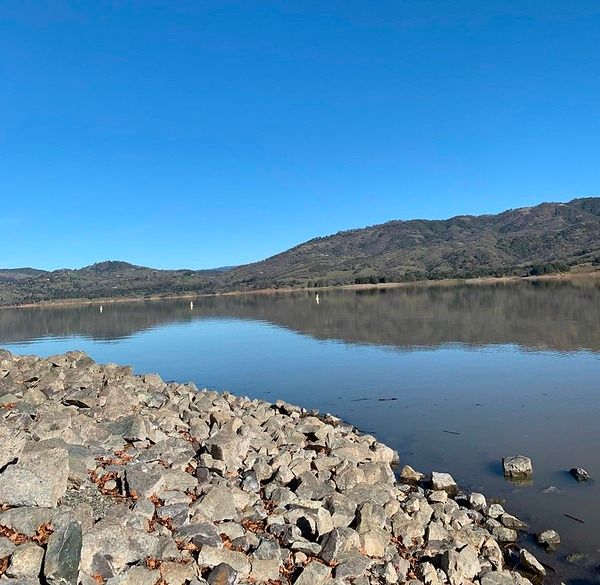
On a February evening in Ukiah, inland residents turned out to protest proposed water rate increases reaching as high as 30 percent this year, with additional double-digit hikes scheduled annually through 2029. For the Millview, Willow, and Redwood Valley water districts, the cumulative increases over the next five years will top 64 percent.
The increases were approved by the board of directors of the Ukiah Valley Water Authority on February 9, after more than 200 protest letters failed to meet the legal threshold required to block them. Officials said the additional revenue is needed for long-deferred infrastructure repairs and to stabilize shrinking reserves across Millview, Redwood Valley, Willow, and the City of Ukiah.
But for ratepayers, the increases felt abrupt and destabilizing.
“I understand that rates do go up,” Millview resident Jenny Richards told the board. “But the amount of the rate going up at one time is excessive, and I think it’s going to cause hardship for a lot of people.”
Playing Catch-Up
Mark Hildebrand, a Bay Area rate consultant hired by the authority, told protesters that most of the increases stem from deferred capital improvements.
“Every year that you don’t raise rates, you dig yourself into a hole,” he said, noting that Millview had not raised rates in 14 years.
Under the proposal:
- Millview customers will see a 15 percent increase beginning March 1, followed by 14 percent annual increases in subsequent years.
- Redwood Valley customers will face a 30 percent increase this spring and another 12 percent three months later, with smaller increases thereafter.
- Willow customers will see a 19 percent increase, followed by annual 12 percent adjustments.
- Ukiah’s increases will be more modest — roughly 6 percent initially — reflecting what officials described as more consistent past investment, as well as a 22 percent rate hike last September, and 14 percent increase in 2024.
Officials say the money will fund stepped-up capital reinvestment — replacing pipes before they rupture, upgrading reservoirs and treatment facilities, and stabilizing reserves that in some districts are projected to fall close to zero.
General Manager Jared Walker described the system in Redwood Valley as uniquely expensive to maintain: a dual plumbing network that provides both treated domestic water and untreated irrigation water, effectively doubling infrastructure across a sprawling rural footprint.
“We’ve got twice as much infrastructure,” he said. “Per capita, it’s very spread out.”
Anxiety Over Affordability
But for many residents, the numbers were disproportionate to the need — and to retired ratepayers’ ability to pay.
Kenneth Boudreau, a retired city employee in Millview, said the cumulative increases would outpace anything residents could realistically absorb.
“I receive a pension increase of 2 percent a year,” he said. “Not 57 percent.”
In a formal protest letter, Stephanie Yeh, a customer of the Redwood Valley County Water District, noted that the authority had not provided parcel- or district-specific cost-of-service data sufficient for ratepayers to evaluate whether the proposed rates exceed the actual cost of providing service.
Yeh said the mailed notice did not include “underlying cost allocations, assumptions, project lists, time frames, or district-level revenue and expense details necessary to validate the size and structure of the increases for Redwood Valley ratepayers.”
Remorse Over Consolidation
Others questioned whether consolidation under the new joint powers authority structure — which shifted operations to the City of Ukiah — had triggered rising administrative costs.
“Willow functioned for a long time without raising rates significantly,” said Steve Miller, a longtime Willow customer. “I’m very concerned that all of this extra money is going to projects other than serving water to us.”
Jim Donnelly, another Willow customer, noted that the 2021 Water Rate Study being used to justify the increase is not available on the Ukiah Valley Water Authority website.
“I am pretty sure the 2021 water rate study didn’t take into consideration the inclusion of three additional water districts,” he wrote.
The Ukiah Valley Water Authority, a joint powers agency, was formed in early 2024. The initial agreement was between the City of Ukiah, the Redwood Valley County Water District, and the Millview County Water District. The agreement was amended on October 1, 2024, to include the Willow County Water District and the Calpella Water District.
In a press release, city officials said the establishment of the joint powers authority would lead to “more efficient and reliable water services for the Ukiah Valley region.”
Learning from Hopland
The Hopland Public Utility District is not part of the joint powers agency, but it has service agreements in place with the Willow County Water District.
In October 2025, the Hopland Public Utility District voted to raise water rates by 40 percent and wastewater rates by 25 percent — part of a decade-long schedule that would ultimately triple water costs for roughly 330 customers.
Many residents crowded into a tense public hearing to challenge the hikes, questioning inconsistent financial figures, missing documentation, and what they saw as unclear justification for the new charges. Vernon Budinger, a Hopland ratepayer, criticized the process as a “smokescreen” masking rising administrative costs following consolidation under the regional water authority.
After a third of Hopland ratepayers submitted protest letters, a protest hearing was held on October 9. At that hearing, the board of directors of the Hopland Public Utility District restricted public comment to a total of ten minutes, appearing to violate the Brown Act.
No such limit was imposed at the February 9 hearing.
Board Issues “Determinations”
In contrast to the Hopland Public Utility District board of directors, which discouraged extended ratepayer comment, the executive committee of the Ukiah Valley Water Authority published its rebuttal to ratepayer protests in the meeting agenda.
The executive committee stated that the proposed rates were supported by financial plans and asserted that a reasonable relationship exists between the rates and the cost of service. In addition, the committee said there is no cross-subsidization of one district by another.
The executive committee claimed the state’s noticing requirements were followed. “Sufficient materials were made publicly available, and the record contains sufficient information to proceed,” the determinations stated.
Regarding the financial hardship the increases will create for seniors on fixed incomes, the executive committee “acknowledged affordability concerns, but finds that applicable law requires rates to be based on cost of service rather than individual ability to pay.”
“It Shouldn’t Be a Surprise”
When a member of the public requested a 10-day extension for further review, Tom Schoeneman, chair of the executive committee, declined, stating it was the board’s “responsibility to move this along.”
Schoeneman pushed back against public claims that the rate increases were a “surprise” or handled “underhandedly.” He said the board had been discussing the issue for months on Zoom and in person, asserting that the information “was available to you” as citizens and that “this shouldn’t be a surprise.”
In California, there is no regulatory body that directly oversees rates for most public water utilities. The primary requirement, established by Proposition 218, is that fees not exceed the cost of providing service. Proposition 218, which passed in 1996, also mandates public notice of rate increases and allows a majority of ratepayers to block a proposed increase.
Read our coverage of water rate increases in Hopland and Ukiah:
Ready to Go to Court December 5, 2025
One Brown Act Violation after Another November 24, 2025
Hopland Public Utility District Faces Brown Act Challenge November 7, 2025
Hopland Public Utility District Board Limits Public Comment, Votes to Triple Water Rates October 10, 2025
Ukiah Sewer Rates Poised for Huge Jump After One-Minute Protest Hearing September 19, 2025