



With public comment set to close at the end of the week, CAL FIRE is facing renewed pressure from Mendocino Coast residents who say the state’s draft management plan for Jackson Demonstration State Forest still fails to meet the moment.
Every ten years, CAL FIRE is required to update the forest management plan for Jackson, the 48,652-acre working redwood forest between Fort Bragg and Willits. And every decade, longstanding tensions resurface — between timber harvesting, ecological restoration, climate strategy, and the well-being of surrounding communities.
This year’s draft introduces two new stated priorities: improving relationships with local tribes and aligning the forest with California’s climate-mitigation goals.
State Highlights Tribal Co-Management and Climate Strategy
At an October meeting in Caspar, State Forest Programs Manager Kevin Conway told attendees that a series of statewide policy shifts is reshaping how Jackson is managed.
“There’s also been some significant public policy changes that have given us additional tools for managing our natural and wildlands,” Conway said. “Some of the significant items I’d like to draw your attention to… Our first: tribal co-management.”
He outlined more than a decade of state actions — including Governor Brown’s 2011 executive order on tribal consultation, the creation of the Truth and Healing Council under Governor Newsom, and the 2020 Native American Ancestral Lands policy.
“This directed state landowners… to provide access and co-management opportunities to local tribes,” Conway said. “And in 2022, CAL FIRE… had our Jackson Advisory Group do a deep dive into the policies and our existing management plan to review it and provide recommendations.”
Conway said JDSF has begun incorporating those recommendations and that tribal input is now embedded in everything from historical interpretation to project design.
“We feel very privileged with the amount of time that local tribal leaders have devoted to working with JDSF staff on co-creating projects, with a specific goal of providing tribal benefits,” he said.
He also emphasized the forest’s role in meeting California’s climate goals — citing carbon storage, beneficial fire, biodiversity protection, and wildfire resilience.
“There’s recognition that redwood forests can play a leading role in climate-change mitigation… We’ve been challenged to reintroduce beneficial fire into all of our forest… And then there are other goals — biodiversity, recreation, wildfire resilience,” Conway said.
Community Members Say the Plan Lacks Specifics
Despite those commitments, many residents say the draft remains too vague and continues to justify commercial timber harvesting under the banner of research.
Scientist Evan Mills urged the state to tighten the plan.
“We see considerable potential to improve the draft plan’s rigor and its clarity,” he said.
Resident Ellen Beekner was more pointed, arguing that the document still reflects an outdated model for forest management.
“We don’t have time for that anymore,” she said. “Anyone who walks in the forest can feel it and know it.”
What’s Next
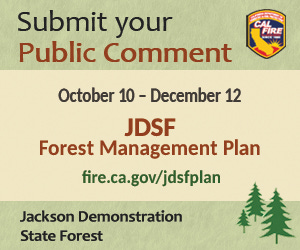
The public comment period closes December 12.
CAL FIRE expects to release a revised draft of the management plan in March.


