
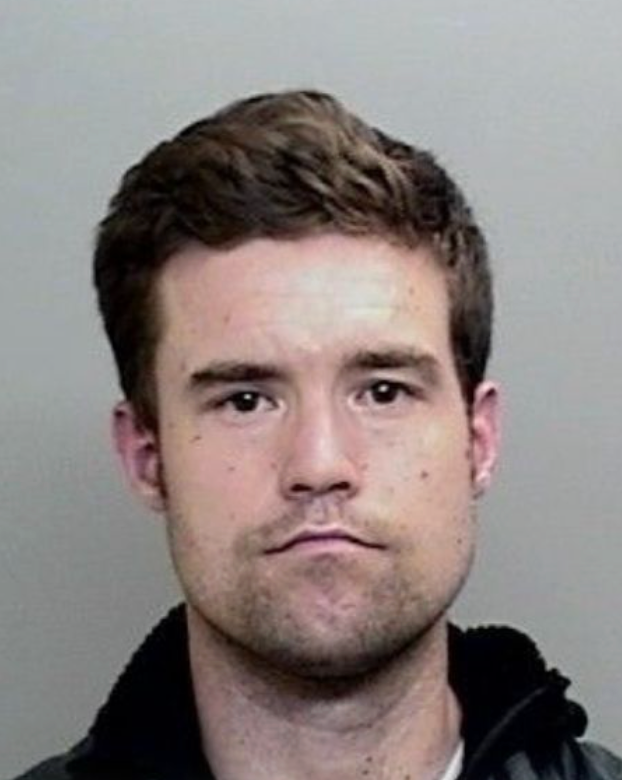
Matthew LaFever’s $10,000 bond was exonerated on Monday by Mendocino County Superior Court Judge Keith Faulder, two months after LaFever was arrested by the Ukiah Police Department on suspicion of misdemeanor child annoyance or molestation stemming from alleged Snapchat communications.
LaFever has not been charged with any crime. Bonds are typically “exonerated” or cancelled after a defendant has filled all their obligations to the court. In this case, the exoneration signals the court’s confidence that LaFever will show up in court if he is later charged by the district attorney.
The brief hearing came after the court’s December 22 appointment of a special master to oversee the handling of materials seized from LaFever and to ensure compliance with protections provided by the California Constitution and state law. Those protections are intended to prevent law enforcement from conducting overly broad digital searches and, in LaFever’s case, to protect unpublished interviews, notes, and other material from his work as a journalist from disclosure.
Judge Faulder, who presided Monday, had previously approved a Ramey warrant sought by Ukiah police on November 2, one day before LaFever’s arrest.
The arrest, which was preceded by the seizure of LaFever’s electronic devices two weeks earlier drew scrutiny from First Amendment attorneys, particularly because LaFever is a working journalist.
David Loy, legal director of the First Amendment Coalition, said California law places strict limits on the scope of digital searches conducted by law enforcement.
“The California Electronic Communications Privacy Act explains that any warrant for digital devices or searches of digital data must be strictly limited to the precise contours of what’s under investigation,” Loy said.
For example, if an allegation involves inappropriate contact with minors, he said, any search should be confined to material directly relevant to that allegation. “It should not cover anything else,” Loy said.
Loy also pointed to California’s Shield Law, which prohibits the government from compelling the disclosure of journalistic materials. “That could include notes, drafts, or unpublished photographs,” he said.
Loy sent a letter to Ukiah Police Chief Tom Corning on November 7 recapping the relevant laws. In the letter, Loy emphasized that he assumed “the warrant was supported by probable cause that evidence relevant to that charge would be found [on] Mr. LaFever’s devices or accounts.”
Loy said he took no position on the merits of any charges against LaFever. “However, because any search of a journalist’s devices, accounts or property raises significant concerns, I write to confirm that relevant legal protections for press freedom and independence were followed,” he wrote.
The request for a special master was submitted under seal by Orchid Vaghti, LaFever’s attorney. All sealed filings appear under a case styled Matthew LaFever v. State of California and the Ukiah Police Department, case number 25CR09419, according to a courthouse source who viewed the case while describing it to Mendo Local.
None of the sealed motions or scheduled hearings — including Monday’s bond hearing — are visible through the court’s public online portal.
In response to a California Public Records Act request, the Ukiah Police Department stated that it has not received any legal complaint or other formal legal notice from LaFever.
Vaghti declined to comment last week and did not respond to a renewed request for comment on Monday.
Mendo Local on Monday filed a “Motion by Intervenor,” seeking access to court proceedings and records in the case. A hearing date has not yet been announced.
Faulder is expected to sign a joint order drafted by the defense and prosecution related to the special master. If the prosecution decides to move forward with charges, LaFever’s attorney will be contacted directly.
Separately, Ukiah Police Chief Tom Corning on Monday responded to questions Mendo Local sent on December 16 regarding the department’s decision to seek a Ramey warrant rather than working directly with the District Attorney’s Office prior to LaFever’s arrest.
Corning also addressed allegations that an employee of the Ukiah police department disclosed confidential details of the LaFever investigation to an online personality, allegedly for the purpose of defaming a journalist.
Some of the information described by the online personality referred to sexual intercourse between two adults and the photo of a body part. Other information was taken directly from the search warrant and Ramey warrant —weeks before the police department filed those documents with the court. This meant that police department employees were the only ones with access to the information, increasing the seriousness of a malicious leak.
“We take very seriously the need for confidentiality and integrity in our investigations,” Corning said. He acknowledged being aware of a YouTube video discussing the case and said the department conducted an internal investigation but did not identify the source of the leak.
Corning said the department used the incident to remind personnel of their obligations regarding sensitive information and confidentiality.
Addressing the use of a Ramey warrant, Corning said detectives believed it was the most appropriate and lawful tool to take LaFever into custody based on information available at the time.
“While Ramey warrants are often associated with exigent circumstances, their use is not limited to any single type of offense,” Corning said. “In this instance, detectives determined that a judicially reviewed arrest warrant was the most appropriate course of action to ensure a lawful and orderly custody process.”
He added that because the case involved alleged crimes affecting minors, the department “moved quickly to issue a press release with information about the arrest including the suspect’s photos and screen name in order to ask any additional victims to contact law enforcement.
“As with all investigations, the Ukiah Police Department acts in good faith, reliance on applicable law, prosecutorial guidance, and judicial oversight,” Corning said. “We remain confident that the actions taken were consistent with legal standards and department policy.”
Mendo Local’s previous coverage:
Ukiah Journalist Arrest Highlights Tensions Between Criminal Investigations and Press Protections (January 3, 2025)
LaFever Invokes Shield Law (January 2, 2025)
Ukiah Journalism Student Accuses Teacher of Sending Inappropriate Snapchat Messages (November 14, 2025)
Ukiah High School Teacher and Journalist in the Midst of Police Misconduct Investigation in Fort Bragg is Arrested on Charges of Annoying a Minor (November 3, 2025)