
Federal Court Upholds Sheriff's Authority in Cannabis Raids in Indian Country
Judge allows lawsuit brought by Round Valley Indian tribes alleging unlawful searches and discriminatory enforcement to proceed
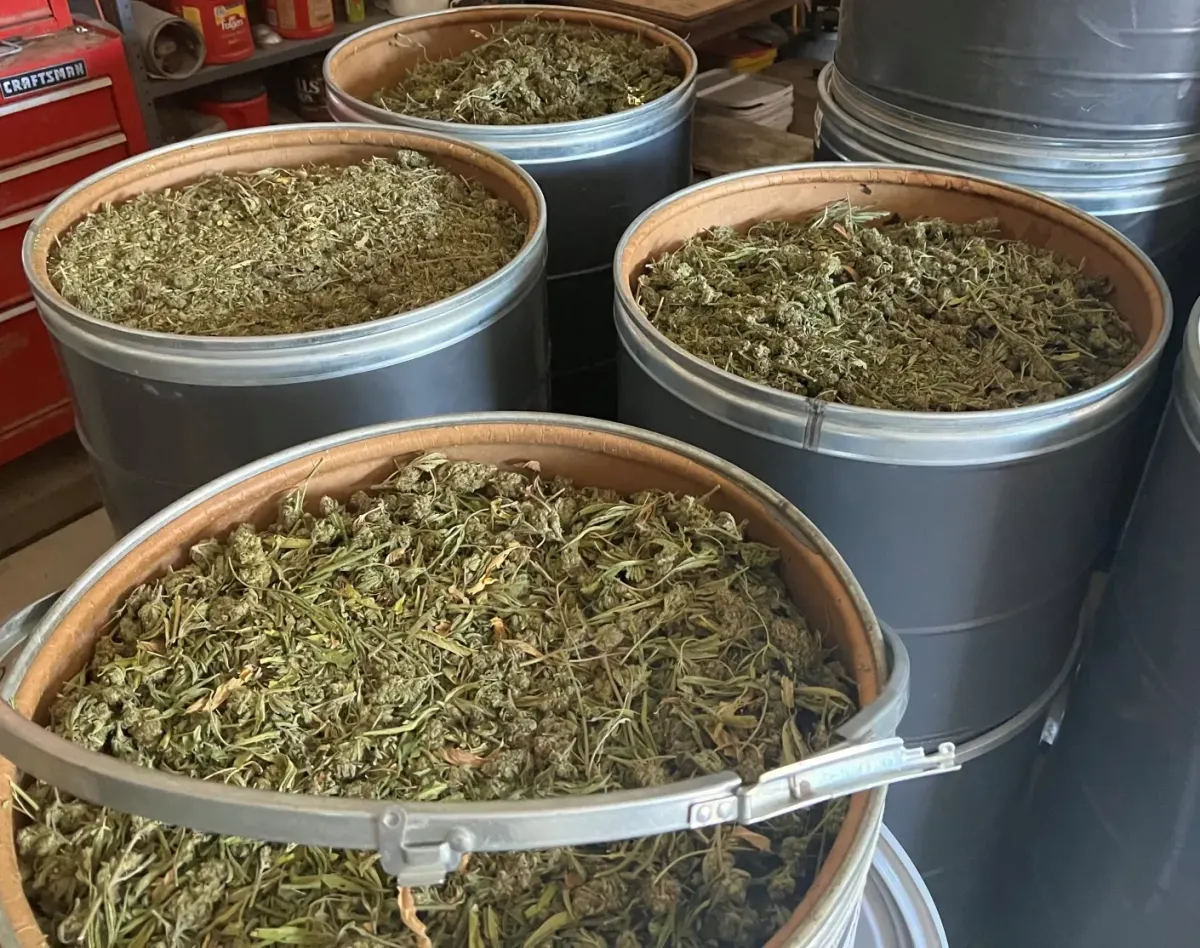
Editor’s Note: We added a clarifying sentence regarding the use of the term “Indian country,” which is a legal reference to tribal land. February 1, 2026, 8:33 p.m. Also, a misspelling of Judge Illman’s name was corrected.
A federal judge in the Northern District of California on Thursday affirmed the authority of sheriff’s deputies to enforce criminal laws prohibiting large-scale cannabis cultivation on tribal land.
The ruling marked a victory for Mendocino County Sheriff Matt Kendall, who has repeatedly warned about cartel activity in the northeastern part of the county.
U.S. District Judge Robert Illman issued the decision in a civil lawsuit brought by the Round Valley Indian Tribes against Kendall, Humboldt County Sheriff William Honsal and California Highway Patrol Commissioner Sean Duryee. The lawsuit stems from law enforcement raids conducted in the Covelo area on July 22 and 23, 2024.
The tribes alleged the raids violated federal common law, which generally prohibits the enforcement of state regulatory laws on Indian reservations, and infringed on tribal sovereignty.
In an order responding to motions to dismiss filed by the defendants, Illman rejected those claims, but allowed allegations of unlawful searches and discriminatory enforcement to proceed.
The lawsuit was brought by three tribal members whose properties were targeted in the raids. Two of the plaintiffs, Eunice Swearinger, 86, and April James, 48, are grandmothers who use medicinal cannabis to treat conditions including arthritis, injuries from a traffic accident, and a degenerative disc disorder.
Swearinger cultivated cannabis alongside onions, watermelons, and zucchinis on her 2.3-acre trust allotment. James similarly grew cannabis on her 1.25-acre allotment and used it to make medicinal cream.
The third plaintiff, Steve Britton, a rancher, cultivated cannabis on five acres owned by his granddaughter, Mary Mae Azbill McKenna.
No criminal charges have been filed against any of the plaintiffs.
The lawsuit asserts that all three properties qualify as Indian country, where cannabis cultivation is permitted under the tribe’s Compassionate Use Ordinance, enacted by the Tribal Council on August 8, 2006. (Note that when using the term “Indian country” we are using the legal reference to the land.)
The properties are trust allotments — parcels of land that were typically carved out of communal reservation land in the 1887 General Allotment Act and assigned to individuals. Both tribal trust lands and individual trust allotments are considered to be Indian country under federal law.
According to the 85-page complaint filed April 29, 2025, the plaintiffs sought “to protect the civil right of Indians to be free from state regulation and control while engaging in activities on their reservations authorized and licensed by their tribal government.”
States may enforce criminal laws in Indian country only if Congress has allowed it, including under Public Law 280, which authorized states such as Alaska, California, and Oregon to to prosecute most crimes committed in Indian Country.
The tribes argued Public Law 280 does not apply to the cannabis raids because cannabis has been decriminalized in California and enforcement should be treated as regulatory, not criminal. The complaint also alleges the raids were conducted without probable cause and without search warrants, violating the Fourth Amendment. Plaintiffs said hundreds of cannabis plants were destroyed and that the raids caused extensive property damage and “terrorized the community.”
In his ruling, Judge Illman acknowledged that “there is no bright-line rule for distinguishing between criminal and regulatory statutes.” Courts instead apply what he described as “a shorthand test” examining whether the conduct at issue violates state public policy.
Illman concluded that while California has legalized and regulated certain cannabis activities, state public policy still “strictly limits and generally prohibits the large-scale cultivation and possession for sale of cannabis.” He wrote that the intent of the Adult Use of Marijuana Act was to eliminate the illegal market, which the state has deemed dangerous.
“The medical exception for some of the limitations on cannabis possession and cultivation does not render the statutes regulatory in nature,” Illman wrote. “This is a narrow exception to limits on possession and cultivation that does not undermine the public policy of eradicating illegal marijuana operations.”
The ruling allows the lawsuit to proceed on the remaining claims and clarifies that while Public Law does not permit the enforcement of state regulatory laws on tribal land, it does allow enforcement of criminal provisions of California’s Health and Safety Code.