
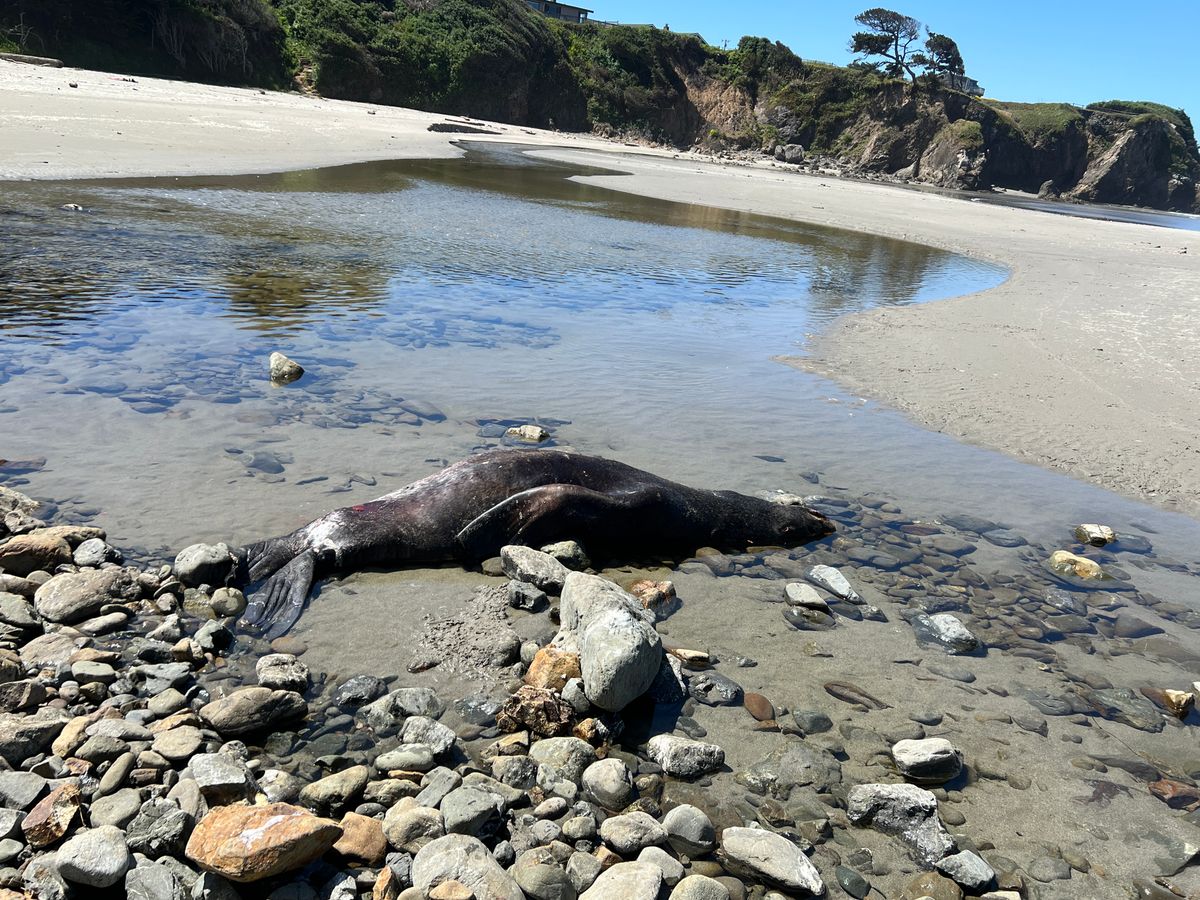
Dead and malnourished sea lions are being reported along the Mendocino Coast in unusually high numbers, according to the Marine Mammal Center in Sausalito.
Giancarlo Rulli, a spokesperson for the center, said staff have been receiving reports from the Mendocino Coast as often as several times a day over the past two to three weeks. While that is a significant increase for the area, it remains far below the numbers seen elsewhere in California. In Santa Cruz County, for example, more than 300 dead sea lions were reported last year.
Rulli said the overall number of dead and stranded marine mammals reported along California’s 600-mile coastline remains within historical norms. However, scientists are concerned about a persistent marine heatwave affecting coastal waters.
According to the National Oceanic and Atmospheric Administration (NOAA), coastal sea surface temperatures off California are among the warmest ever recorded for this time of year, rivaled only by conditions observed during the powerful 1997–98 El Niño and the “Warm Blob” marine heatwave of 2014–15.
Young, recently weaned sea lions are particularly vulnerable, Rulli said. Changes in ocean conditions can affect the availability of traditional prey species at a time when juvenile animals are still developing the skills needed to forage successfully on their own. Stranded animals can suffer other ailments such as pneumonia.
The Noyo Center for Marine Science did not respond to a request for information about local reports of dead or stranded sea lions, making it difficult to quantify the extent of the problem on the Mendocino Coast.
Sarah Grimes, the stranding coordinator for the Noyo Center, said in an email that a cause of death had not yet been established for the young grey whale that was found dead at Virgin Creek Beach at the end of April.
NOAA Fisheries cautions that the presence of a seal or sea lion on the beach does not necessarily mean the animal is sick or injured. Marine mammals commonly come ashore for a variety of reasons including to rest, breed, molt, and avoid predators.
Signs that an animal may be in distress include severe injuries such as excessive bleeding or open wounds, extreme emaciation, or unusual behaviors including persistent head shaking, seizures, disorientation, foaming at the mouth, or eating rocks or sand. Animals displaying these symptoms should be reported to the National Marine Mammal Stranding Response Network.
In Mendocino County, reports can be made to the Marine Mammal Center at (415) 289-7350.
Members of the public can also help by keeping their distance from marine mammals and ensuring that pets, especially dogs, remain leashed on beaches. This precaution is particularly important from late May through October during pupping season.