
Former San Francisco Controller Says Mendocino County Must Overhaul Financial System
The overhaul is estimated to take three years and cost up to $5 million
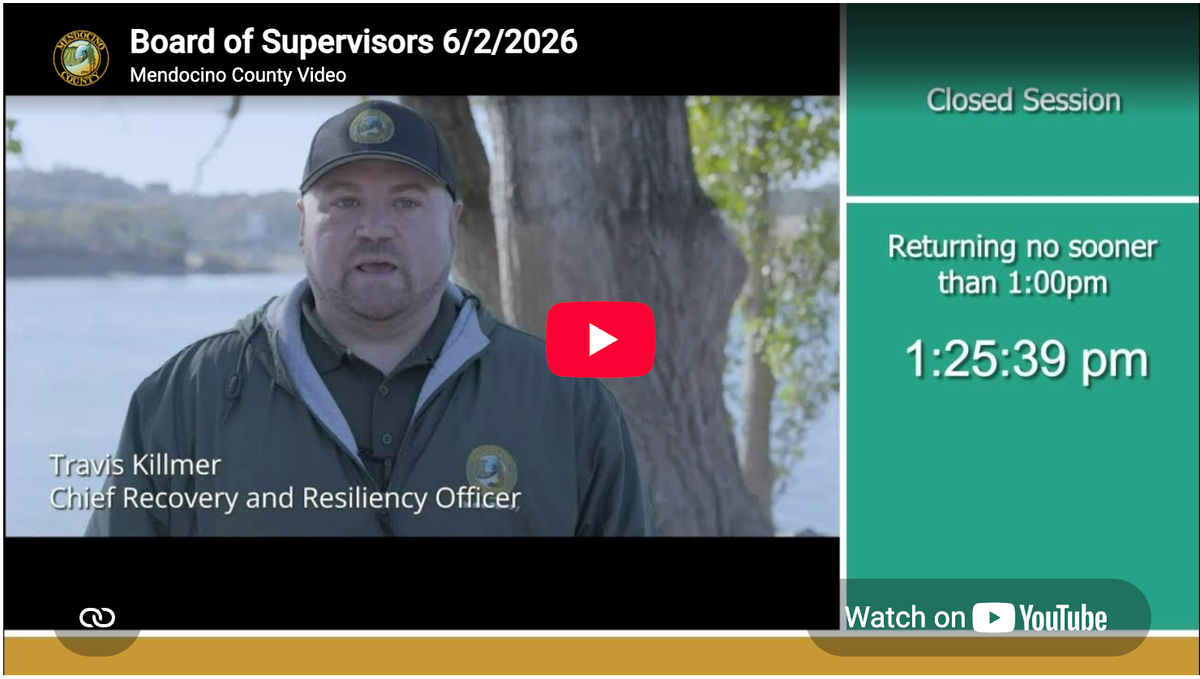
Ben Rosenfield, a widely respected budget professional who served as controller for the City and County of San Francisco from 2008 to 2023, delivered a message of tough love to the Mendocino County Board of Supervisors on Tuesday about its financial processes.
Mendocino County is struggling with a financial system so outdated and inefficient that it is hindering basic operations, consuming valuable staff time and potentially leaving millions of dollars in property tax revenue uncollected, he said.
“The root of these challenges are in large part due to a long-ago and incomplete implementation of the financial system that the county uses to perform the vast majority of this work,” Rosenfield said.
He noted that the Board of Supervisors has been informed of the issue before, including during a 2025 presentation by the Regional Government Services organization.
The county’s financial system is MUNIS, an enterprise resource planning (ERP) system, a type of software used to automate and manage day-to-day operations. While ERP systems can be invaluable, they are also notoriously difficult to implement.
Rosenfield said other counties have successfully implemented MUNIS, but Mendocino County did not do so in a way that made the system fully usable.
“This results in a whole host of financial activities that require extensive staff time to navigate what should be more routine transactions, things like processing journal entries, preparing a budget, preparing financial tracking reports,” Rosenfield said. “In other cases, it leads to gaps that make it very challenging for the county to perform some of these tasks, things like bank reconciliation and others.”
A Three-Year Roadmap
The county hired Rosenfield in December following a scathing state audit that documented Mendocino County’s declining financial health. Dubbed the “Clark Kent of City Hall” by The New York Times, Rosenfield was tasked with providing the county a roadmap for modernizing and stabilizing its finances.
Rosenfield said Mendocino County needs to reimplement its ERP system, whether it decides to continue using MUNIS or chooses another provider. He estimated the project will take three years, cost between $3 million and $5 million, and require a dedicated staff of three to five employees, along with outside consultants.
The first year will focus on documenting existing processes and determining how they can be improved.
“We don’t want to too quickly jump to simply implementing the financial system without asking ourselves first, what do we want it to do for us and what do we want those processes to look like,” Rosenfield said. “That’s a mistake that often happens, and the result is that you end up with financial systems that embed the way you’re doing things today. The goal here is to imagine that we can do things in a more standard way that’s in place in many other places.”
The primary deliverable from the first phase will be a detailed work plan presented to the Board of Supervisors for approval. Rosenfield suggested the board receive quarterly or semiannual updates on implementation.
Uncollected Property Taxes
Turning to uncollected property taxes, which the California State Auditor estimated exceed $30 million, Rosenfield said the county is now able to produce reports of unpaid bills, known as aging reports.
The backlog is substantial. The county has records of more than 5,000 property ownership changes and building permits that still need to be evaluated for reassessment.
The backlog, which dates to 2008, has a cascading effect: It reduces revenue available for local services, creates significant additional work for employees in the assessor’s, auditor-controller’s and treasurer-tax collector’s offices, and creates uncertainty and “unfortunate surprises” for taxpayers.
Rosenfield pointed to high turnover in the assessor’s office as one of the most significant contributing factors. Since 2022, 24 staff members have left and 23 have been hired. The office averages 4.8 departures annually, meaning roughly one-quarter of the workforce turns over each year.
“That means they’ve lost institutional knowledge necessary to do work,” Rosenfield said. “It means they’re pulling people off the floor to train a never-ending chain of new people coming in the door.”
Rosenfield said it is important to interrupt what he described as a “negative workload cycle.” He recommended stabilizing staffing levels and developing a clear, measurable and public plan to eliminate the backlog. He warned that clearing it could take two years.
Accurate Budget Forecasts
One area where Mendocino County has made progress during the past 18 months is financial forecasting and reporting.
Rosenfield said the county’s budget forecasting compares favorably with that of its peers, with less than a 1% variance between original forecasts and actual results over the past four years.
However, he recommended improvements in summarizing key trends in quarterly reports and providing executive summaries that preview year-end results to minimize surprises.
Rosenfield also praised the county’s updated reserve policy.
“That has the potential to put the county in a much better place in the future to navigate multi-year financial cycles,” he said.
A Commitment to Move Forward
Supervisors expressed agreement with Rosenfield’s assessment and said they were prepared to approve the funding needed to implement the recommendations.
Supervisor Ted Williams described the roadmap as “shovel-ready” and asked CEO Darcie Antle what she needed from the board.
Supervisor Mo Mulheren said she would support additional staffing or consultants as necessary.
“I do know that it is having a lasting impact on our community to be so far behind in the property tax assessments,” Mulheren said.
Supervisor Madeline Cline described the roadmap as “the biggest opportunity for improvement for the county.”
She said the next step is “investing the resources, the staff, the money to set the county up for success moving forward.”
CEO Antle said she would huddle with her team and return to the board with a staffing request.