
Updated with informational links. Friday, March 27, 2026, 2:33 p.m.
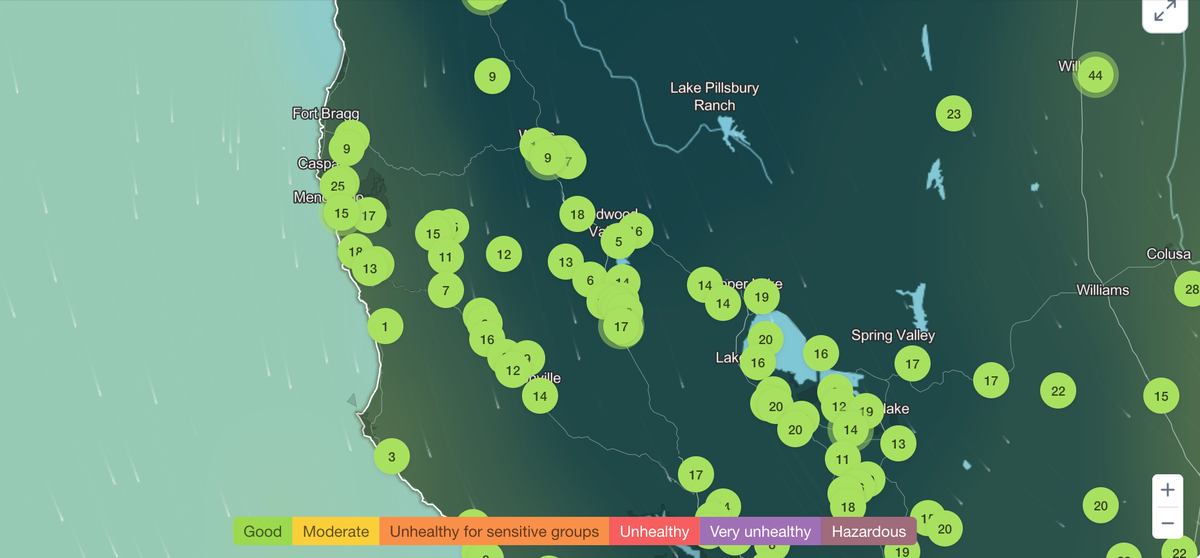
Mendocino County officials took a step Tuesday toward tracking local air pollution, adopting the region’s first Air Toxics “Hot Spots” report — a state-mandated analysis that found no facilities posing a high risk to public health.
Meeting as the Air Quality Management District, the Board of Supervisors accepted the findings of the AB 2588 program, which inventories toxic air contaminants and evaluates community exposure. The program requires regulators to collect data on the location, type and volume of emissions from every permitted source in the county and assess both cancer and non-cancer health risks.
Of the 280 facilities surveyed, 231 were classified as low risk and 49 as medium risk. Air Quality Management District staff said none met the threshold for high risk.
The board also adopted thresholds for ranking facilities, including a cancer risk level of 25 and a hazard index of 1 for both chronic and acute non-cancer impacts.
Glen Stephens of the Air Quality Management District explained that acute risks refer to short-term exposures — such as carbon monoxide, which can be immediately dangerous — while chronic risks stem from long-term exposure to pollutants like toluene, a component of gasoline.
Supervisor Ted Williams questioned why the report did not account for radon, noting that it is a leading cause of lung cancer and occurs naturally in parts of the county. Stephens said radon is not currently regulated under the district’s authority for this program and would more likely fall under the jurisdiction of the California Air Resources Board.
In an interview following the meeting, Stephens directed MendoLocal.News readers who are interested in more information on radon gas and indoor air quality to the California Department of Public Health's website here: https://www.cdph.ca.gov/Programs/CEH/DRSEM/Pages/EMB/Radon/Radon.aspx
Public comment focused on localized concerns, including emissions from a wood pellet plant in Redwood Valley. A resident who goes by the name of Gizmo also raised concerns about illegal idling by PG&E contractors who are keeping their engines running to charge drones and other equipment instead of using solar panels. Gizmo said prolonged engine use in residential areas is both expensive for the contractors and poses a health risk for the broader community.
“We need to stop idling because it’s killing our kids,” Gizmo said.
Officials said the 11-page report will be made available to the public for review.
Before the vote, Supervisor Maureen Mulheren disclosed that she is a corporate officer of a business listed in the report. Because the business received a risk score of zero, she did not recuse herself. The board voted unanimously to adopt the findings.