
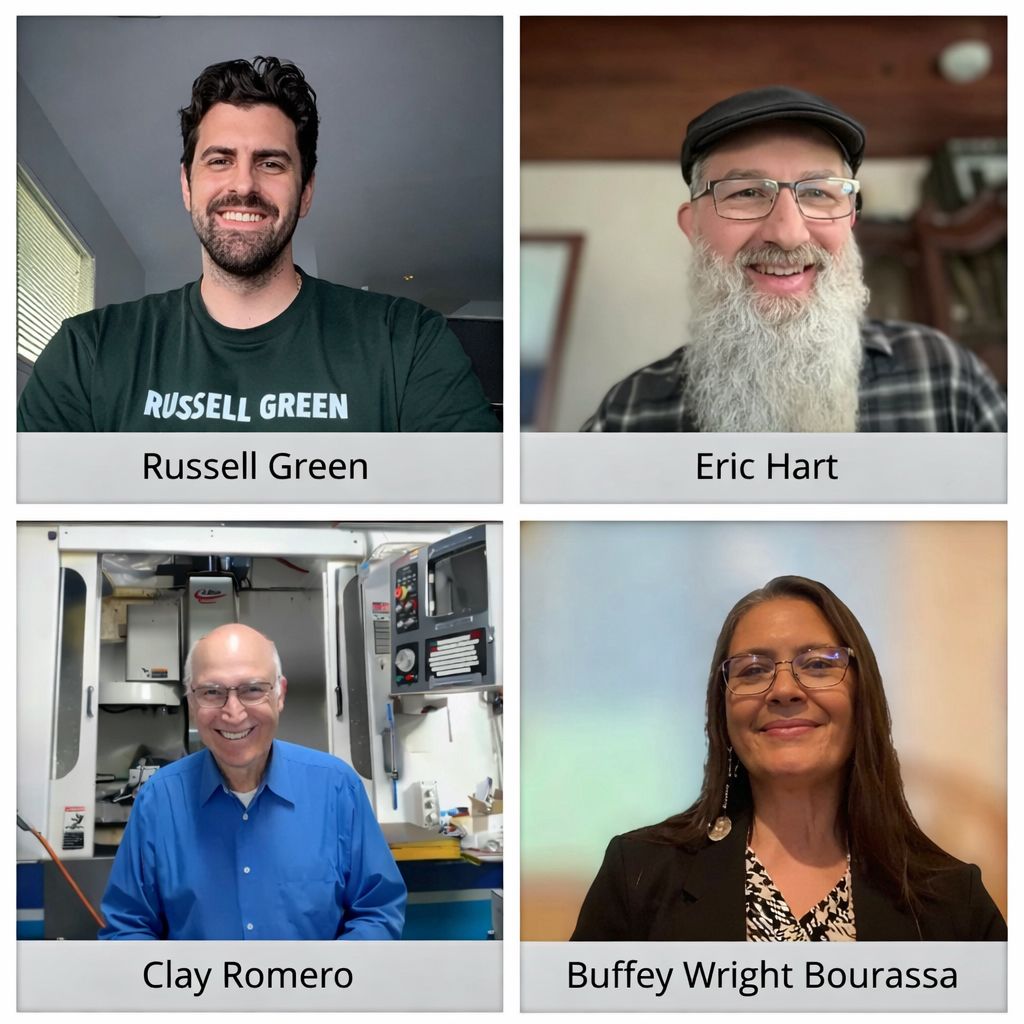
Four candidates vying for the Mendocino County Board of Supervisors District 3 position — Eric Hart, Buffy Wright Bourassa, Clay Romero, and Russell Green — participated in an election forum Thursday, March 26, sponsored by Mendocino Local Public Media, addressing critical issues facing the county including economic development, road maintenance funding, financial oversight, and public safety spending.
INTRODUCTIONS
The forum began with each candidate introducing themselves and outlining their qualifications and priorities. Each candidate was given a time limit of two minutes.
Buffey Wright Bourassa
Buffey Wright Bourassa, born and raised in Mendocino County, highlighted her Native American family's deep roots in the area and her decade of experience in county government across human services, public health, behavioral health, and the sheriff's office. She emphasized her commitment to public service and bringing the voice of District 3 to the table, focusing on improving infrastructure, supporting local economic development, ensuring responsible use of public funds, and strengthening public safety by addressing root causes.
Clay Romero
Clay Romero, a 51-year resident of District Three and a graduate of Laytonville High School (Class of ‘78) , stressed the importance of community and working together despite differing backgrounds. He outlined five core priorities: safety, economic stability, a clean environment, freedom, and basic fairness. Romero also noted his 31 years of experience running his own business and his extensive knowledge of the county and board of supervisors.
Eric Hart
Eric Hart, a California native who grew up on a horse ranch in Illinois, shared his 25-year career experience in California improving operations and fixing organizations, from AT&T to local nonprofits. Living off-grid outside Willits, he has been involved with groups like the Fire Safe Council and Mendocino County Community Foundation. Hart aims to bring his problem-solving skills to the county, focusing on transparency, improving government efficiency, and strengthening community health through healthcare, public safety, infrastructure, economy, housing, and stable county operations.
Russell Green
Russell Green, a lifelong Willits resident and Willits High School graduate, emphasized his business background, including founding Cure Wellness and having the first micro-business in the county. He expressed a desire to reduce government interference and taxes, advocating for efficiency and a "win for once" for the people. Green highlighted his skills in managing money and his use of advanced AI technologies for analysis.
QUESTION ONE
What specific actions can a District 3 supervisor take to support economic development, and which sectors would you prioritize?
Buffey Wright Bourassa
Bourassa advocated for focusing on "basics" like reliable roads, predictable permitting, workforce development, and rural coordination between the county, cities, schools, and tribes. She prioritized small businesses, local entrepreneurs, agriculture, value-added food production, tourism, workforce training, and public sector-adjacent industries like healthcare, education, and skilled trades.
Clay Romero
Romero championed industries that produce physical products, such as machining, fabrication, manufacturing, construction, and energy, believing these are essential for long-term economic support, unlike service jobs alone. He cited the difficulties faced by Laytonville and the need for efficient permitting processes, referencing a cannabis grower who found it easier to get permits in Nevada County.
Eric Hart
Hart called for moving away from a "boom-bust" extractive economy by encouraging stable, long-term industries that bring money into the county and promote local ownership. He suggested value-added and vertically integrated industries, such as milling local wood products, and leveraging rural expertise for technologies like tank monitoring and fire hardening products. He also proposed supporting agrotourism and positive branding around "healthy living, organic farming, food combined with the W's: wine, weed, wilderness, waves and wellness."
Russell Green
Green's primary focus was on streamlining planning and building processes, stating, "quit king making with planning and building." He argued for easy, over-the-counter permits with clear pricing to encourage business creation. While open to all sectors, he specifically mentioned artificial intelligence and medical technology as priorities, alongside supporting logging and grazing.
QUESTION TWO
Would you support a 20-year sales tax on county businesses to fund road maintenance? Why or why not, and what alternatives would you consider?
Eric Hart
Hart stated he would support a tax only after exhausting other options, such as collecting uncollected assessments, selling unused county properties, and addressing internal inefficiencies. He also suggested examining gas tax allocations and electric vehicle contributions.
Russell Green
Green firmly opposed any new taxes, arguing that residents are "taxed to death." He called for greater efficiency from the current tax base and a "fair shake" from the state. He also criticized the county for blocking projects like asphalt plants, which increase the cost of road paving efforts.
Clay Romero
Romero also opposed adding to the existing sales tax, which he noted is already very high in Mendocino County. He suggested exploring alternative healthcare funding systems to reduce county insurance costs and free up funds for other needs.
Buffey Wright Bourassa
Bourassa said she could support a road measure if it were "transparent, accountable, time limited, and tied to a very clear project list in annual public reporting." She emphasized the need for voter trust and independent oversight, while also advocating for aggressively pursuing state and federal transportation dollars and prioritizing critical roads.
QUESTION THREE
Do you feel qualified to provide financial oversight at the county level? As part of your answer, and as a resident of Willits, can you please address the fiscal challenges facing the City of Willits and what role, if any, the county should play?
Clay Romero
Romero, drawing on 31 years of business experience and a dozen years of studying county information, felt well-qualified. He acknowledged Willits' challenges, including software issues, a "toxic culture" noted in a grand jury report, and questionable use of federal pandemic funds. He believed the current city council members are "good people" but noted a lack of experience.
Russell Green
Green asserted his strong qualifications, citing his family's century-long business history in Mendocino County and his personal training in finance. He highlighted his use of advanced AI technologies for budget analysis and his commitment to efficiency. Regarding Willits, he believed the council "wasn't paying enough attention to their manager and their numbers," overhired, and failed to react quickly to financial downturns. He stated the city is an independent entity but the county should act as a supportive partner.
Buffey Wright Bourassa
Bourassa affirmed her qualifications, citing her background in government program management, contracts, budgets, compliance, and administrative oversight. She pointed to a California State Auditor report highlighting Mendocino County's persistent deficits and weaknesses in financial reporting. For Willits, she acknowledged the fiscal emergency and layoffs, emphasizing the county's role as a "stable partner" in areas like economic development, infrastructure, and emergency preparedness, while respecting local control.
Eric Hart
Hart referenced his extensive background in operations, budgeting, and accountability. He stressed that financial oversight involves more than just approving line items, but also ensuring realistic assumptions, protecting reserves, and transparent reporting. He described Willits’ situation as a reminder of what happens when financial discipline slips, advocating for earlier action and transparency from the city council. He believed the county should advocate for the city with state and federal governments and provide resources where interests align, but not take over.
QUESTION FOUR
If you had been serving as an elected official in Willits during its current fiscal crisis, what would you have done differently?
Russell Green
Green, drawing on his business experience, stated he would have immediately recognized that the numbers “didn’t add up” and would have deployed AI agents to analyze the budget and identify the problem. He would have been more inquisitive with staff, not trusted anyone to tell him what he could afford, and avoided overhiring. He would have planned for tough times rather than taking good times for granted. He also would have pushed the county to ensure fair property tax revenue. He largely agreed with the actions the city council ultimately took but would have taken them sooner. He suspected that Bruce Burden, with his private business acumen, was instrumental in recognizing the financial issues.
Eric Hart
Hart acknowledged that hindsight is 20/20 but stated that with the information available, he would have acted earlier and more transparently. He noted that the crisis was a long-term structural gap where expenses outpaced revenue, and relying on reserves and one-time transfers was a warning sign that should have been addressed sooner. He would have pushed for clearer, more consistent financial reporting, including monthly actuals versus budget and reserve levels, to ensure the council and public understood the situation. Hart said he also would have started the adjustment process earlier, which might have saved some jobs, by looking at staffing and service priorities before layoffs became the only option. He emphasized that it's an elected official's job to recognize trends early and make corrections before a crisis.
Buffey Wright Bourassa
Bourassa stated that accountability is about building systems where warning signs are visible and acted upon early. If she had been an elected official in Willits, she would have pushed for much earlier and clearer financial reporting, early public disclosures of the problem's seriousness, and a review of all plans before the emergency level was reached. She would have asked for regular public budget updates, multi-year forecasting, outside reviews when needed, and a clear explanation to the public about what was structural versus one-time. She also would have wanted the city to be more proactive in identifying cost pressures, staffing liabilities, and operational inefficiencies. Most importantly, she said she would have treated transparency as part of the solution, ensuring honesty with the public and fostering a culture where staff could raise red flags early.
Clay Romero
Romero identified the primary missing element as the complete disregard for the finance director's warnings. He also noted a problem with the city being two years behind on verifiable audits, which hindered finding the right solutions. He believed that some council members "just didn't know" due to this lack of transparency, which led Willits to a "terrible situation." He stated that these would be "red flags" he would actively look for at the county level and would speak up about them.
QUESTION FIVE
County officials have said that roughly 70% of general fund spending goes toward public safety. How would you evaluate whether that money is being spent effectively, and what additional data or metrics would you need to make that assessment?
Clay Romero
Romero acknowledged the complexity of evaluating public safety spending, stating it would require his "own knowledge of what things cost" and what to expect. He mentioned an anecdote about the cost of a child psychologist hired by the county as an example of potential inefficiencies.
Eric Hart
Hart proposed evaluating public safety spending by looking at outcomes, such as trends in crime, response times, and recidivism. He also suggested assessing system performance, including staffing levels and bottlenecks between departments, and cost-effectiveness compared to similar rural counties. He called for better, more consistent data and multi-year trends to ensure accountability.
Buffey Wright Bourassa
Bourassa emphasized the responsibility to evaluate not just the amount spent but also the outcomes. She highlighted the challenges of covering a vast territory with limited staff, leading to long response times. She questioned whether current spending makes people safer, reduces repeat calls, or provides value from prevention and diversion efforts. She called for data on response times by geography, vacancy rates, recidivism, and the effectiveness of alternative programs.
Russell Green
Green echoed concerns about potential "bloat" in contracts and salaries, referencing past county compensation packages. He found the 70% allocation "staggering" and questioned its necessity. He proposed a detailed analysis of expenses and income using AI technology for real-time reports and anomaly detection. He also suggested exploring public self-regulation, such as supporting CCW holders, and investing in logging and grazing to mitigate fire risk.
CLOSING STATEMENTS
Russell Green
Green emphasized that he is running for the "right reasons," stating he doesn't need a job and is not beholden to special interests or parties. He wants the people to "get a win for once" and believes "taxation is a form of theft," advocating for more careful government spending. He expressed concern about a Sheriff's Department employee voting on the sheriff’s department’s budget. (This was reference to Bourassa, who would presumably recuse herself from these votes if elected.) He also highlighted the damage done by partisan alliances that lead to a "status quo of placate and then do nothing," and elected officials lacking the "backbone to bring about change." He invited interested individuals to reach out on Facebook https://www.facebook.com/russgreen707/ or visit his website, green4mendo.com.
Eric Hart
Hart expressed his eagerness to continue problem-solving and helping people, which he sees as his core motivation and something he has done for years in the community. He views the supervisor role as an opportunity to "step that up a level and increase the impact." He announced upcoming "meet and greet" events at Flying Dog Pizza on April 8th at 5:30 p.m., and in Laytonville and Covelo in the coming weeks, which will be posted on his Facebook page https://www.facebook.com/erichartforsupervisor and website, erichartforsupervisor.com. He also mentioned holding office hours at Brickhouse (first and third Thursdays from 10 a.m. to 12 p.m.) and Northspur Brewing (fourth Thursday evenings around 5 p.m.).
Clay Romero
Romero highlighted his personal approach to campaigning, which involves talking to people directly, and expressed his passion for the role. He emphasized his interest in helping people and treating them fairly, drawing a parallel to a child's sense of fairness. He noted his concern for individuals who start businesses but die before obtaining permits, advocating for reduced permit fees to build the tax base. He also voiced strong opposition to the Potter Valley Project decommissioning, calling it "reprehensible" to dynamite a valuable piece of infrastructure and environmentally wrong, especially given the 600,000 people downstream who rely on the water. He mentioned his website, clayformendocino.org.
Buffey Wright Bourassa
Bourassa thanked the forum organizers and fellow candidates, acknowledging Mendocino County's challenges with its budget, roads, and the need for stronger, more stable services. She stressed the county's "strong communities and people who care deeply about where we live." She reiterated her commitment to bringing the "voice of our communities forward." She said she believes progress is made by "working together, focusing on practical solutions and following through." She committed to "showing up, listening, and doing the work." She listed upcoming engagements including a radio interview at KLLG, a chili cookoff at the Willits Senior Center, neighborhood meet and greets, and attending the Round Valley tribal council and MAC meetings. She referred voters to her website teambuffey.com.